
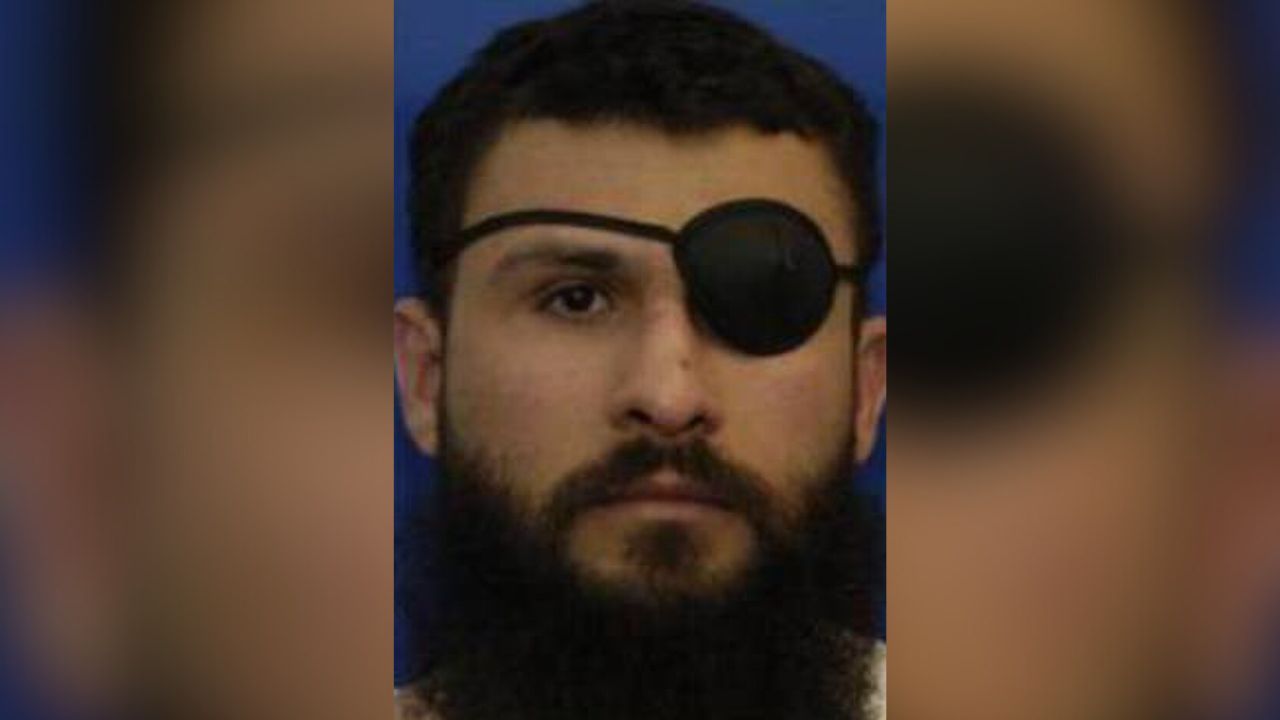
Abu Zubaydah, a Guantanamo Bay prisoner who has been detained for nearly 20 years without trial and was brutally tortured by the CIA, has received a "substantial" financial settlement and compensation package from the United Kingdom government.
The 54-year-old prisoner initiated a legal claim against the UK on the grounds that its intelligence services—specifically MI5 and MI6—were complicit in the severe human rights abuses he suffered while in U.S. custody. According to reports from the BBC, the legal battle ultimately concluded with a financial settlement, resulting in the substantial compensation payout.
Zubaydah, whose birth name is Zayn al-Abidin Muhammad Husayn, holds the distinction of being the first individual subjected to the dehumanising torture techniques that the U.S. Central Intelligence Agency officially termed "enhanced interrogation." Although the U.S. government initially alleged that Zubaydah was a senior member of al-Qaeda, that allegation was later formally withdrawn. Despite never being charged or convicted of any crime, he has remained incarcerated in the U.S. military-run prison camp in Cuba since 2006.
MI5 and MI6 Complicity in Torture
Internal government documents and intelligence communications have revealed the extent to which British intelligence agencies participated in the interrogation process that violated international law. MI5 and MI6 routinely passed interrogation questions to the CIA, fully aware of the extreme mistreatment Zubaydah was enduring.
Leaked internal MI6 messages highlighted the brutal nature of his confinement, noting that the methods being applied to him were severe enough to have "broken" 98 percent of U.S. special forces soldiers if they had been subjected to the same conditions. Despite understanding the gravity of the abuse, British intelligence agencies continued to facilitate and benefit from the interrogations.
Legal counsel representing Zubaydah argued that this direct intelligence sharing and cooperation made the UK government legally and morally complicit in his torture. The resulting legal claim has now forced the British government to settle out of court, acknowledging through financial compensation the role its agents played during the dark era of post-9/11 counter-terrorism operations.
The Capture and "Black Sites" Detention
Abu Zubaydah was born in Riyadh, Saudi Arabia, to a Palestinian family. According to Moazzam Begg, a former Guantanamo Bay prisoner and senior director at the human rights organization CAGE, Zubaydah grew up in Ramallah, Palestine, where he participated in local resistance against the Israeli occupation by throwing stones at military tanks during his youth.
In the aftermath of the September 11 terrorist attacks, Zubaydah was captured in Faisalabad, Pakistan, in 2002 during a joint raid by U.S. and local forces that detained more than 30 suspects. American authorities initially claimed he was a major al-Qaeda operative who was actively planning attacks against Western targets, prompting President George W. Bush to personally publicize his arrest to the global media. That foundational allegation was eventually dropped as the U.S. government’s narrative surrounding his actual status unraveled.
Following his arrest in Pakistan, Zubaydah entered the secretive CIA rendition and detention program. For four years prior to his transfer to Guantanamo Bay in 2006, he was moved across a network of secret detention facilities known as "black sites" located in six different countries, including Thailand, Lithuania, and Poland. These black sites operated entirely outside the formal U.S. legal system and domestic frameworks, allowing intelligence operatives to subject detainees to extreme forms of abuse without judicial oversight or legal recourse.
Severe Torture Techniques and the SSCI Report
Almost immediately upon his capture, CIA planners and interrogators debated and implemented extreme methods of physical and psychological abuse, as detailed in internal agency records cited by the landmark U.S. Senate Select Committee on Intelligence (SSCI) report.
During his years in isolation, Zubaydah himself documented the atrocities through detailed drawings from his prison cell, depicting the specific torture methods inflicted upon him. Human rights advocates and legal representatives have extensively cataloged these violations. Moazzam Begg described the abuses, stating that interrogators waterboarded him, subjected him to physical and sexual assault, and even locked him inside a coffin-like box while alive.
According to findings in the SSCI report on the CIA detention and interrogation program, Zubaydah was subjected to treatment that clearly crossed the threshold of torture by international and UK standards. Records show he was waterboarded 83 times, confined to cramped coffin-shaped boxes for extended periods, and subjected to repeated physical assaults. Because of these experimental and brutal techniques, many human rights observers and legal experts have described Zubaydah as a "guinea pig" for the CIA’s post-9/11 interrogation protocols.

Ongoing Detention and Legal Battle
Professor Helen Duffy, international legal counsel for Zubaydah, emphasized that the violations suffered by her client are not merely historical chapters, but represent an ongoing injustice.
"These violations of his rights are not historic, they are ongoing," Professor Duffy stated following the settlement. "The compensation is important, it’s significant, but it’s insufficient," she added, urging the UK and other international governments to take accountability and "share responsibility for his ongoing torture and unlawful detention."
While legal restrictions prevent the disclosure of the exact financial sum awarded in the settlement, Professor Duffy confirmed it is a substantial amount of money. However, due to his continued incarceration in military detention, Abu Zubaydah is currently unable to directly access or manage the funds himself.
Zubaydah remains one of the remaining 15 prisoners still held indefinitely at Guantanamo Bay, the offshore detention facility established in 2002 by President George W. Bush to house individuals designated as "illegal enemy combatants" and terrorism suspects. Often referred to by media and human rights advocates as the "forever prisoner" due to his decades-long detention without trial, his case has become a prominent symbol of the legal and ethical controversies surrounding the global "war on terror."

Despite the prolonged ordeal, legal representatives remain focused on securing his eventual release. Professor Duffy noted that Zubaydah looks forward to gaining his freedom and attempting to build a new life outside the confines of military detention.
"I am hopeful that the payment of the substantial sums will enable him to do that and to support himself when he’s in the outside world," Duffy said.