KUALA LUMPUR — In a major step toward streamlining cross-border commerce, Malaysia and Indonesia—the two largest halal economies in Southeast Asia—have established a joint halal council designed to harmonize their certification regimes. The agreement comes at a crucial time as both nations tighten their regulatory frameworks for halal products, signaling a significant push toward a unified regional market.
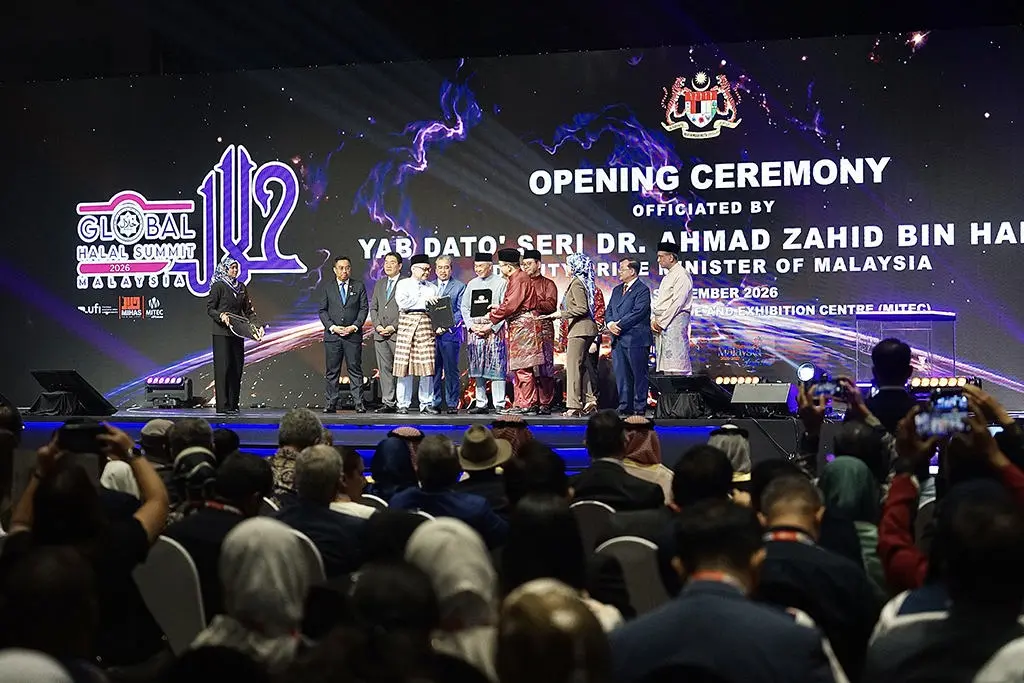
The formation of the joint council was announced on September 25 by Malaysia’s Deputy Prime Minister during the Global Halal Summit, which was held alongside the high-profile Malaysia International Halal Showcase. Under the new cooperative framework, Indonesia’s Halal Product Assurance Organizing Agency, widely known as BPJPH, will chair the council. Meanwhile, Malaysia will assume the role of secretary-general, with the Department of Islamic Development Malaysia (JAKIM) expected to serve as the primary secretariat. The two agencies are scheduled to hold their inaugural meeting in October to establish mutual certification facilitation and eliminate duplicate bureaucratic procedures that have historically hindered cross-border trade.
Building on 2023
The newly established council does not start from scratch. It builds upon foundational agreements forged in 2023, when BPJPH and JAKIM signed a landmark memorandum of understanding recognizing each other’s halal certificates for domestic products. Under that arrangement, each agency was officially listed as a recognized certification body within the other’s market. At the time of signing, JAKIM noted that certified Malaysian products and official logos would be permitted to enter Indonesia without unnecessary restrictions.
This memorandum remains active and runs through June 2029. Following extensive bilateral negotiations that concluded in June, the Deputy Prime Minister confirmed that the two countries have officially begun accepting each other’s halal logos, laying the groundwork for deeper administrative integration.
The volume of trade underpinned by these systems is considerable. Official figures show that Malaysia shipped approximately RM7.77 billion worth of halal-certified products to Indonesia between 2021 and 2023. Furthermore, Malaysia’s incoming ambassador to Indonesia estimates the total annual halal-related bilateral trade to be between US$2 billion and US$3 billion, highlighting the massive economic stakes involved in easing regulatory friction.
The Agenda: Fewer Repeated Procedures
When announcing the council, Malaysia’s Deputy Prime Minister emphasized that its core mission is to address longstanding logistical challenges, including differing halal requirements, repeated administrative procedures, and the hurdles businesses face when trying to penetrate a neighboring market. In his framing, ultimate success will be measured by fewer barriers, smoother market access, and a higher volume of companies successfully trading across borders.
A primary focus of this initiative is supporting smaller producers. Despite the domestic halal sector accounting for roughly 11 percent of Malaysia’s gross domestic product, only about 14.7 percent of the country’s halal-certified companies currently export their goods. With Malaysia targeting roughly RM80 billion in halal exports by 2030, government officials recognize that small- and medium-sized manufacturers need a much clearer, more direct route to overseas buyers, alongside practical support in fulfilling their first international export orders.
Navigating complex regulatory procedures is where this institutional support will matter most. Currently, Indonesia exempts imports from separate national certification provided they are certified by a foreign body that holds a formal recognition agreement. However, these imports still require formal certificate registration through BPJPH’s online system, a processing cycle that can take up to 20 working days. On the other side, Malaysia permits a formal halal description on imported goods provided they are certified by a body recognized by JAKIM, with the certifying body’s name clearly marked on the product packaging. Establishing a standing forum for both national agencies provides a natural, highly effective venue for aligning these administrative steps. While neither government has yet specified which procedures will be prioritized first, the framework offers an immediate channel for resolution.
Roles and Rhetoric
The structured division of labor reflects the cooperative spirit of the partnership as presented by participating officials. According to the Deputy Prime Minister, Malaysia contributes decades of deep expertise in technical standards, governance systems, and trade facilitation. In return, Indonesia contributes immense market scale, vast production capacity, and a vibrant entrepreneurial ecosystem.
The head of BPJPH offered a broader perspective during the summit, describing halal standards not merely as a religious requirement, but as a universal benchmark for transparency, supply chain traceability, and overall quality that benefits all consumers. He praised Malaysia as a natural partner given its long history in the sector, noting that the bilateral council serves as a vital stepping stone toward establishing an eventual ASEAN-wide halal council, while reiterating Indonesia’s grand ambition to position itself as a global halal hub.
Indonesia’s Changing Rules
The timing of this bilateral alignment is particularly noteworthy. Indonesia’s strict halal certification deadline for imported food, beverages, and slaughtered products is fast approaching on October 17, 2026. Adding to the regulatory landscape, a BPJPH regulation signed in August introduces a mandatory pre-shipment conformity check for imports, which must be conducted by a designated inspection body directly at the loading warehouse. BPJPH officially named four qualified inspection bodies for this purpose on September 10.
While officials have not publicly confirmed whether these specific regulatory developments are formally on the council’s upcoming agenda, the existence of a standing communication channel between the two agencies adds immense value for Malaysian exporters. For businesses navigating this complex transitional phase, the council provides a reliable mechanism to address emerging compliance hurdles.
Commercial Support
To complement the diplomatic and regulatory tracks, the Malaysian government is actively pairing institutional alignment with direct commercial trade support. During the same summit, the Malaysia External Trade Development Corporation (MATRADE) and JAKIM exchanged formal letters of intent concerning the Malaysia Halal Global Nexus initiative. Under this program, MATRADE officers stationed at overseas embassies and trade offices will provide hands-on guidance to local businesses regarding the national halal ecosystem, actively promote the international recognition of Malaysian certification, and spearhead the marketing of halal exports abroad.
The Regional Goal
Looking beyond bilateral trade, Malaysia’s Deputy Prime Minister has formally proposed launching an ASEAN Halal Council in Malaysia by September 2027. Under this ambitious proposal, Malaysia is prepared to host the permanent secretariat—subject to the formal agreement of all ASEAN member states—while Indonesia has been proposed as the inaugural chair. The proposal has already been formally submitted to the ASEAN Secretariat and is awaiting endorsement at the upcoming ASEAN Summit. Officials describe this initiative as an essential building block toward realizing a broader World Halal Development Council in the future.
The underlying market logic for regional integration remains straightforward. By government estimates, the broader ASEAN region is home to more than 250 million halal consumers, while global Muslim consumer spending is projected to reach approximately US$3.56 trillion by 2029. The Deputy Prime Minister emphasized that any regional body must maintain a clear mandate, concrete priorities, and tangible benchmarks of success defined by reduced trade barriers and easier market access.
The upcoming October meeting is expected to deliver the first concrete details of the bilateral council’s operations, including a published agenda, clear terms of reference, initial workstreams dedicated to certification alignment, and a definitive timetable for the broader ASEAN proposal. For Malaysian halal exporters and the public agencies backing them, these developments will soon reveal how effectively a shared regulatory framework can translate into shorter, faster pathways into one of the world’s most lucrative consumer markets.