KUALA LUMPUR, Sept. 25, 2026 — For decades, Malaysia has methodically constructed one of the most robust, globally recognized systems for halal certification and governance. Yet, as the nation looks toward the future, its most pressing challenge is no longer administrative or domestic; it is fundamentally commercial. The core dilemma facing policymakers and industry leaders is how to bridge the gap between a world-class regulatory ecosystem and the actual number of local companies successfully selling their halal-certified goods beyond the country’s borders.
This vital question took center stage in Kuala Lumpur on Friday during the official opening of the Global Halal Summit (GHaS) and the Malaysia International Halal Showcase, commonly known as MIHAS. Against a backdrop of bustling trade floors and high-level policy discussions, the Malaysian government unveiled a series of strategic new initiatives designed to align domestic halal standards and certification mechanisms more closely with the realities of international commerce.
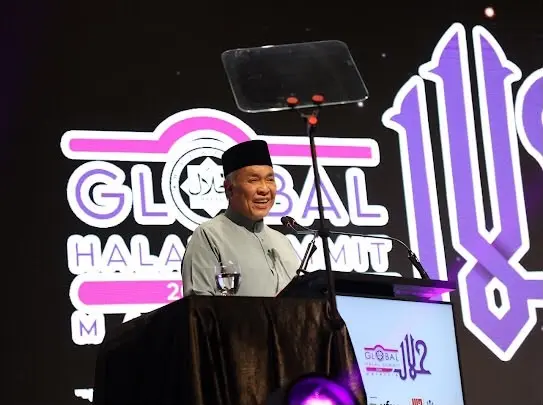
The timing of these announcements underscores both the urgency and the ambition of Malaysia’s economic strategy. The nation has set a formidable target of achieving approximately RM80 billion in halal exports by the year 2030. However, a stark statistical reality complicates this goal: Deputy Prime Minister Ahmad Zahid Hamidi revealed during the opening ceremony that only about 14.7 percent of Malaysia’s currently halal-certified companies are actually exporting their products. At the same time, the broader halal industry remains a cornerstone of the domestic economy, contributing roughly 11 percent to Malaysia’s gross domestic product.
These figures vividly illustrate the disconnect between the massive scale of Malaysia’s halal infrastructure and the relatively small proportion of enterprises that have successfully translated a domestic compliance certificate into a thriving overseas business.
"Certification is only the beginning of that journey," Ahmad Zahid told the audience of international delegates, regulators, and industry leaders during his opening address. He emphasized that holding a certificate does not automatically resolve the multifaceted operational hurdles of foreign markets. Companies venturing abroad must also secure consistent production capabilities, appropriate and appealing packaging, adequate working capital, reliable logistics networks, and a deep, nuanced understanding of their target consumer bases.
In response to these structural challenges, Malaysia is actively working to tear down administrative silos by forging closer institutional links between the agencies responsible for halal oversight and those mandated with driving export promotion.
Unifying Governance and Trade Promotion
One of the cornerstone initiatives unveiled on Friday was the creation of the Malaysia Halal Global Nexus, or MHGN. This strategic platform is the result of close cooperation between the Department of Islamic Development Malaysia—widely known as JAKIM—and the Malaysia External Trade Development Corporation, or MATRADE.
Under the framework of the MHGN, JAKIM brings its formidable authority in halal governance, auditing, and standards enforcement, while MATRADE contributes its extensive expertise in international trade promotion, market research, and global networking. The stated objective of this collaboration is to expand international market access for Malaysian businesses, strengthen cross-border industry networks, and fortify global confidence in the uncompromised integrity of Malaysia’s halal certification system.
Complementing this domestic synergy is a significant international development: the establishment of the Malaysia-Indonesia Halal Council. This new bilateral mechanism is engineered to streamline and simplify halal certification processes between the two neighboring economic powerhouses, reducing friction for businesses seeking to operate across both jurisdictions.
The council will be chaired by Indonesia’s Halal Product Assurance Organising Agency, known as BPJPH, with Malaysia stepping into the role of secretary-general. Its inaugural meeting is scheduled for October, with an immediate mandate focused on facilitating mutual halal certification recognition and smoothing the path for bilateral halal trade.
This cooperative arrangement builds directly upon a broader memorandum of cooperation signed by Malaysia and Indonesia in 2023. Ahmad Zahid noted that intensive bilateral negotiations aimed at harmonizing certification and trade facilitation concluded successfully in June. The primary purpose of the newly minted council is to directly address divergent regulatory requirements and eliminate the costly, time-consuming redundant procedures that have historically burdened companies attempting to navigate both markets.
For everyday business operators, this distinction is crucial. While a halal certificate formally establishes compliance with specific religious and quality standards, it does not, by itself, solve the complex commercial, logistical, and legal problems inherent in entering a foreign retail or industrial market.
The Malaysian government’s candid emphasis on these practical, on-the-ground barriers was widely regarded as one of the most revealing aspects of Friday’s announcements. Ahmad Zahid noted that smaller local manufacturers require a much clearer, more supported route to overseas buyers, and that newly certified companies need targeted assistance in successfully fulfilling and shipping their very first export orders.
Showcasing Potential at MIHAS
The ongoing 22nd edition of the Malaysia International Halal Showcase provided an immediate, real-world measure of the robust trade activity that Malaysia is so eager to expand and institutionalize.
Running from September 23 to 26 at the Malaysia International Trade and Exhibition Centre (MITEC) in Kuala Lumpur, the massive exhibition drew immense global attention. Prior to the event, MATRADE projected that the showcase would attract roughly 50,000 visitors hailing from 45 different countries, hosting 1,700 exhibiting companies spread across 2,400 booths. Furthermore, the organization’s signature International Sourcing Programme was structured to facilitate 4,000 targeted business-matching meetings involving 450 international buyers and approximately 600 Malaysian exporters.
By Friday, those expectations were translating into tangible economic activity. Ahmad Zahid announced that MIHAS had already recorded an impressive US$1.2 billion in cumulative sales during just its first two days alone. Concurrently, Malaysia’s public broadcaster RTM reported the milestone figure as RM5.2 billion.
While financial analysts and trade experts note that these figures represent transactional activity generated during the four-day exhibition rather than Malaysia’s total annual halal export volume—and thus should not be conflated—they powerfully illustrate the catalytic role the government envisions for MIHAS. The showcase acts as a vital commercial marketplace, directly connecting local enterprises with eager international procurement agents.
In keeping with evolving global business trends, this year’s exhibition also expanded beyond its traditional trade-show format. MATRADE introduced an advanced, artificial intelligence-based matchmaking system tailored for MIHAS 2026. The technology is designed to assist registered participants in effortlessly discovering prospective business partners, connecting directly with relevant exhibitors, scheduling high-value meetings, and navigating the sprawling exhibition floor with maximum efficiency.
Running concurrently with the showcase, the broader Global Halal Summit brought together an influential coalition of international regulators, religious certification bodies, industry practitioners, academics, and corporate professionals. Their discussions tackled complex themes ranging from the harmonization of global certification standards and technical capacity building to the sustainable development of the wider international halal ecosystem. The official GHaS program confirmed that the summit’s grand opening ceremony took place at MITEC on September 25, following several days of intensive technical, certification, and networking sessions held in Putrajaya.
When viewed collectively, the policy announcements and commercial milestones unveiled during Friday’s events indicate that Malaysia’s current economic strategy extends far beyond the mere accumulation of more domestic certified businesses.
The immediate, tactical objective is to make the nation’s existing halal infrastructure substantially more functional and useful for enterprises striving to capture international customers. This is being pursued through enhanced institutional cooperation between regulatory and trade bodies, the systematic reduction of certification-related friction between major trading partners, and the tighter integration of national halal standards with aggressive export-promotion networks.
The longer-term strategic target, however, remains exceptionally ambitious. Malaysia is firmly committed to elevating its annual halal exports to the milestone figure of RM80 billion by the end of the decade. Yet, the government’s own disclosure that a mere 14.7 percent of certified companies currently engage in exporting underscores the sheer scale of the challenge ahead. Transforming domestic compliance into sustained international market penetration will require sustained effort across multiple fronts.
Friday’s high-profile opening ceremonies achieved much more than simply celebrating Malaysia’s pre-eminent position in the global halal landscape. They laid out a pragmatic, coordinated series of policy measures explicitly designed to tether those hard-earned regulatory credentials to the demanding, competitive realities of international trade.
Ultimately, whether these new initiatives succeed in producing a substantially larger pool of globally active Malaysian halal companies will depend heavily on the work that takes place long after the exhibition lights are turned off and the dignitaries depart—in bustling certification offices, modern factory floors, sophisticated logistics networks, tailored financial arrangements, and, most importantly, ongoing commercial negotiations between Malaysian suppliers and overseas buyers.