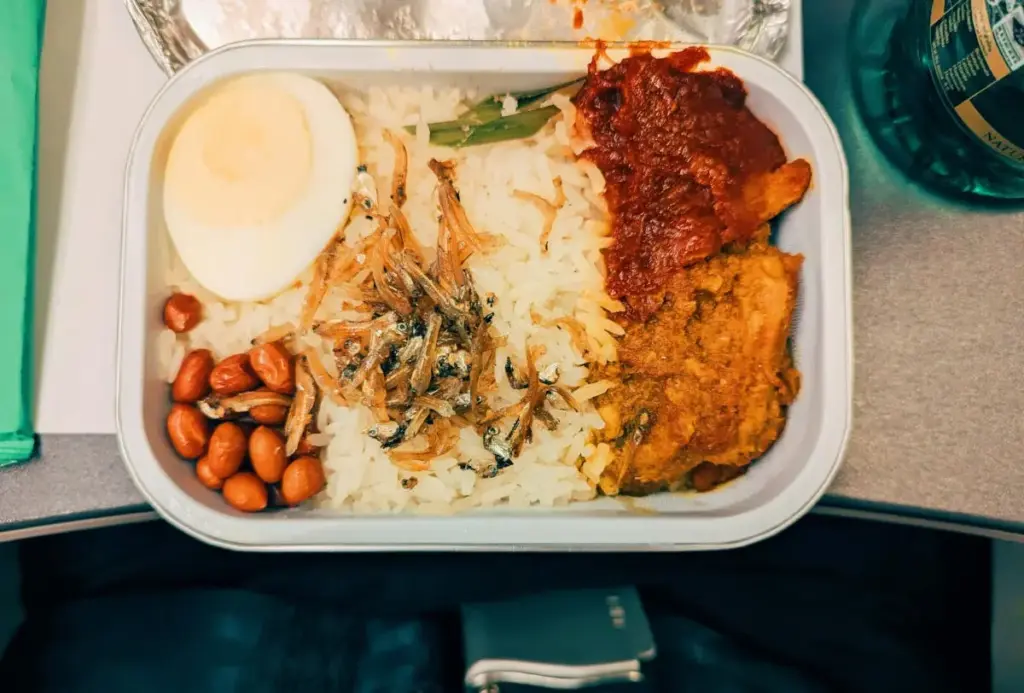
Most major international airlines offer halal meals on long-haul flights, but certification standards, ingredient sourcing, and meal quality vary significantly by airline, route, and region. For Muslim travelers, securing a reliably halal meal requires advance planning, careful verification of certification bodies when booking, and an awareness that meals labeled as halal from different carriers may follow distinct schools of Islamic jurisprudence, known as madhabs. While global carriers that partner with certified suppliers significantly reduce the risk of cross-contamination, a broader transparency gap persists across the commercial aviation industry.
When passengers order a halal meal from an airline, they are primarily relying on that specific carrier’s internal sourcing standards. Unlike the mainstream food industry, which relies on recognized halal certification bodies such as SMIIC, HCS, or various national authorities, commercial airlines are not legally required to independently verify halal certification in most countries. This dynamic creates a notable transparency gap for travelers who adhere strictly to dietary laws.
The core challenge stems from the absence of a unified international standard within aviation catering. The meal a passenger receives may originate from a globally recognized certified kitchen, or it may simply be prepared using general guidelines provided by an unverified vendor. This variation means that a halal meal served by one airline may meet substantially stricter standards than one from another carrier, even if both explicitly advertise halal options on their menus.
This discrepancy carries profound implications for observant travelers. Islamic jurisprudence requires not only that individual ingredients are inherently halal, but also that animals are slaughtered according to specific religious rites, and that food preparation and supply chains remain entirely free from cross-contamination with alcohol or non-halal animal derivatives. Because most airlines do not publicly disclose these intricate operational details, passengers often find it difficult to independently verify full compliance with their specific school of Islamic jurisprudence.
Securing a reliable meal typically requires adherence to a structured timeline. Travelers are generally advised to research an airline’s catering reputation before booking their tickets. During the reservation process, passengers must explicitly request the halal meal option, usually between 24 to 48 hours in advance of departure, depending on the carrier’s policy. Following the booking, proactive travelers often contact customer service to reconfirm that the special meal request has been successfully linked to their passenger record.
When the meal finally arrives at cruising altitude, passengers usually encounter one of three distinct categories. The first is a standard meat-based halal meal. Major international carriers renowned for maintaining strong dedicated halal programs include Emirates, Qatar Airways, Saudi Airlines, Malaysia Airlines, and Turkish Airlines. Conversely, airlines such as Lufthansa, Air France, KLM, and United often exhibit more variable quality, as their offerings depend heavily on the practices of local third-party catering partners. North American carriers like American Airlines, Delta, and United do not consistently source their halal meals from certified suppliers across all international and domestic routes.
The second category comprises vegetarian and vegan halal meals, which inherently bypass many of the complex sourcing concerns associated with meat preparation, though they still require vigilance regarding hidden additives. The third category includes regional or specialized dietary variations offered by select carriers operating out of specific cultural hubs.
Beyond raw ingredients, the physical environment of airline catering kitchens introduces a persistent risk of cross-contamination. Airline catering facilities frequently prepare multiple specialized diets simultaneously, including halal, kosher, vegan, standard, and allergen-free meals, often within the same shared workspace. Cross-contamination frequently occurs when cooking utensils, preparation surfaces, storage containers, or transport carts are shared between halal and non-halal production lines without rigorous sanitization protocols.
Airlines that maintain dedicated partnerships with internationally recognized halal suppliers generally pose a lower contamination risk. These preferred carriers often utilize segregated preparation facilities or strict partitioning within industrial kitchens to protect the integrity of specialized meals. On the other hand, airlines that rely on general-purpose catering vendors without specialized oversight present a higher risk of accidental exposure to non-halal elements.
To evaluate these risks, observant travelers frequently examine the specific certification body associated with an airline’s catering supplier. Prominent international certifiers include SMIIC, which serves over eighty Organization of Islamic Cooperation countries under high-strictness standards; the Halal Certification Service in the United Kingdom, known for rigorous auditing and transparent sourcing; and the Islamic Food and Nutrition Council of North America. Other highly stringent authorities include the Indonesian Council of Ulama, Malaysia’s JAKIM, the UAE Ministry of Climate Change, and the Saudi Food and Drug Authority. When airlines source from suppliers certified by these internationally recognized bodies, the overall risk of non-compliance and cross-contamination decreases significantly.
A particularly hidden challenge involves secondary ingredients and food additives present in airline meals. Even dishes prepared with certified meats may incorporate additives that escape standard labeling disclosures. Ingredients such as gelatin found in desserts and sauces, emulsifiers including E322 and E471 used in breads, flavoring agents containing alcohol derivatives, mono- and diglycerides derived from animal fats, and various whey or casein components can introduce ambiguity into an otherwise compliant meal. Because commercial airlines rarely disclose the detailed chemical provenance of these additives, verifying their exact halal status remains a difficult task for passengers.
Passenger satisfaction with airline halal meals varies widely across the industry. Anecdotal feedback from Muslim travelers indicates that carriers with substantial Muslim passenger demographics invest heavily in robust, transparent halal supply chains, treating dietary compliance as an essential aspect of customer service. Meanwhile, airlines operating in regions with smaller Muslim populations frequently treat halal requests as an afterthought, contracting with general caterers who lack specialized training or certification oversight.
When a pre-ordered halal meal fails to materialize on board—a frequent occurrence in commercial aviation—passengers generally have limited recourse mid-flight. Experienced travelers often notify cabin crew immediately upon boarding to check if the special meal is loaded in the galley. Upon landing, passengers may register a formal complaint with customer service to address the operational failure. For future travel, selecting airlines with established track records for special meal fulfillment remains the most effective preventive measure.
Industry experts recommend several best practices to ensure a reliable dining experience in the air. Choosing established carriers with dedicated halal programs, booking direct flights to minimize meal transfers between different airlines and catering stations, and reconfirming meal requests multiple times before departure help mitigate potential errors. Additionally, engaging ground staff at the check-in counter to verify that the meal is physically on board provides an extra layer of assurance.
Many frequent flyers also pack certified halal snacks, such as energy bars, nuts, and dried fruit, as a reliable backup in case of catering failures or quality concerns. Finally, understanding the specific requirements of one’s school of jurisprudence allows travelers to make informed personal assessments of the food provided, as commercial airlines cannot customize meals to suit individual theological interpretations. By combining careful planning, proactive communication with airline personnel, and realistic expectations regarding industry-wide transparency, travelers can navigate the complexities of international flight catering with greater confidence.