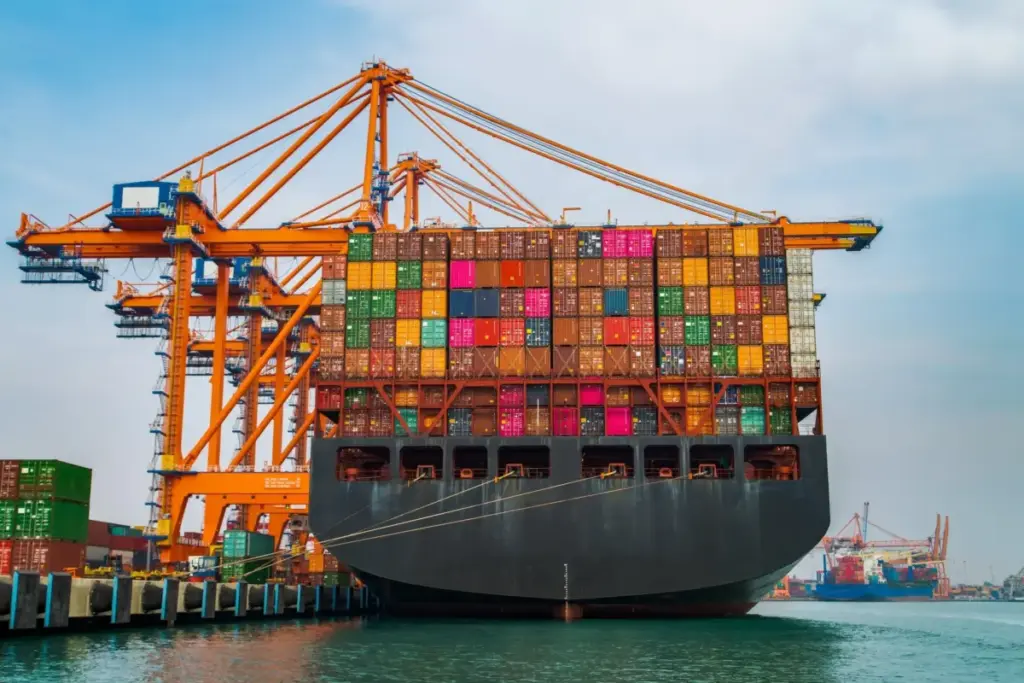
As Türkiye and China mark the 55th anniversary of their diplomatic relations this year, economic discussions between Ankara and Beijing are repeatedly drawn to a singular, persistent friction point: the profound trade imbalance. For Turkish officials, this asymmetry is not merely a statistical quirk, but one of the most formidable obstacles to the long-term sustainability and health of bilateral economic cooperation.
Rather than reducing the issue to questions of intent or blaming it entirely on the purchasing habits of Turkish consumers, policymakers and economists recognize that the trade gap is rooted in a complex convergence of structural, commercial, and market-access factors on both ends. At the same time, dismissing the imbalance as an imaginary hurdle or an unavoidable consequence of global trade dynamics would be a critical miscalculation. The sheer scale of the deficit requires serious, pragmatic attention if the two nations are to build a balanced and enduring partnership.
The Scale of the Challenge
The statistical reality of the relationship clearly illustrates why Ankara views the status quo with mounting concern. In 2025, Türkiye imported approximately $49.6 billion worth of goods from China, while its exports to the world’s second-largest economy limped to just $3.3 billion. This dynamic resulted in a staggering bilateral trade deficit of roughly $46.3 billion—a figure that accounts for approximately half of Türkiye’s entire merchandise trade deficit.
While a bilateral trade volume hovering around $53 billion may represent less than 1% of China’s massive total foreign trade, it carries an outsized weight for the Turkish economy. To be sure, bilateral trade does not need to achieve absolute equilibrium, and structural trade deficits can occur in a globalized economy. However, a persistent import-to-export ratio of roughly 15 to 1 raises legitimate, pressing questions regarding domestic industrial capacity, long-term supply-chain resilience, and external financing requirements.
At the same time, any serious evaluation of this trade dynamic must account for China’s formidable competitive advantages. As the globe’s preeminent manufacturing powerhouse, China seamlessly combines massive industrial scale, highly sophisticated supply networks, and aggressively competitive pricing. A significant share of the goods Türkiye imports from China consists of essential machinery, industrial components, and intermediate goods that feed directly into Turkish manufacturing lines. Imposing abrupt, heavy-handed restrictions on these vital inputs could easily backfire, driving up production costs, fueling domestic inflation, and severely weakening the competitiveness of Turkish exporters on the world stage.
Yet, an excessive concentration of imports in strategic sectors carries its own risks, creating vulnerabilities for domestic production capabilities and long-term industrial development. The experiences of major global players like the United States and the European Union demonstrate that blunt tariff instruments alone are rarely sufficient to eliminate deeply entrenched structural trade imbalances.
Market outcomes, however, are rarely determined solely by raw price and quality. Industrial policies, state-backed financing schemes, targeted subsidies, stringent technical standards, and opaque market-access rules heavily influence the competitive playing field. Consequently, trade-defense measures can serve as legitimate tools of economic policy, provided they remain transparent, strictly proportionate, and fully consistent with World Trade Organization (WTO) rules. For Ankara, the overarching strategic objective must be to systematically reduce excessive import dependency without sacrificing the undeniable benefits of globally competitive industrial inputs.
Toward a Balanced Relationship
Addressing this structural asymmetry requires a multi-pronged approach, beginning with the tangible expansion of Turkish exports into the vast Chinese market. Throughout 2025, China maintained its position as one of the world’s premier import markets, purchasing approximately $2.58 trillion in foreign goods. High-profile trade initiatives, such as the China International Import Expo, have routinely signaled Beijing’s stated political and economic interest in actively promoting inbound trade and diversifying its import sources.
On its part, Türkiye faces the task of continuously refining its export portfolio to better match the specific demands of Chinese consumers and industries. Turkish export capabilities have historically remained concentrated within a relatively narrow basket of goods, primarily consisting of minerals, stone, chemicals, selected machinery, and agricultural commodities. To capture greater market share, Turkish exporters must invest in strengthening recognizable brand identities, rigorously meeting applicable technical standards, and establishing more effective, deeply integrated distribution channels within China.
Yet, domestic supply constraints tell only part of the story. Accessing the Chinese market can frequently prove to be a labyrinthine process, requiring lengthy risk assessments, product-specific protocols, and complex administrative registration procedures. These hurdles were notably highlighted during the WTO’s 2024 trade policy review of China, where various member states voiced growing concerns regarding sanitary and phytosanitary measures, regulatory transparency, state support mechanisms, and technical rules that diverge significantly from accepted international standards.
To foster genuine reciprocity, China should work in close coordination with Turkish authorities to accelerate product-approval procedures, enhance regulatory transparency, finalize outstanding agricultural and food safety protocols, and clear unambiguous market-entry channels for higher-value Turkish industrial products.
Beyond merchandise trade, services—most notably tourism—offer a promising avenue for narrowing the economic gap. Türkiye’s strategic goal of welcoming 1 million Chinese visitors remains an entirely achievable target, provided both nations invest in expanding direct flight frequencies, coordinating targeted tourism promotions, and simplifying payment systems for foreign travelers. While tourism receipts alone cannot single-handedly offset a merchandise deficit of tens of billions of dollars, a thriving tourism sector generates vital service exports, supports domestic employment, and deepens interpersonal and cultural ties between the two societies.
The Critical Role of Productive Investment
Perhaps the most consequential path toward structural equilibrium lies in productive, high-value Chinese foreign direct investment. Establishing manufacturing facilities within Türkiye focused on cutting-edge sectors—such as electric vehicles, advanced battery technologies, renewable energy equipment, robotics, and other advanced industrial technologies—could substantially accelerate Türkiye’s ongoing industrial upgrading. Simultaneously, such investments would provide Chinese enterprises with a strategically diversified production base located ideally at the commercial crossroads of European, Middle Eastern, and Central Asian markets.
However, the qualitative nature of these investments matters just as much as the headline figures. To deliver genuine economic value, incoming projects must foster robust local supplier networks, build domestic research and development capacities, generate skilled employment opportunities, and drive exports to third-party markets. Investments that rely predominantly on imported intermediate components and focus solely on the domestic retail market will do little to correct the underlying trade imbalance.
Official economic data underscores the untapped potential in this arena. China’s global outward investment flow reached approximately $213.6 billion in 2025, with its accumulated foreign investment stock surpassing $3.4 trillion. Meanwhile, official Turkish figures indicate that Türkiye currently hosts more than 1,400 Chinese-funded enterprises and has attracted roughly $3.2 billion in cumulative Chinese investment. While this footprint is far from negligible, it remains remarkably modest when measured against the immense economic weight and potential of the two nations.
The BYD Case as a Test of Implementation
The trajectory of major investment initiatives is vividly illustrated by the high-profile case of BYD, which highlights both the immense promise and the inherent complexities of the bilateral investment relationship. On July 8, 2024, BYD and the Turkish Ministry of Industry and Technology formally signed a landmark agreement for an approximately $1 billion automotive investment project in the western province of Manisa. The ambitious plan envisioned the construction of an electric and plug-in hybrid vehicle manufacturing plant with an annual production capacity of 150,000 vehicles, accompanied by a dedicated research and development center and up to 5,000 direct jobs.
However, the initiative subsequently encountered hurdles. In June 2026, BYD announced that construction work on the Turkish facility had been temporarily placed on hold and that no firm timetable had been established for its resumption, as the company prioritized the operational rollout of its Hungarian facility. Turkish state authorities responded by clarifying that the original investment agreement, BYD’s legal obligations, and the financial guarantees submitted to the state remained fully valid, although access to specific state incentives had been temporarily suspended due to the absence of expected construction progress.
Consequently, the project should be categorized neither as a completed success nor as an officially terminated investment. Instead, it stands as an unresolved test of the capacity of both governments and major multinational corporations to navigate hurdles and implement monumental commitments.
Publicly available information does not point to a single, definitive catalyst for the project’s delay. Rather, a complex matrix of commercial and strategic considerations likely plays a role, including BYD’s shifting global investment priorities, internal corporate decision-making, evolving European production strategies, rapidly changing European Union trade measures targeting China-made electric vehicles, and broader macroeconomic and regulatory developments within Türkiye. Without definitive evidence from the primary stakeholders, attributing the delay to any single factor risks oversimplifying a multifaceted corporate decision.
What remains evident, however, is that jointly negotiated economic projects of this magnitude require steadfast accountability from both the host government and the corporate investor, particularly regarding transparent adherence to agreed timelines, commitments, and implementation milestones.
Tariffs, Global Rules, and Mutual Trust
The broader regulatory landscape has also faced scrutiny. Between 2023 and 2024, Türkiye implemented a series of additional customs duties and stringent import requirements specifically affecting motor vehicles imported from China. Turkish officials defended these policy instruments as necessary measures designed to support the domestic automotive industry through its green transition, incentivize domestic manufacturing investments, and ensure adequate, reliable after-sales consumer services. Nevertheless, the country-specific and rapid deployment of these trade measures inevitably raised legitimate international questions concerning regulatory predictability and compatibility with WTO rules.
In July 2026, a WTO dispute settlement panel delivered findings concluding that several of the additional duties applied to electric and hybrid vehicles, alongside certain elements of the national import-permit system, were inconsistent with Türkiye’s international trade obligations. Yet, the panel’s conclusions were nuanced rather than a blanket condemnation of Turkish trade policy. China failed to substantiate its legal challenges regarding certain duties applied to traditional internal combustion engine vehicles. Furthermore, specific hybrid vehicle categories were not found to be WTO-inconsistent, and the majority of tariff exemptions granted by Ankara to its regional trade agreement partners were validated under international trade rules.
Moreover, in September 2025, Türkiye amended its regulatory framework, ensuring that the relevant additional duties were applied universally to imports originating from all countries lacking a regional trade agreement with Ankara, rather than singling out China alone. Dismissing the entirety of Turkish trade policy as an unlawful or exclusively anti-China maneuver overlooks both the mixed legal findings of the WTO panel and Türkiye’s subsequent adjustments to its regulatory framework.
Even so, Ankara would be wise to draw constructive lessons from the panel report. Legitimate industrial policy goals and economic-security objectives are most effectively pursued through strictly WTO-compatible instruments—such as thoroughly investigated anti-dumping, countervailing, or safeguard measures—coupled with transparent investment incentives tied directly to measurable production, employment, and export benchmarks.
At the same time, the pursuit of fairness and reciprocity cannot be treated as an obligation resting solely on Turkish shoulders. China’s internal industrial support systems, regulatory transparency standards, public procurement practices, and persistent market-access barriers are equally relevant to the health of the bilateral relationship. Building sustainable mutual trust is impossible if one partner is expected to abandon its legitimate policy concerns while the structural barriers of the other remain entirely off the table.
Both nations continue to offer formidable complementary advantages. Türkiye boasts a massive domestic market, a highly developed automotive supplier ecosystem, a skilled and adaptable labor force, robust logistics networks, a Customs Union with the European Union, a network of free trade agreements, and deep commercial connectivity with surrounding regions. Chinese enterprises bring immense capital reserves, advanced technologies, deep manufacturing expertise, and comprehensive integration into global supply chains. These powerful complementarities explain why neither nation should approach the relationship with the assumption that the other is easily replaceable.
Shared Responsibility at a Milestone
As 2026 marks the 55th anniversary of the establishment of formal diplomatic relations between Türkiye and China, the milestone offers a timely and auspicious opportunity for both countries to elevate their long-standing ties into a more balanced, reciprocal, and future-oriented economic partnership. The most viable path forward relies on the creation and execution of a joint, measurable economic road map.
For its part, Türkiye must press ahead with efforts to reinforce macroeconomic stability, enhance regulatory predictability, and systematically upgrade its capacity to produce and export higher-value goods. China, meanwhile, should proactively facilitate more effective market access for Turkish goods, encourage long-term manufacturing and technology investments, and contribute meaningfully to the timely implementation of mutually agreed commitments.
Establishing clear, measurable benchmarks for trade volumes, investment flows, and market access—monitored through regular, institutionalized bilateral dialogue—will be essential to sustaining momentum. Beyond pure commerce, both nations must continue expanding cooperation in tourism, transportation infrastructure, and diplomatic communication to foster an overarching environment of mutual trust.
The persistent trade imbalance is not proof of deliberate economic wrongdoing by Beijing, but neither is it an imaginary grievance manufactured in Ankara. It is a structural challenge that can only be effectively managed through a framework of shared responsibility. Ultimately, the durability of the Türkiye-China partnership will not be judged by whether the bilateral trade deficit vanishes overnight, but by whether trade, investment, and market access evolve to become significantly more reciprocal, productive, and sustainable for both nations in the years ahead.