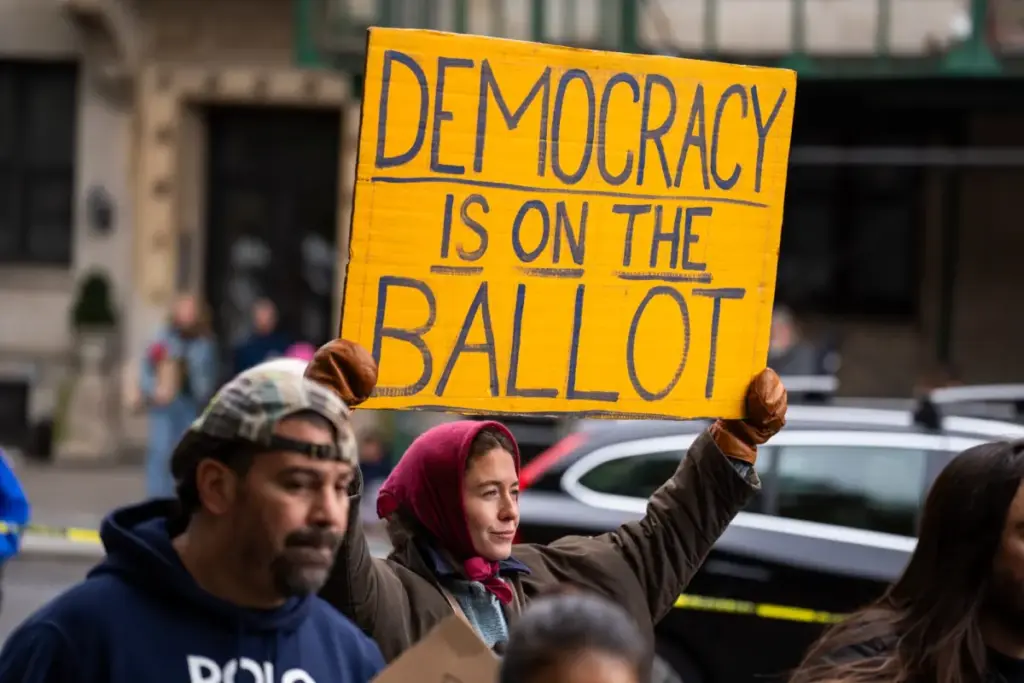
Cities and communities across the United States came alive on Saturday with demonstrations organized by the "No Kings" network, drawing crowds united by a central message: casting their ballots early in the upcoming midterm elections. The nationwide mobilization, which encompasses more than 3,000 planned events from coast to coast, represents the latest chapter in a sustained wave of grassroots political engagement that has unfolded over the past two years in response to United States President Donald Trump’s administration.
Billed officially under the banner “No Kings: Vote Early,” Saturday’s events were framed by organizers as strictly nonpartisan gatherings designed to encourage civic participation. Yet, the underlying momentum clearly derived from months of marches and demonstrations organized by citizens who have expressed deep dissatisfaction with President Trump’s policies and governance. Rather than focusing strictly on partisan rhetoric, however, the day’s speakers and participants concentrated heavily on the mechanics of democracy, emphasizing the importance of turning out ahead of election day and navigating the complexities of early voting options.
“It’s a day of nonpartisan voter participation: we are bringing our community together to make a plan to vote early and ensuring every eligible voter understands their options for how to vote and has the opportunity to make their voice heard,” organizers said in a formal statement released ahead of the weekend’s events.
By actively advocating for early voting, the network’s organizers hope to achieve multiple goals, including cutting off the potential for administrative bottlenecks, confusion, or any malfeasance once election day officially arrives. Early voting has increasingly become a focal point of electoral strategy and public debate across the United States, viewed by proponents as a reliable method to ensure high turnout and secure votes before unforeseen circumstances can interfere.
In the nation’s capital, a live band entertained a crowd numbering in the hundreds at the historic Lincoln Memorial. Despite the chilly autumn weather that swept through Washington, DC, attendees clad in caps and heavy coats danced to the music while waving an array of prominent placards. Among the most visible messages carried by the crowd were bold declarations reading “VOTE EARLY” and “HANDS OFF MY VOTE!” reflecting the urgency participants felt regarding the protection of their electoral rights.
Similar scenes played out at rallies across the country, highlighting the decentralized nature of the "No Kings" network. At a prominent gathering in Atlanta, Georgia, City Councilman Michael Julian Bond took to the stage to deliver a passionate address, urging the assembled crowd to mobilize their friends, families, and neighbors to vote well ahead of the November 3 general election.
Drawing on pop culture and classic rhetoric, Councilman Bond connected the fundamental civic duty of voting to the timeless archetypes of heroism. “The Constitution gives you one power, right? That is the power to vote. Are you gonna use that power?” he asked the attentive audience.
“You don’t see Superman giving up his power,” Bond continued, building to his core message. “You don’t see Black Panther giving up his power. You don’t see Wonder Woman giving up her magic lasso. So why would you give up your right, your power, your obligation to vote? Be a superhero, use your power. Go to the polls and vote.”
The emphasis on early voting and mail-in ballots during Saturday’s rallies takes place against a backdrop of intense national friction surrounding the integrity and methods of American elections. President Trump has long maintained a public stance of deep suspicion toward mail-in voting, repeatedly claiming without presenting concrete evidence that widespread voting fraud cost him victory in the 2020 presidential election. This skepticism has continued to influence federal policy, legal battles, and administrative actions as the midterm elections draw closer.
The legal and political tensions surrounding the voting process escalated significantly just days before the weekend rallies. On Thursday, the Trump administration took direct legal action by suing California election officials. In that lawsuit, federal authorities asked a presiding judge to bar the state from counting mail-in ballots submitted for the upcoming midterm elections by individuals whom the federal government has identified as “likely” noncitizens. The administration argued that these ballots should be frozen until the precise immigration status of those voters can be thoroughly investigated and confirmed.
The following day, the Department of Justice escalated the administration’s warnings, issuing a formal advisory stating that local election officials who process and tabulate ballots submitted by suspected noncitizen voters are putting themselves at direct risk of criminal investigation and potential prosecution. The dual actions by the executive branch drew immediate pushback from congressional lawmakers concerned about federal overreach and the potential disenfranchisement of legitimate voters.
Earlier on Friday, a group of prominent Democratic senators—including Alex Padilla of California, Sheldon Whitehouse of Rhode Island, and Dick Durbin of Illinois—responded to the Justice Department’s warning by dispatching a formal letter to Attorney General Todd Blanche. In their correspondence, the lawmakers demanded that the Justice Department make an explicit commitment to refrain from seizing ballots or other sensitive election materials before the midterm elections have been officially certified by state authorities.