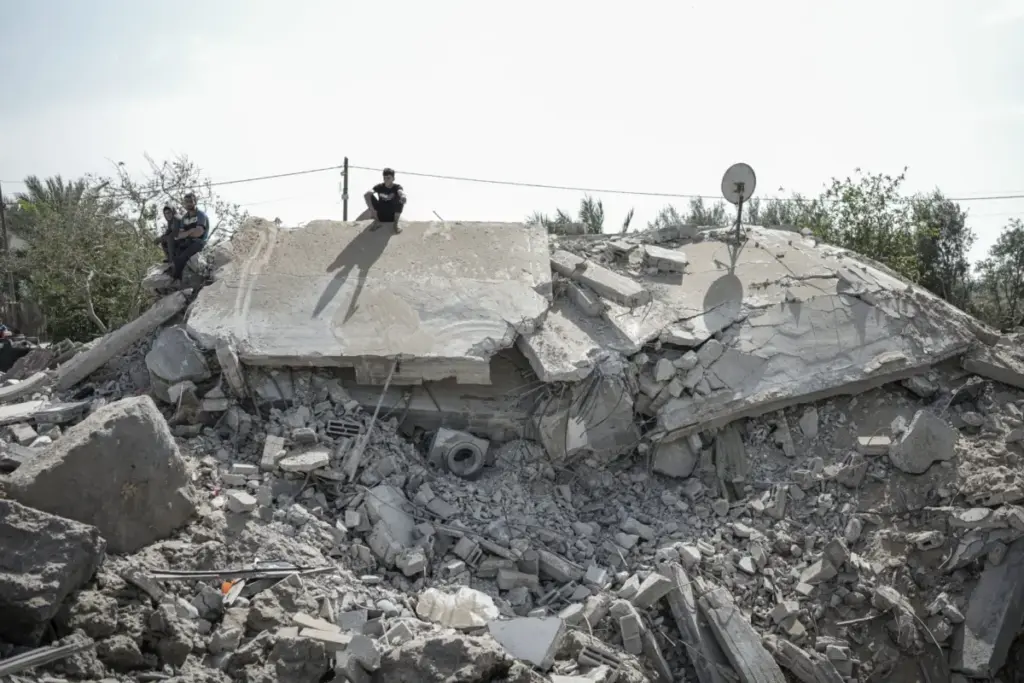
GAZA — Marking one year since a ceasefire was officially announced, humanitarian workers on the ground in Gaza report that daily life remains heavily overshadowed by persistent military attacks, severe overcrowding, and a deepening humanitarian emergency. Two aid workers with Islamic Relief, whose names have been anonymized to protect their safety, have shared harrowing accounts of the realities facing local communities and aid personnel as the enclave endures its third year of catastrophic destruction.
According to the humanitarian workers, the announced truce has failed to materialize into real safety for the more than two million residents trapped within the enclave. Ongoing airstrikes continue to target displacement camps and densely populated areas, leaving civilians with an unyielding sense of fear that permeates every aspect of daily existence.
"There is no ceasefire in reality"
"The current situation here in Gaza, with bombing and airstrikes still ongoing, cannot be called a ceasefire. There is no ceasefire in reality," said Layla, an Islamic Relief aid worker in Gaza. "They target displacement camps and crowded areas, so there is still a lot of fear."
Layla described the profound psychological toll and physical restrictions imposed on everyday life. "We cannot say that we are 100% safe. We cannot go into the streets by car or on foot. We are scared to even leave our homes, and of the noise of the drones above us. Even our homes themselves are unsafe. It’s hard to think you could be next. These are the hardships we’re facing; displacement, fear. The killing is non-stop and we cannot live our lives normally."
For Sameer, another aid worker on the ground, the initial announcement of the truce offered a fleeting sense of relief following years of relentless devastation. However, those hopes were quickly dashed as military operations persisted across the Strip.
"When we heard the news about the ceasefire, it brought us some relief that we were still alive after what had happened over the 2 years before. But afterwards we saw that it was not a ceasefire from the Israeli side," Sameer said. "Just the other day, there was an attack nearby. It was in a crowded tent area with women and children around."
Displacement and the Collapse of Infrastructure
The humanitarian crisis has been exacerbated by massive forced displacement. Palestinians have been expelled from nearly 70 percent of the Gaza Strip, forcing the entirety of the population into a restricted zone accounting for just over 30 percent of the enclave’s total territory. This extreme concentration of people into a small fraction of land has created severe overcrowding and decimated local living conditions.
"So, the feeling here is still the same as before the ceasefire. We cannot live in just 30 percent of the Strip, just waiting for them to move forward and occupy other parts of Gaza. A ceasefire with us in 30 percent of the Strip and still being attacked and denied aid is not actually a ceasefire. They are just pretending that they are maintaining minimum humanitarian standards," Layla noted.
Most residents are currently living in makeshift tents or dangerously compromised buildings. Sameer highlighted the constant structural hazards faced by families seeking shelter. "Most people are living in crowded tents and damaged buildings. I don’t know if you saw on the news, but a few weeks ago a damaged building collapsed on the sleeping children and families sheltering inside."
The destruction of civic infrastructure has left basic necessities nearly inaccessible. Finding safe drinking water or a reliable source of electricity is described as almost impossible. The scarcity of essential resources has turned routine activities into daily trials.
"When I go out walking with my children, any time a car comes up beside us, I fear that there will be an attack. Even when we’re at home, there is fear in every moment. Even leaving to go to work… it’s difficult to explain that feeling because it’s become something in our minds, in our lives, in every move we make," Sameer explained.
Aid Restrictions, Scarcity, and the Cash Shortage
While some commercial goods are permitted to enter Gaza, humanitarian organizations report that the volume is nowhere near sufficient to meet the staggering needs of the population. Essential commodities remain heavily restricted, and prices for available goods are prohibitively high for the average resident amid widespread unemployment and a severe cash shortage across the territory.
Chronic shortages of medical supplies continue to threaten vulnerable populations. Individuals suffering from diabetes and other chronic diseases face life-threatening challenges in securing necessary medications, while acute hunger remains widespread.
Despite these immense operational hurdles, humanitarian agencies are adapting their response methods to reach those in greatest need. Islamic Relief has implemented food voucher programs designed to give families the agency to select what they need most from local shops, which simultaneously supports surviving local businesses and restores a degree of dignity to recipients.
"We’re adapting by providing food vouchers, which allow people to choose what they want from local shops — giving families more choice and dignity, and supporting local businesses," Sameer said. These vouchers have been particularly vital for marginalized groups, including individuals with disabilities whom aid workers note have been largely forgotten amid the wider crisis.
Furthermore, Islamic Relief is supporting more than 25,000 orphaned children and their surviving guardians, many of whom are sheltering in desperate conditions inside tent camps. Delivering this aid, however, involves constant calculation of risk. Humanitarian personnel must routinely verify evacuation orders, active bombing zones, and drone activity before attempting travel.
Risk, Resilience, and the Fear of Being Forgotten
As the conflict stretches past its third year, humanitarian workers express growing concern that international attention is fading. The saturation of other global crises and the perception of a partial ceasefire have caused Gaza to slip from major news headlines and social media feeds.
"Maybe after 3 years, Gaza is being forgotten. We don’t have the action we used to see on social media and in the news. There is so much going on in the world, maybe Gaza is being forgotten even though the challenges and shortages are still enormous," Layla reflected. "Maybe the focus has gone because of the partial ceasefire. Maybe we’ll get a headline in the news — one or two people killed by an airstrike — and that’s it. People just move on to the next story. Gaza is maybe seen as just the last big trend…"
Yet, despite the mental exhaustion, physical stress, and constant threat to their own lives, aid workers emphasize that stopping is not an option. Witnessing continuous suffering compels them to press forward with their mission.
"Even if it’s hard to travel or deliver aid, as humanitarian workers, we cannot just sit by and watch people suffering. We see them suffering and know we can help them, so we take the risk. In Gaza, just living is a big risk! We cannot see the struggles that people are facing and do nothing. It’s not in our nature or in the people of Gaza’s nature," Layla said.
Acknowledging that their efforts cannot instantly reach every one of the two million people in need, the staff remains driven by the tangible impact they can make in individual lives. This sense of purpose helps sustain them through the overwhelming weight of the ongoing crisis.
"The humanitarian work must go on. We cannot just stop. Even if our intervention cannot help all 2 million people in Gaza, we can still make a difference in people’s lives, and this is the motivation for humanitarian workers," Layla concluded. "This is what moves us, this is what encourages us to just keep going, to just bear the hardships we are facing — the mental hardship, the physical, the stress, the exhausting circumstances — and just keep going."