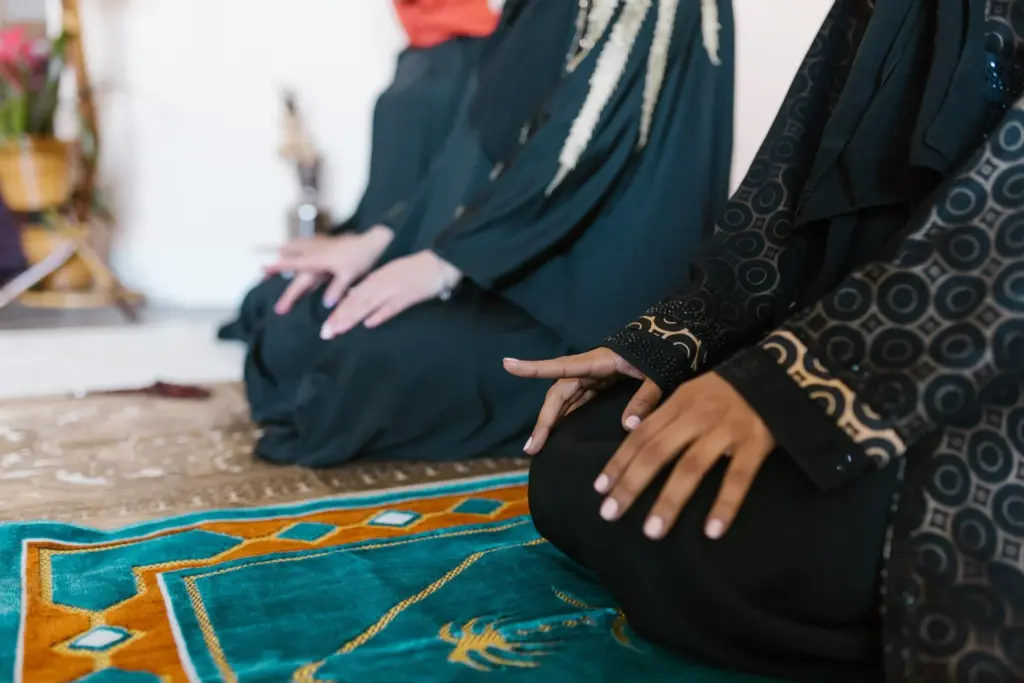
Stepping into a place of worship outside of one’s own faith tradition can sometimes feel unfamiliar or even a little daunting. However, communities across the United Kingdom are increasingly opening their doors to foster deeper connections, broaden perspectives, and encourage meaningful interactions between people of different backgrounds. Central to this ongoing community outreach is the Muslim Mamas network, an organisation dedicated to creating safe spaces for individuals to come together, share, learn, and grow alongside like-minded peers. Through collaborative efforts with larger agencies, organizations, and charities, the community continually extends an invitation to individuals outside of the Muslim faith, driven by the belief that there is profound richness in seeking to understand those who are different from ourselves.
While a mosque is primarily a sacred place of worship, reflection, education, and community for Muslims, it is fundamentally a space open to people of all faiths and backgrounds. Understanding the etiquettes, practices, and everyday functions of these institutions can help ensure that any visit becomes a positive, respectful, and enlightening experience.
When and Why Do People Visit the Mosque?
The architectural and structural diversity of mosques throughout the United Kingdom is vast. Some are purpose-built landmarks featuring traditional domes and minarets that mirror structures found globally, while others are former churches, converted community centers, or residential properties adapted to serve local populations with fewer resources. Regardless of the exterior appearance, the Arabic word for mosque is masjid, a term visitors will frequently hear used by congregants.
The majority of mosques remain open for at least the five daily prayers, which are observed facing Mecca. While individual prayer is permitted, communal prayer within the mosque is strongly encouraged, particularly for the midday prayer and most notably for the congregational midday prayers held on Fridays. Known as Jum’ah prayer, this weekly gathering typically includes a sermon delivered by a community leader.

Prayer spaces within mosques are traditionally segregated by gender. However, spatial constraints mean that some smaller mosques may not always have a dedicated area for women. While communal prayer is a religious obligation for men where possible, it is optional for women, who are equally welcomed at the mosque but maintain the flexibility to pray elsewhere. Beyond daily and weekly worship, mosques serve as vibrant community hubs. They frequently host Islamic and Quranic classes for children, adults, and individuals newly introduced to Islam. Furthermore, these spaces often facilitate social events and milestone services, including weddings, funerals, Ramadan and Eid festivals, and dedicated prayer programs.
Leadership and Governance
Leadership within a mosque is typically centered around an Imam, who leads prayers and delivers sermons. However, not every mosque employs a permanent Imam. Some facilities rely on visiting spiritual leaders, while others depend on members of the local community to lead prayers or teach from the Quran, the Muslim holy book. Additionally, mosques are generally overseen by boards of trustees, maintenance staff, and dedicated volunteers who manage the daily operations and upkeep of the building.
Dress Code and Preparation
Visitors planning a trip to a mosque should adhere to standards of modesty that apply to both men and women. Clothing should be loose-fitting and cover both the arms and legs, meaning shorts and sleeveless shirts are discouraged for all attendees. Female visitors are advised to bring a headscarf. While not every mosque strictly requires female visitors to cover their heads—particularly outside of designated prayer halls—wearing one is considered a respectful gesture. For those who forget, many mosques keep spare scarves near the entrance. Makeup is entirely acceptable, and children are generally not held to strict clothing standards.
Upon arrival, visitors are required to remove their shoes before entering the carpeted prayer areas. Consequently, wearing clean socks or tights is recommended. Most mosques provide designated shoe racks, shelves, or a separate room near the entrance where visitors can safely store their footwear and personal belongings.

Greetings and Interpersonal Etiquette
Mosque communities are overwhelmingly welcoming, and visitors should feel encouraged to ask questions and engage with locals eager to share their knowledge and guidance. The traditional Islamic greeting is "Assalamu ’alaykum," which translates to "peace be upon you." While visitors should not worry about minor mispronunciations—as locals generally appreciate the effort—a standard greeting of hello and a polite inquiry into someone’s well-being is always well-received.
When greeting individuals, visitors may shake hands with people of the same gender. When greeting someone of a different gender, it is customary to follow the other person’s lead. While some individuals are entirely comfortable shaking hands, others prefer not to. In instances where a handshake is not preferred, placing a hand over one’s heart with a gentle nod serves as a universal, respectful alternative. Perfect execution of every custom is not expected; observant and respectful behavior is more than sufficient.
Navigating the Prayer Space
Upon entering the prayer hall, visitors are typically greeted by a member of the community who will direct them where to remove and store their shoes. Mobile phones should be silenced or turned off prior to entering. Once inside the main prayer hall, conversations should be kept to a minimum and ceased entirely during active prayer services.
Before entering the prayer hall, Muslims perform ablution, a ritual washing of the face, arms, and feet. While some mosques feature specialized washing facilities, visitors are not expected to perform ablution themselves.

Unlike traditional churches or places of worship equipped with pews or individual seats, prayer halls feature expansive carpets or rugs. A limited number of chairs may be available for elderly individuals or those with mobility impairments. Men and women typically enter through separate doors and occupy different sections of the hall, which may be separated by partitions, curtains, or distinct levels, depending on the architecture of the building. Families visiting with young children generally keep them close regardless of gender.
During communal prayers, congregants stand, bow, prostrate, and sit in unison. Visitors are not expected to participate in the physical movements and may simply observe quietly from the background. Because walking directly in front of someone who is actively praying is considered disrespectful, visitors are often guided to the rear of the hall to watch the service without interruption. Worshippers engaged in prayer will not respond to conversations until their prayers are completed, but questions are welcomed before or after the service.
Ultimately, visiting a mosque offers an opportunity to explore a different culture and faith tradition while discovering shared values of hospitality, inclusivity, and mutual understanding.