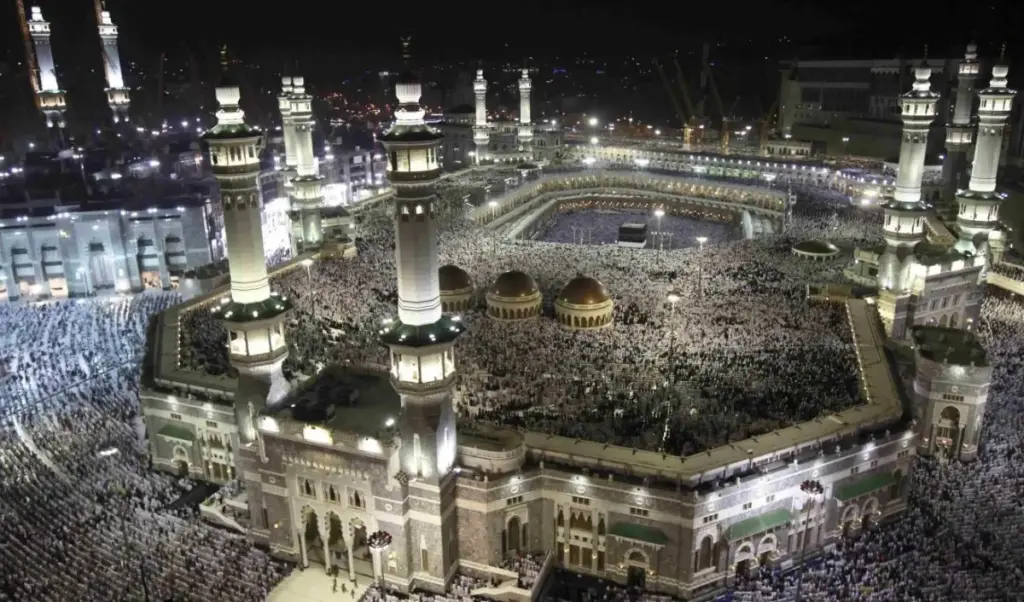
In contemporary discussions surrounding the management and accessibility of mosques, one persistent challenge involves the rigid parameters often placed on social interaction between men and women. In many modern Islamic centers and prayer spaces that welcome female worshippers, an atmosphere of excessive sensitivity—and occasionally, strict prohibitions—surrounds ordinary, everyday communication between the genders. This phenomenon presents a striking sociological contradiction, given that these same individuals navigate professional workplaces, educational institutions, and broader civic life with entirely normal, unhindered social interactions.
Scholars and community leaders increasingly point out that this hypersensitivity diverges sharply from the historical reality of early Islamic society. A careful examination of the Sunnah—the traditions and practices of the Prophet Muhammad—reveals that everyday interaction between men and women within the sacred space of the mosque was common, natural, and integrated into both religious and civic affairs. Rather than cultivating an environment of artificial isolation, the Prophet’s mosque functioned as a dynamic hub of community life where men and women participated side-by-side in learning, inquiry, and communal discourse.
While historical records do indicate that occasional violations of decorum occurred, these incidents were treated as isolated, individual cases. They did not trigger radical overhauls of the foundational rulings governing gender interaction, nor did they prompt systemic alterations to the architectural layouts of mosques or the arrangement of prayer rows. Instead, the legal and social framework maintained a balance between modesty and natural human engagement.

What the Sunnah Says
To understand the baseline of acceptable interaction within a sacred context, contemporary researchers frequently look to authentic narrations recorded by both male and female Companions. These accounts illustrate what scholars describe as normal, respectful engagement in the presence of the Prophet Muhammad, providing clear precedents that require little elaboration.
A primary example of this dynamic is preserved in a narration by Asma’, who recounted an event involving a public address by the Messenger of Allah. Asma’ detailed how the Prophet stood up amongst the congregation to deliver a sermon, drawing the attention of both men and women present in the mosque. During his address, he mentioned the trials and tribulations a deceased person experiences in the grave. The gravity of the subject caused a considerable clamor among the audience, with voices rising to the extent that Asma’ was prevented from hearing the concluding words of the Messenger of Allah.
Once the commotion subsided and the gathering grew calm, Asma’ did not hesitate to seek clarification. Turning to a man standing near her in the congregation, she addressed him directly, seeking the information she had missed. She asked, "May Allah bless you, what did the Messenger say concluding his sermon?" The man readily answered her inquiry, conveying the Prophet’s warning: "It was revealed to me that you would be tested in your graves in a manner almost similar to that of Ad-Dajjal’s trial."

This straightforward exchange, preserved in classical collections of Hadith, highlights several key aspects of early Islamic communal life. First, it demonstrates that women were present in the main body of the mosque during major public addresses, sharing the same acoustic and physical space as their male counterparts. Second, it shows that spontaneous, polite communication between unrelated men and women for the purpose of acquiring knowledge was entirely acceptable and devoid of the social panic that characterizes some modern mosque environments.
As contemporary Muslim communities grapple with issues of inclusivity, governance, and architectural planning, returning to these foundational narratives offers a valuable perspective. By distinguishing between cultural anxieties and authentic religious guidance, community stakeholders can foster environments that honor the traditional spirit of accessibility and respectful coexistence modeled during the formative period of Islam.