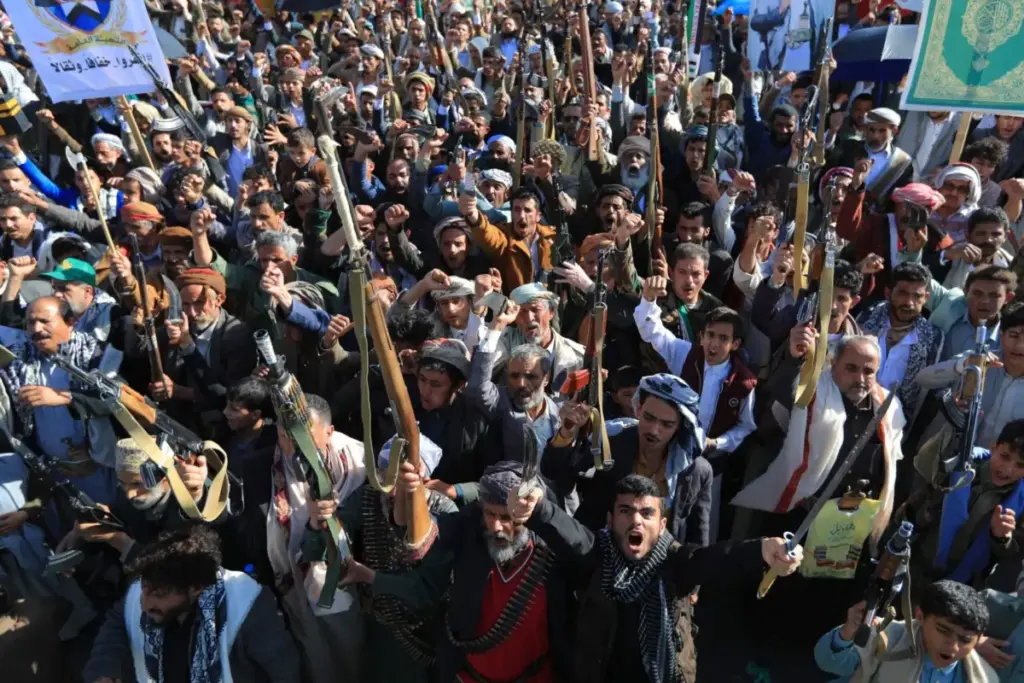
Riyadh — Saudi Arabia has leveled sharp accusations against Iran, stating that Tehran continues to actively arm, train, and support Yemen’s Houthi rebels while deliberately inciting the group to prolong its ongoing military conflict with the kingdom.
The allegations were detailed on Thursday by Rayed Krimly, deputy minister for public diplomacy at the Saudi Foreign Ministry, during a virtual briefing with international journalists. Krimly’s remarks underscore the deepening geopolitical tensions and the persistent diplomatic deadlock surrounding the protracted war in Yemen, even as regional and international actors repeatedly attempt to broker sustainable ceasefires and political settlements.
According to the senior Saudi official, Tehran’s material and tactical backing of the militant movement remains a blatant violation of international law. Specifically, Krimly pointed to ongoing breaches of multiple United Nations Security Council resolutions designed to curb the flow of weapons and military assistance to non-state actors in Yemen.
"Iran continues to arm, train and support the Houthi militia in violation of U.N. security council resolutions," Krimly told reporters during the online briefing.
For years, Riyadh and its regional allies have maintained that the Houthis serve as a proxy force for Iran, utilizing advanced weaponry, ballistic missiles, and unmanned aerial vehicles supplied from abroad to target civilian infrastructure and oil facilities within the kingdom. Tehran has consistently denied providing direct military assistance to the Houthi movement, characterizing the relationship as political and moral support rather than armed intervention.
However, Saudi officials argue that the behavior on the ground tells a distinctly different story. Krimly emphasized that the recent surge in hostile operations and battlefield aggression by the insurgent group cannot be viewed in isolation from Iranian strategic objectives in the region.
"We think that the escalation by the Houthis at this latest stage of the conflict is encouraged by Iran," Krimly added, highlighting what Riyadh views as a deliberate effort by Tehran to undermine peace initiatives and destabilize the Arabian Peninsula.
The diplomatic friction comes at a delicate juncture for Yemen, where localized fighting and cross-border escalations continue to inflict severe humanitarian and security challenges. Despite various international mediation efforts led by the United Nations and regional mediators, establishing a durable framework for peace has proven exceptionally difficult.
During the briefing, Krimly also shed light on recent behind-the-scenes diplomatic overtures aimed at de-escalating the crisis. He revealed that Riyadh reached out directly to Houthi leadership in recent weeks in an effort to open channels of communication and stem the tide of rising violence.
However, these outreach attempts hit a brick wall when the insurgent group abruptly refused to engage in dialogue or attend proposed face-to-face meetings in the neutral venue of Muscat, the capital of Oman. Oman has long played a crucial diplomatic role in the region, frequently acting as a trusted intermediary between various warring factions and international stakeholders in the Yemeni conflict.
"At the beginning of this escalation, we asked them to meet in Muscat, Oman and they refused. This was the last communication which happened a few weeks ago," Krimly stated, illustrating the current intransigence that continues to frustrate diplomatic channels.
The refusal of the Houthi leadership to meet in Oman underscores the immense hurdles facing regional peace efforts. While international pressure mounts for a comprehensive political solution to end the devastating conflict, the combination of external geopolitical interference and hardened domestic positions leaves the path forward uncertain. As fighting persists and diplomatic overtures are rebuffed, the regional standoff between Riyadh and Tehran remains a central obstacle to achieving long-term stability in Yemen and the wider region.