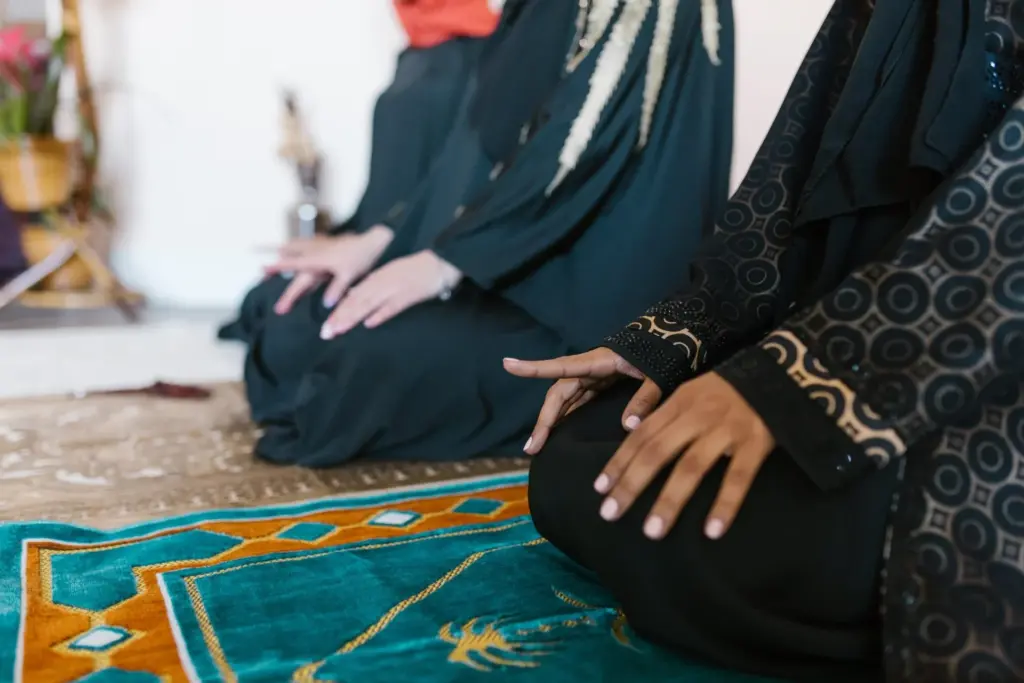
The Muslim Mamas community has long championed the creation of safe spaces designed to bring people together for shared learning, mutual growth, and meaningful dialogue. Through outreach initiatives spanning the broader community—partnering with larger agencies, charitable organizations, and civic institutions—the network aims to extend a welcoming hand to individuals outside of the Islamic faith. Organizers and community advocates firmly believe that widening perspectives through genuine cross-cultural engagement enriches society as a whole, fostering lasting connections and deepening understanding across diverse populations.
For those who have never stepped inside a mosque, the experience can occasionally feel unfamiliar or even a little daunting. However, community leaders emphasize that visitors can rest assured they will be met with profound hospitality. Serving as vibrant centers of worship, spiritual reflection, education, and community life for Muslims, mosques are also inclusive spaces traditionally open to people of all faiths, backgrounds, and walks of life. Understanding the basic etiquette, architectural diversity, and daily rhythms of these community hubs can transform a simple visit into a profoundly positive and respectful cultural exchange.
Diversity in Architecture and Purpose
The physical landscape of mosques across the United Kingdom is remarkably diverse. While some are purpose-built architectural landmarks featuring grand domes and minarets that mirror structures found throughout the Muslim world, others reflect adaptive reuse. Many mosques operate out of converted churches, former community centers, or residential houses, resulting in structures that may look less traditional and offer more modest facilities. In Arabic, the traditional word for a mosque is masjid, a term visitors will frequently hear used interchangeably with the English translation.
At a minimum, the majority of mosques remain open throughout the day to accommodate the five daily prayers mandated in Islam. Depending on available resources and staffing, smaller neighborhood mosques might restrict their operating hours primarily to morning or evening prayer sessions. Muslims turn toward Mecca five times daily to perform their prayers, and while individual prayer is permitted, communal worship at the mosque is strongly encouraged. This is particularly true for the midday prayer, and carries special significance during congregational midday prayers on Fridays.

Prayer spaces inside the mosque are traditionally segregated by gender. Nevertheless, structural limitations mean that some smaller mosques do not always feature a dedicated space for women. Because the faith obligates men to pray in congregation whenever possible, spaces for male worshippers are frequently prioritized. Conversely, while women are warmly welcomed to pray at the mosque, they retain the option to perform their daily prayers in any clean environment, including at home.
The weekly communal gathering takes place on Friday afternoons during the midday prayer and sermon, a service known as Jum’ah. Beyond strictly religious services, mosques function as vital community hubs. They frequently host Islamic and Quranic classes for children, adults, and individuals newly introduced to Islam. Furthermore, these institutions serve as venues for social gatherings, weddings, funerals, religious festivals such as Ramadan and Eid, and various community support services.
Leadership and Administration
Leadership within a mosque is typically centered around the Imam, who leads the prayers and delivers sermons. However, not every mosque employs a permanent, full-time Imam. Some institutions rely on visiting scholars or community members who step forward to lead prayers and teach from the Quran, the holy book of Islam. Day-to-day operations, building maintenance, and the administration of community services are frequently overseen by a board of trustees, administrative staff, and dedicated volunteers from the local congregation.
Appropriate Attire and Preparation
Visitors planning a trip to a mosque are advised to observe standard guidelines regarding modest dress. Both men and women should wear loose-fitting clothing that fully covers the arms and legs, avoiding shorts and sleeveless shirts. Female visitors should also bring a scarf with them. While not every mosque strictly enforces head-covering for non-Muslim visitors—particularly outside of designated prayer halls—carrying a scarf is viewed as a courteous sign of respect. For those who forget to bring one, most mosques maintain a supply of spare scarves at the entrance. Makeup is entirely acceptable, and children are generally not bound by strict dress codes.

Footwear is another important consideration. Visitors are required to remove their shoes before entering the carpeted prayer area, making it practical to wear clean socks or tights. Most mosques provide a dedicated shoe rack or cloakroom near the entrance where visitors can safely store their footwear and personal belongings before stepping inside.
Greetings and Social Etiquette
Mosque communities are overwhelmingly welcoming, and visitors are encouraged to shed any initial shyness. Congregants generally appreciate thoughtful questions and are happy to share knowledge, guidance, and historical context about their faith and traditions.
When greeting someone inside the mosque, visitors may use the traditional Islamic greeting, “Assalamu ’alaykum,” which translates to “peace be upon you.” Congregants typically take no offense at mispronunciations, usually responding with delight at the genuine effort made by a guest. A standard English greeting of hello and asking how someone is doing is equally well-received and never frowned upon.
Physical greetings follow traditional social protocols. Visitors may freely shake hands with individuals of the same gender. When greeting someone of a different gender, however, it is customary to follow the other person’s lead. While many individuals are comfortable shaking hands across genders, others prefer to avoid physical contact for religious reasons. In such cases, an appropriate and widely appreciated alternative is to place one’s right hand over the heart accompanied by a slight nod. This universal gesture of respect consistently elicits a warm response. Ultimately, perfection is not expected; as long as visitors act with genuine respect and observant care, their presence is more than welcome.
Navigating the Prayer Space

Upon arrival at the prayer hall, a host or congregant will typically guide visitors on where to remove and store their shoes. Guests are reminded to silence or turn off mobile phones before entering. Once inside the main prayer hall, maintaining a quiet demeanor is essential, and all conversations must cease during the service itself.
Visitors will observe that Muslims perform a ritual washing known as ablution before entering the prayer hall, cleaning their faces, arms, and feet in specially equipped washrooms. Guests, however, are never expected to perform ablution simply to enter and observe.
Unlike traditional churches or places of worship, prayer halls feature no pews or benches; instead, congregants sit directly on wall-to-wall carpets or rugs. A limited number of chairs may be available along the perimeter for elderly worshippers or individuals with physical disabilities. Men and women enter through separate doors and sit on different sides of the hall or, in some multi-story buildings, on separate levels. Depending on the specific architecture of the mosque, a partial or total physical barrier may divide the men’s and women’s sections.
Families visiting with young children will find that youngsters are generally permitted to remain with their parents regardless of gender. During communal prayers, congregants stand, bow, prostrate, and sit in precise unison. Observers are not expected to participate in the physical movements and may watch quietly from the sidelines. Because worshippers engaged in prayer are focused entirely on their devotion, they will not respond to conversation until the prayer cycle is complete. Questions are best saved for before or after the service.
Additionally, walking directly in front of someone who is actively praying is considered highly disrespectful. To prevent accidental disruption, hosts may seat visitors near the back of the hall, allowing them an unobstructed view of the service from a respectful distance.
Ultimately, entering a mosque offers an enriching opportunity to explore a vibrant religious and cultural tradition firsthand. Community organizers emphasize that visitors should feel encouraged to look past any anxieties about making mistakes, allowing themselves the chance to connect with individuals from different walks of life and discovering unexpected common ground along the way.