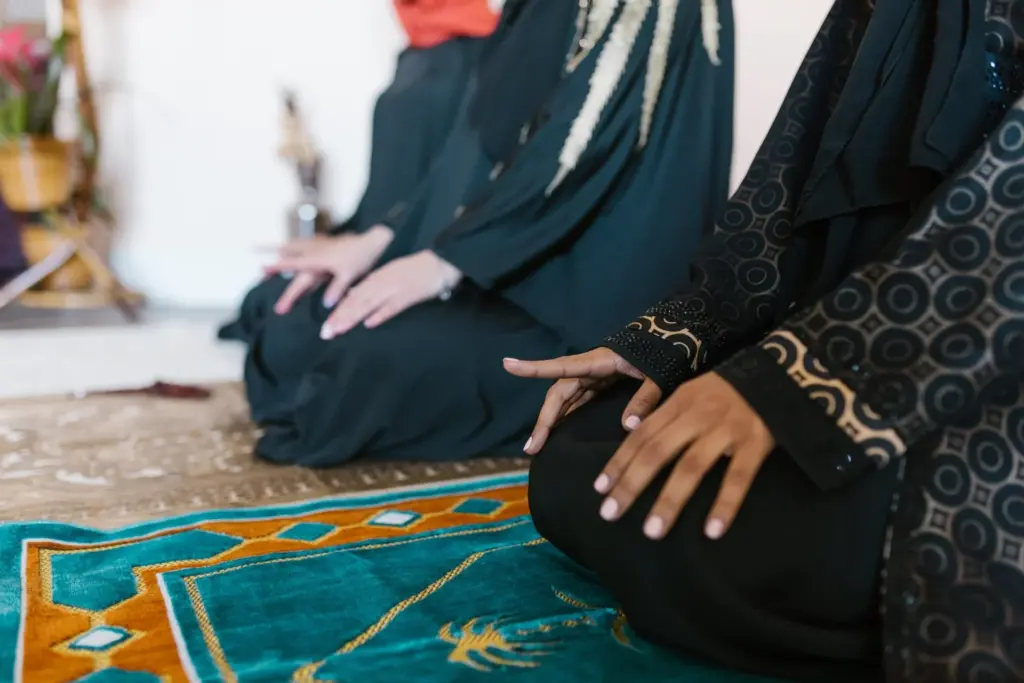
Building safe spaces where people can come together to share, learn, and grow alongside like-minded individuals forms the foundational mission of the Muslim Mamas community. Through ongoing collaboration with the wider community, larger agencies, charitable organizations, and civic groups, the organization seeks to extend that invitation far beyond the boundaries of the Muslim faith. Organizers and community advocates firmly believe that widening everyday perspectives offers profound richness, particularly when individuals make a conscious effort to understand neighbors and peers who come from different backgrounds. Fostering genuine human connection and meaningful interactions relies fundamentally on developing deep-seated mutual understanding between distinct communities.
Stepping inside a mosque as a non-Muslim visitor might initially feel unfamiliar or perhaps even a little daunting to those who have never experienced it before. However, community leaders and regular attendees consistently emphasize that visitors will be met with profound hospitality and warmth. At its core, a mosque serves as a dynamic place of worship, quiet reflection, education, and community gathering for Muslims, yet it simultaneously functions as an inclusive space open to individuals of all faiths, traditions, and cultural backgrounds.
Understanding the role of these institutions helps demystify the experience. Across the United Kingdom, mosques display a remarkable degree of architectural and structural diversity. Some are purpose-built grand structures featuring domes and minarets that mirror traditional designs found historically across various Muslim-majority nations. Others occupy converted Christian churches, former secular community centers, or even residential houses that may present a less traditional appearance from the outside and offer more modest facilities. Regardless of the exterior architecture, the Arabic word for a mosque is masjid, a term visitors will frequently hear used by community members.

Muslims traditionally perform ritual prayers five times a day, orienting themselves toward Mecca. While the mosque remains accessible for any and all of these individual prayer intervals, communal praying within the facility is strongly encouraged, particularly for the midday prayer, and carries special significance during the congregational midday prayers held every Friday. Inside the building, prayer spaces are typically segregated by gender to maintain modesty and focus during worship. However, architectural realities mean that some smaller mosques do not always possess a dedicated, permanent space specifically for women. Spaces for men are frequently prioritized due to specific religious requirements for men to pray in congregation whenever possible, whereas women, while equally welcomed to attend, retain the religious option to perform their prayers in any suitable environment.
Friday afternoon holds a special place in the weekly rhythm of Islamic practice, with Muslims frequently attending the mosque for the midday prayer and sermon, known collectively as the Jum’ah prayer. Beyond strictly devotional services, mosques function as vibrant community hubs. They frequently offer structured Islamic and Qur’an classes tailored for children, adults, and individuals who are completely new to Islam. Furthermore, these centers regularly host social gatherings, milestone life events such as weddings and funerals, major seasonal festivals surrounding Ramadan and Eid, and various educational outreach programs.
When it comes to the internal administration and leadership of the institution, the head of the mosque is traditionally the Imam, who leads prayers and delivers sermons. However, administrative structures vary widely; not every mosque employs a permanent, full-time Imam. Some facilities rely on visiting guest Imams, while others depend on dedicated members of the local mosque community to step forward as prayer leaders or to teach passages from the Muslim holy book, the Qur’an. Additionally, many mosques are overseen by a formal board of trustees, maintenance personnel, and active volunteers who ensure the daily operation of the building and its wide-ranging community services proceed smoothly.
Preparing for a visit involves paying attention to standard norms of modesty and etiquette that help ensure a comfortable experience for everyone present. Both men and women are expected to dress modestly, opting for loose-fitting clothing that effectively covers the arms and legs, thereby avoiding shorts or sleeveless garments regardless of gender. Female visitors are also advised to bring along a scarf. While not every mosque strictly mandates that female visitors cover their heads—particularly when remaining outside designated prayer halls—having a scarf ready serves as a universal sign of respect. For those who happen to forget, there is rarely any cause for concern, as most mosques maintain a supply of spare head coverings for guests. Wearing makeup is entirely acceptable, and children are generally permitted to dress comfortably in whatever they choose. Visitors should also wear clean socks or tights, as everyone is required to remove their footwear before entering the carpeted prayer areas. Most mosques provide a dedicated shoe rack or an entryway storage room where visitors can safely place their shoes and other personal belongings upon arrival.

Interacting with members of the congregation is typically an uplifting part of the experience, as most mosques cultivate welcoming environments where shyness quickly dissolves. Community members generally welcome polite questions and express genuine delight in sharing their knowledge, traditions, and spiritual guidance. To greet someone upon entering, visitors may use the traditional Islamic greeting “Assalamu ’alaykum,” which translates directly to “peace be upon you.” There is no need for anxiety regarding pronunciation, as locals appreciate the sincere effort. Alternatively, a standard, polite greeting of hello accompanied by an inquiry into someone’s well-being is always received with grace and kindness.
Social customs regarding physical greetings involve following the cues of the person you are meeting. It is culturally acceptable to shake hands with individuals of the same gender. However, when greeting someone of a different gender, visitors should observe and follow the other person’s lead. While some individuals are completely comfortable with a handshake, others prefer to avoid physical contact for religious reasons. In such instances, a widely accepted and respectful alternative is to place one’s right hand gently over the heart accompanied by a slight nod. This universal gesture conveys sincere respect and consistently brings a smile to those receiving it. Perfect adherence to every intricate custom is never expected; as long as visitors approach the environment with genuine respect, observation, and an open mind, their presence is more than sufficient.
Stepping into the main prayer space requires a few mindful adjustments. Upon arrival, a host will typically direct visitors where to remove and store their footwear. Mobile devices should be silenced or turned completely off before crossing the threshold. Once inside the prayer hall, visitors should refrain from holding loud conversations, and talking must cease entirely during the active prayer service.
Observant visitors will notice that Muslims perform an act of ritual washing, known as ablution, prior to entering the prayer hall. Many mosques feature specially equipped washing facilities where individuals cleanse their faces, hands, arms, and feet. As an outside visitor, performing ablution is never a requirement for entry.

Unlike conventional Western houses of worship, the prayer hall contains no pews, benches, or individual seats; instead, the vast floor is covered wall-to-wall with soft carpets or intricately patterned rugs. A limited number of chairs may be positioned near the edges to accommodate elderly attendees or those with physical disabilities. Distinct entrances are frequently designated for men and women, who occupy separate sections of the hall, which may be divided by a partial partition, a full barrier, or even located on different floor levels depending on the specific architecture of the building.
Families visiting with young children will find that youngsters are generally permitted to remain with their parents throughout the visit, regardless of gender. During communal prayers, the congregation moves in unison, standing, bowing, prostrating, and sitting together at precise intervals. Visitors are not expected to participate physically in these rituals and are welcome to remain standing or seated quietly to observe the proceedings. Because individuals engaged in prayer are entirely focused on their worship, they will not respond to conversation until the prayer cycle is fully completed; any questions are best saved for conversations held before or after the service. Furthermore, walking directly in front of someone who is actively praying is considered highly disrespectful in Islamic tradition, prompting hosts to seat observers near the back of the hall where they can watch the service without interrupting anyone’s devotion.
Ultimately, crossing the threshold of a mosque offers a rich, enlightening opportunity to explore a different culture and faith tradition firsthand. Organizers emphasize that anxiety over making a procedural mistake should never overshadow the chance to forge meaningful connections with people from different walks of life. Visitors frequently discover that they share far more commonalities with their Muslim neighbors than differences. By keeping these basic guidelines and etiquettes in mind, guests can ensure their visit is both deeply respectful and genuinely enjoyable. Emphasizing the enduring values of hospitality, inclusivity, and mutual understanding, mosques remain open to all who arrive with an open heart and a curious mind.