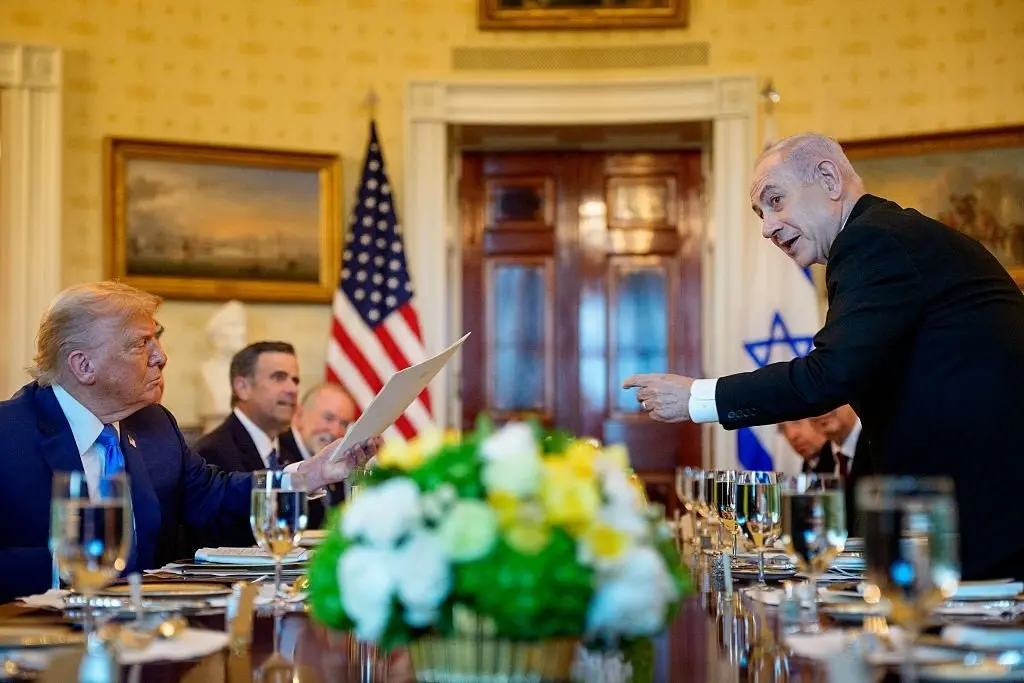
Looking closely at the political landscape confronting U.S. President Donald Trump in recent times, a compelling argument can be made that the moment has arrived to open fresh, critical debates on several interconnected issues defining modern American foreign and domestic policy. Among these, the profound and disruptive impact of the U.S.-Israel alliance stands out as a primary catalyst for the domestic challenges currently eroding the administration’s standing.
To understand the roots of this political vulnerability, one must examine the chain of events set in motion by Israeli Prime Minister Benjamin Netanyahu. If one asks what Israel’s most profound influence on President Trump has been, the answer often traces back to the initiation of a military campaign against Iran. In its natural, cascading course, that conflict served as a major shock to global markets, driving up the prices of oil, food, and agricultural fertilizer across the entire world. That economic wound remains unhealed, continuing to reverberate through the daily lives of consumers globally and, most critically, inside the United States.
It is a well-established political reality that when voters in the United States head to the polls, fuel prices are among the most decisive factors guiding their choices. The economic comfort of a gallon of gasoline once priced at a modest $2.80 has vanished, replaced by a steep climb to nearly $4.30 or $4.50—a severe price point to which the broader American public is entirely unaccustomed and deeply resentful. This inflationary pressure has directly translated into widespread consumer discontent, forming the bedrock of a growing economic fatigue.
In stark historical contrast, previous conflicts in the Middle East often rallied domestic backing during their initial phases. When the United States declared war on Iraq in earlier decades, approximately 63 percent of the American public stood firmly behind the administration during that Gulf War. Today, by comparison, President Trump has found himself unable to push public support for the ongoing confrontation involving Iran beyond a meager 30 to 35 percent. The appetite for protracted foreign military entanglement has vanished among a weary electorate.
Falling Polls
Meanwhile, with public backing for the conflict languishing at these historically low levels—compounded heavily by the overlapping crises in Gaza and the broader regional fallout involving Iran—President Trump’s presidential approval rating continues to tumble day by day. The relentless pressure of high interest rates, elevated food prices, and the punishing cost of fuel has left the American public facing an economic squeeze they increasingly blame on incumbent leadership.
According to research and tracking data conducted by virtually every major polling firm, Trump’s overall support has most recently dropped to around the 30 percent threshold. It is exceedingly rare in modern American history for a sitting president to find themselves trapped in such a politically precarious and troubled position. Furthermore, political analysts suggest that in the upcoming midterm or general elections, the shortfall in votes Trump is projected to suffer across both chambers of Congress—comprising both the Senate and the House of Representatives—could reduce his administration to a weakened, lame-duck status well before the conclusion of his term.
Parallel to these economic grievances, a sociopolitical narrative known widely across the country as the "Gaza effect" has continued to revive and preserve its potent vitality among the American public. This phenomenon has been particularly visible at the nation’s elite universities—institutions historically responsible for graduating the scholars, professionals, and future leaders who go on to govern the United States. Whichever prestigious campus dared to host demonstrations or protest Israel over allegations of genocide met with swift and drastic administrative and police reactions.
In scenes broadcast nationwide, police forces intervened forcefully, leading to the physical removal, beating, and arrest of academics and students alike. Concurrently, federal funding pressures were brought to bear on higher education institutions, while university presidents and senior administrators from esteemed establishments such as the Massachusetts Institute of Technology (MIT) and Harvard came under direct, intense government scrutiny and political pressure. Rather than suppressing dissent, these heavy-handed measures galvanized student movements and further alienated progressive and independent voters.
Secret Everybody Knew
The underlying tensions within the bilateral relationship have also been illuminated by the surprising candor of key administration figures. In fact, the specific political stance recently adopted by U.S. Vice President J.D. Vance regarding Israel made one underlying reality unmistakably clear. When Vance remarked to Israeli leadership that "you can’t just kill your way out of solving every single national security problem," and pointedly reminded them that Trump remains "the only head of state in the entire world who is sympathetic to the nation of Israel," he was essentially vocalizing a quiet truth that everyone in diplomatic circles already knew.
For throughout modern American history, Israel and the United States have frequently functioned almost as a single geopolitical entity. Time and again, successive sessions of Congress and entrenched Washington bureaucracy have prioritized Israel’s strategic interests well ahead of America’s own domestic and economic priorities.
Yet, if one observes the current state of U.S.-Israeli relations on the ground, a profound shift is underway. Across many regions of the United States—with New York standing out above all as a primary political barometer—viable anti-Israel candidates are beginning to emerge. Furthermore, socialist and left-leaning candidates, who historically have held very little mainstream influence or structural leverage in the American political system, are suddenly finding a receptive audience and genuine resonance within society simply by virtue of standing firmly against Israeli military actions and aligning with pro-Palestinian advocacy.
The United States appears to be hurtling toward a remarkably difficult political test. On one front, Israel is rapidly losing the goodwill and backing of the broader American public. On another, President Trump runs the genuine risk of losing crucial elections entirely because of the fallout generated by Netanyahu’s policies.
Iran’s Election Card
In a geopolitical sense, Iran has effectively played its own election card to indirectly pressure and weaken the United States from afar. Although Washington has maintained a crippling apparatus of major economic embargoes against Tehran, Iran has successfully positioned itself to hold out strategically until the American electoral cycle plays out.
President Trump has frequently maintained and declared his intention to launch a major military offensive or escalation against Iran after the conclusion of the elections. However, once those ballots are cast, the political reality within Washington may look entirely different. A newly constituted Senate and House of Representatives could very well step in to directly block such reckless military ventures, reflecting a public and legislative branch exhausted by foreign entanglements.
As elections unfold concurrently in both Israel and the United States, the international stage has reflected these shifting dynamics. At the United Nations, international news agencies and diplomatic observers captured a striking visual narrative: not only did they broadcast Prime Minister Netanyahu taking the podium to address the General Assembly, but they also transmitted live footage of delegates visibly walking out and the assembly hall emptying while he was still actively speaking.
In a symbolic sense, even elements of global political alignment appear to have grown weary of Netanyahu’s defiance. Through his uncompromising posture, the Israeli prime minister has inadvertently helped foster the perception of an Israeli public administration operating with unchecked aggression and disregard for international norms. In doing so, he has strained the traditional Western diplomatic paradigm and fundamentally damaged the once-sacrosanct relations between Washington and Tel Aviv.
To put the final perspective on this unfolding crisis, the political stakes could not be higher: President Trump faces the distinct possibility of losing crucial electoral support fundamentally because of Netanyahu and the ongoing trajectory of the Israeli conflict. This is not a political wound that can be easily patched over or compensated for by traditional campaign strategies. Thus far, the administration has seemingly struggled to formulate or execute a sound, balanced policy to insulate itself from these pressures, while Netanyahu continues to reject the diplomatic frameworks promoted by Washington in Gaza and presses forward with military campaigns. Trump now faces an exceptionally heavy political test, and time will tell whether his administration can manage to carry this immense burden through the crucible of the election.