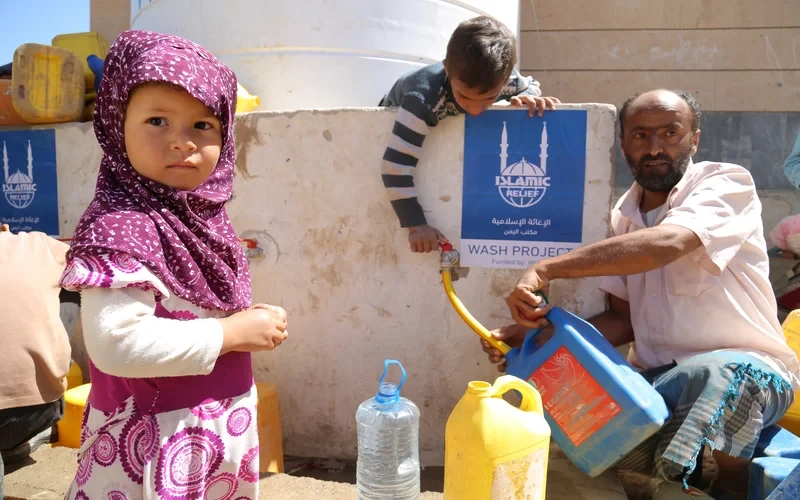
Thousands of families are fleeing a sharp and alarming military escalation in Yemen, triggering urgent calls from humanitarian agencies for immediate international intervention. Islamic Relief, one of the leading aid organizations operating in the war-torn country, has issued a grave warning that further military escalation threatens to unleash catastrophic humanitarian consequences. This deterioration comes in a nation where millions of people are already enduring extreme poverty, systemic economic collapse, and severe levels of malnutrition after years of devastating conflict.
According to aid workers on the ground from Islamic Relief, thousands of additional families are being displaced on a daily basis as airstrikes, intense artillery shelling, and heavy armed clashes sweep across key regions. Many of these families are forced to abandon their homes with virtually no preparation, fleeing into the open without adequate shelter, food, clean water, proper clothing, or any access to vital medical care. In response to the unfolding emergency, Islamic Relief is actively planning and mobilizing resources to provide life-saving aid to the newly displaced populations, though humanitarian access and resources remain severely constrained.
The latest wave of violence threatens to undo whatever fragile improvements have been achieved in Yemen since the implementation of the 2022 truce. For years, the conflict and accompanying economic crisis have generated one of the worst and most protracted humanitarian emergencies anywhere in the world. Currently, an estimated 22 million people—representing approximately two-thirds of the entire population of Yemen—rely entirely on some form of humanitarian assistance for their daily survival. The resurgence of heavy fighting places these vulnerable populations at renewed and heightened risk, threatening to plunge communities back into acute crisis.
Overstretched Essential Services and Looming Aid Cuts
Compounding the immediate dangers of the renewed military activity is the state of the country’s critical infrastructure. Essential public services, particularly healthcare networks and municipal water supply systems, are already severely overstretched and operating far beyond capacity. In recent months, these systems have faced additional immense pressure driven by global funding reductions and aid cuts, which have forced several critical facilities and programs to shut down entirely.
Without functioning hospitals, clean water facilities, and basic social services, communities absorbing the newly displaced families are finding themselves entirely unequipped to manage the influx. The convergence of active conflict, mass displacement, and collapsing infrastructure creates an environment where preventable diseases can spread rapidly and basic survival becomes an daily struggle for millions.
Islamic Relief emphasizes that the international community must take immediate, decisive action to prevent further military escalation. Without urgent diplomatic and financial intervention, millions of Yemenis risk being thrust back into a full-scale humanitarian catastrophe that could reverse years of careful stabilization efforts.
Scale of Displacement Strains Local Resources
While official reporting from the United Nations indicates that more than 80,000 people have already been displaced across the critical governorates of Taiz, Lahj, and Aden, local community estimates suggest that the actual number of displaced individuals may be significantly higher. The rapid pace of the displacement has overwhelmed initial reception capabilities, leaving local networks struggling to cope with the sheer volume of people in need.
Khanzad Shah, Islamic Relief’s acting head of programmes in Yemen, described the alarming reality unfolding on the ground as the situation continues to deteriorate by the hour.
"Thousands more families have fled their homes in the past 24 hours, and the number is rising every day," Shah said. "Many of them don’t have enough food or water as they had to flee with whatever they could carry. In some areas, whole villages have reportedly emptied."
Shah noted that the human cost of the renewed violence falls disproportionately on the most vulnerable segments of society, intensifying an already desperate situation.
"When the fighting escalates, it is always the poorest civilians who suffer most of all," Shah added. "The situation is increasingly desperate and people urgently need aid. The crisis in Yemen has been largely forgotten by the world, and this is a wake-up call that the people of Yemen are still suffering and the crisis could get even worse."
Urgent Calls for De-escalation and International Support
In response to the escalating emergency, Islamic Relief is issuing a direct and urgent appeal to all parties involved in the conflict. The organization is calling for an immediate de-escalation of military activities, strict adherence to international humanitarian law regarding the protection of civilians, and guaranteed safe and unhindered humanitarian access to all populations in need.
Furthermore, Islamic Relief is urging the broader international community to step up diplomatic efforts aimed at achieving a sustainable, long-term peace while simultaneously increasing funding for humanitarian operations in Yemen to meet the surging needs on the ground.
Islamic Relief has maintained a continuous operational presence in Yemen since 1998, delivering a diverse range of critical development and humanitarian projects. These initiatives include improving access to safe drinking water and sanitation facilities, strengthening sustainable livelihoods for vulnerable households, supporting orphaned children, and providing rapid emergency relief during times of acute crisis. The organization continues to coordinate its emergency response efforts closely with local partner organizations operating across the country.