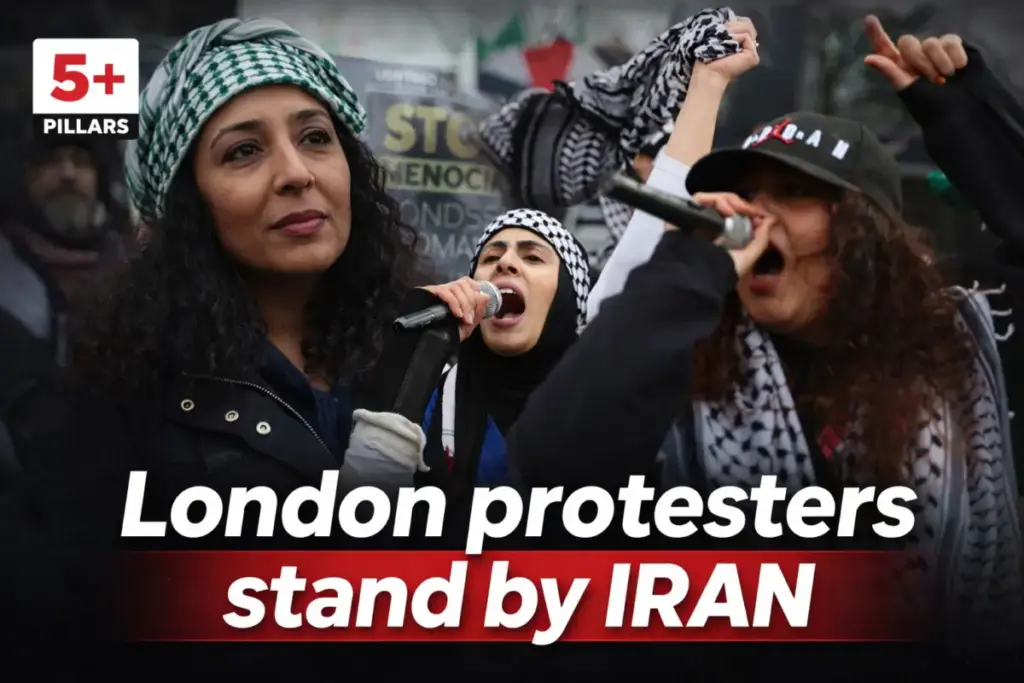
LONDON — Thousands of demonstrators converged on the streets of the British capital over the weekend, staging a massive mobilization to condemn the ongoing United States and Israeli military escalation against Iran. Waving a sea of banners, placards, and flags, activists marched through central London to voice their vehement opposition to what they termed a reckless and dangerous military campaign, while fiercely demanding that the British government refuse any involvement in the unfolding crisis.
The large-scale protest drew a diverse coalition of anti-war campaigners, human rights advocates, community organizers, and concerned citizens. Filling thoroughfares with chants calling for peace and de-escalation, the crowd made its primary objective clear: stopping what organizers described as an unprovoked and catastrophic march toward wider regional conflict. Protesters expressed grave concern that ongoing hostilities could spiral into an all-out war with devastating humanitarian, economic, and geopolitical consequences across the Middle East and beyond.

A central theme of the demonstration was direct criticism of Western foreign policy and political leadership. Activists prominently targeted the administration of US President Donald Trump, holding high signs that bluntly declared “Stop Trump’s wars.” Demonstrators argued that decades of aggressive American military interventions in the Middle East have consistently destabilized the region, resulting in immense human suffering, the displacement of millions, and the strengthening of radical elements. Speakers and placard messages asserted that a renewed military focus on Iran represents a continuation of failed policies that prioritize militarism and regime change over diplomacy and international law.
At the same time, the thousands-strong crowd trained its critical gaze closer to home, directing sharp messages toward British Prime Minister Keir Starmer and his administration. Placards reading “Tell Starmer: Stop arming Israel” highlighted public discontent regarding the United Kingdom’s diplomatic and military posture. Protesters demanded an immediate halt to British arms sales and military intelligence sharing that they argue facilitates ongoing military operations by Israel across the region. Activists emphasized that the UK has a moral and legal obligation to refrain from supporting actions that violate international norms and exacerbate regional bloodshed, insisting that London should instead act as an independent voice for peace rather than an uncritical accomplice to Washington and Tel Aviv.
The visual landscape of the march reflected a broad intersection of solidarity. Alongside traditional anti-war symbols and banners from organizations such as the Campaign for Nuclear Disarmament and the Stop the War Coalition, participants carried numerous Iranian and Palestinian flags. This display underscored a shared perspective among the demonstrators—that the struggles against military intervention in Iran, the ongoing humanitarian catastrophe in Gaza, and broader Western militarism in the Middle East are fundamentally interconnected.

Placards addressing broader geopolitical issues also stood out among the crowd. Several demonstrators carried signs demanding an “End to nuclear hypocrisy,” drawing attention to the double standards they perceive in Western policies regarding nuclear proliferation and military capabilities in the Middle East. Others carried straightforward appeals such as “Stop bombing Iran,” reflecting deep anxiety over reports of targeted strikes, sabotage operations, and covert warfare that threaten to ignite a broader conventional conflict.
The atmosphere throughout the march remained charged with urgency and defiance. Marshals guided the orderly procession past prominent landmarks, while speakers addressed the gathering through amplification systems, detailing the immediate dangers posed by the current trajectory of Western foreign policy. Speaker after speaker urged the government in Westminster to listen to public opinion, which polls consistently suggest leans heavily against British involvement in foreign military adventures.
As the demonstration concluded, organizers vowed to continue their mobilization efforts, promising further rallies, community meetings, and lobbying campaigns if British authorities move closer to supporting or participating in military actions against Iran. For the thousands who marched through London, the message to political leaders was unmistakable: the public rejects a new cycle of war, and any entanglement in US-Israeli military strategies will face fierce, sustained resistance at home.