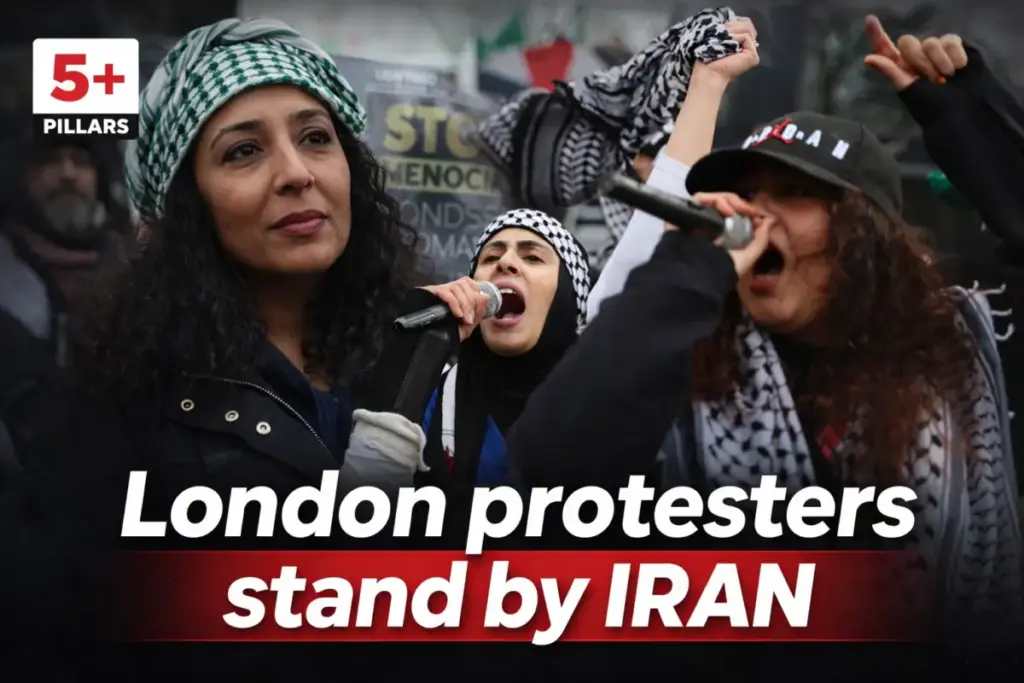
Thousands of demonstrators took to the streets of London in a powerful display of solidarity with Iran, marching through the heart of the British capital to strongly condemn the escalating military aggression orchestrated by the United States and Israel. Amid heightening geopolitical tensions in the Middle East, the mass mobilization brought together a diverse coalition of peace activists, community organizers, and concerned citizens who united under a common banner to voice their opposition to a wider regional conflict.
The protesters gathered to demand that the United Kingdom maintain a strict policy of non-involvement, warning British political leaders against being dragged into what organizers and speakers characterized as a reckless and perilous military campaign. Chants echoed across the London streets as demonstrators called for an immediate halt to hostilities, criticizing Western foreign policy decisions that they argue continue to destabilize the Middle East and push the international community toward unprecedented danger.

A sea of flags, banners, and placards dominated the demonstration, reflecting a broad spectrum of anti-war and human rights grievances. Activists proudly waved Palestinian and Iranian flags alongside brightly colored signs bearing direct political demands. Prominent slogans inscribed on the placards included "Stop Trump’s wars," "Tell Starmer: stop arming Israel," "End nuclear hypocrisy," and "Stop bombing Iran." The messaging explicitly targeted both the historical and contemporary foreign policies of Western administrations, drawing direct lines between the ongoing crisis in Gaza, regional military escalations, and the renewed threats directed at Tehran.
The march through London comes at a time of acute international anxiety regarding the trajectory of military actions involving the United States, Israel, and Iran. Over recent months, the Middle East has witnessed a dangerous spiral of retaliatory strikes, diplomatic standoffs, and military build-ups, sparking intense alarm among global peace movements. Demonstrators in London emphasized that ordinary citizens bear the brunt of geopolitical conflicts, arguing that further escalation could trigger a devastating global catastrophe.
Speakers addressing the crowds focused heavily on the responsibilities of the British government under Prime Minister Keir Starmer. Activists directed sharp criticism at Downing Street, demanding transparency and accountability regarding UK military intelligence sharing, logistical support, and arms exports. The demand to stop arming Israel was a central focal point of the speeches and banners, with protesters arguing that British complicity in ongoing military campaigns makes the UK government an active participant in regional suffering.

Furthermore, demonstrators raised serious concerns regarding what they termed "nuclear hypocrisy" in international diplomacy. Protest organizers pointed to the double standards applied by Western powers concerning nuclear capabilities in the Middle East, arguing that aggressive postures toward Iran ignore broader regional realities and diplomatic pathways to peace. Instead of confrontation, the crowds called for de-escalation, adherence to international law, and a renewed commitment to diplomatic resolutions that respect the sovereignty and self-determination of nations across the region.
The mobilization in London reflects a growing wave of public dissent across Western nations, where anti-war coalitions are increasingly organizing to challenge official government narratives on foreign interventions. Organizers of the London march pledged to continue their grassroots mobilization, promising further demonstrations, public forums, and advocacy campaigns until British foreign policy shifts away from military alignment with Washington and Tel Aviv. As the situation on the ground in the Middle East remains volatile, the powerful turnout in the British capital serves as a stark reminder of the deep domestic opposition facing any potential expansion of the conflict.