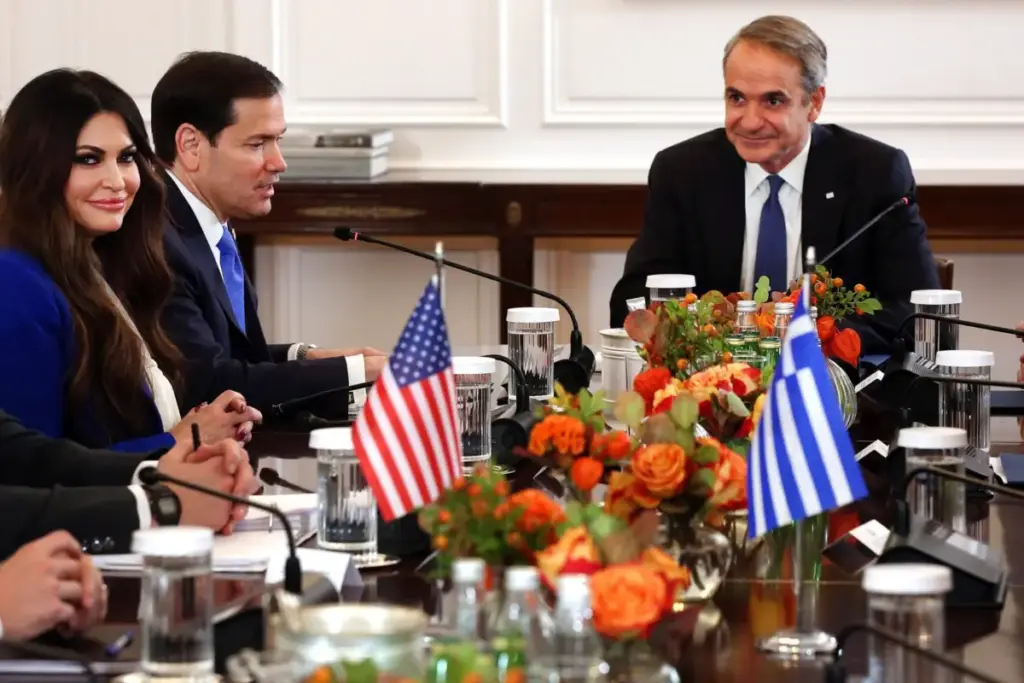
ATHENS — In a significant move underlining their enduring partnership as NATO allies, the United States and Greece announced a substantial $4 billion package in Foreign Military Sales on Wednesday, designed to support Athens in achieving its long-term defense modernization goals.
The announcement followed high-level diplomatic meetings in the Greek capital, where U.S. Secretary of State Marco Rubio and Greek Foreign Minister George Gerapetritis presided over the sixth installment of the U.S.-Greece Strategic Dialogue. The comprehensive talks culminated in a joint statement released by the U.S. State Department, detailing a broad expansion of bilateral security, economic, and technological cooperation between Washington and Athens.
According to the joint statement, the newly finalized military sales are structured not only to bolster Greece’s national defense capabilities over the long term, but also to significantly deepen tactical and operational interoperability between the armed forces of the two nations. As part of this defense alignment, the allied governments confirmed they would explore expanded cooperation between their respective defense industrial bases, placing particular emphasis on research, development, and integration of innovative military technologies.
A key component of the defense modernization package involves enhancing ground-to-ground capabilities and mobility through the provision of advanced Stryker armored vehicles to the Hellenic Armed Forces. Furthermore, the strategic meeting formalized Greece’s integration into the U.S. National Guard Bureau’s State Partnership Program, specifically pairing the country with the state of Florida. This program is widely recognized for fostering deep, enduring people-to-people and institutional ties between U.S. state military units and partner nations through military-to-military engagements, exchanges, and joint training exercises.
Beyond traditional military procurement and defense planning, the two delegations used the Strategic Dialogue to address a wide array of regional and transnational security challenges. Washington and Athens formally agreed to broaden their existing cooperation in law enforcement and counterterrorism operations. In addition, both sides reiterated their shared commitment to tackling the complex challenges posed by irregular migration across the Mediterranean and European border regions, emphasizing the need for coordinated border management and regional stability.
Economic ties also occupied a prominent place on the agenda during the talks in Athens. The governments pledged to actively strengthen bilateral trade and foreign investment. To safeguard these economic channels, the two sides agreed to cooperate closely on investment screening mechanisms and the rigorous protection of critical infrastructure procurement against potential economic or security vulnerabilities.
The technological dimension of the partnership received considerable attention, with Rubio and Gerapetritis highlighting ongoing and future cooperation in high-performance computing, cybersecurity, and a variety of advanced emerging technologies. In the energy sector, the discussions focused heavily on reinforcing strategic ties through major regional infrastructure initiatives, most notably the Vertical Gas Corridor, alongside ongoing cooperative efforts regarding hydrocarbon exploration in the Eastern Mediterranean.
Concluding their extensive diplomatic engagement, the two governments also moved to safeguard their shared heritage by extending their bilateral Cultural Property Agreement. This renewed accord is designed to protect cultural treasures and enhance joint efforts to combat illicit trafficking networks that target historical antiquities.