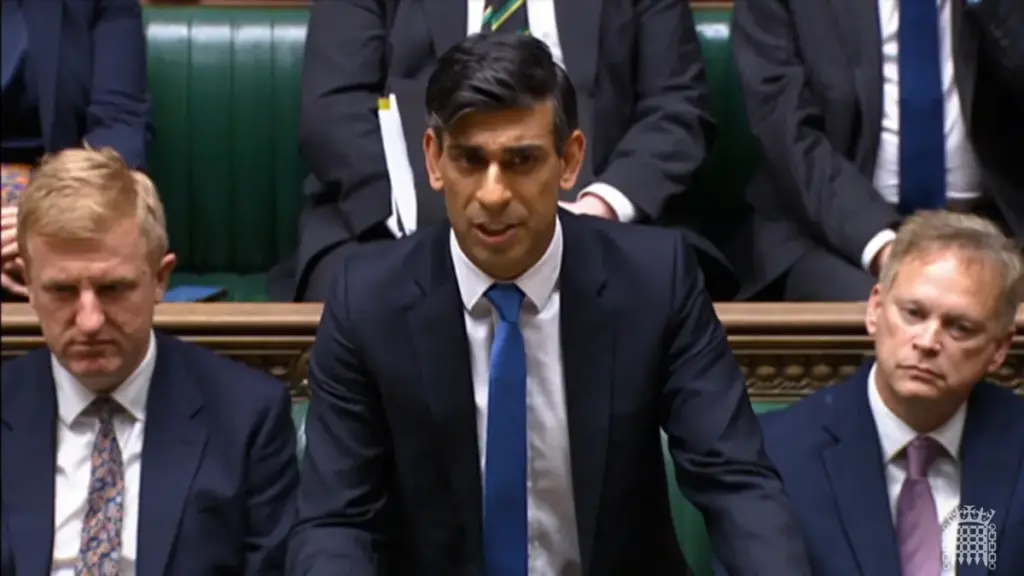
During a major policy statement addressing both international security and domestic order, the British Prime Minister explicitly rejected any correlation between the escalating maritime security crisis in the Red Sea and the ongoing military conflict between Israel and Hamas in the Gaza Strip. By severing this geopolitical link, Sunak’s administration is pushing back against arguments advanced by various regional actors and domestic critics who maintain that the Houthi attacks on commercial shipping are a direct response to the humanitarian catastrophe unfolding in the besieged Palestinian enclave.
Alongside his rejection of the causal link between the two conflicts, Sunak announced a strict "zero tolerance" posture from the British government toward any individuals or groups within the UK who express support for, or seek to justify, Houthi military operations. The Prime Minister emphasized that public glorification or endorsement of these hostile actions against international shipping lanes crosses a clear legal and moral boundary, shifting from political expression into the realm of domestic security and the backing of violent extremism.
The firm declarations from Downing Street come amid a rapidly intensifying international naval standoff in the Red Sea, one of the world’s most vital maritime trade corridors. Over recent weeks, Yemen’s Houthi movement has launched a series of drone and missile attacks targeting commercial vessels navigating the Bab el-Mandeb strait and surrounding waters. These disruptions have forced major global shipping lines to reroute their vessels around the southern tip of Africa, significantly extending transit times and driving up international shipping costs, supply chain pressures, and energy prices.

From the perspective of the Houthi leadership in Yemen, the maritime campaign is framed as a targeted response to the humanitarian crisis in Gaza. The group has repeatedly and publicly demanded that the ongoing military operations and blockades in Gaza must cease completely. Furthermore, the movement has insisted that adequate provisions of food, essential medicines, and vital fuel supplies must be permitted to reach the besieged civilian population of the Gaza Strip before they will agree to halt their attacks on cargo ships and tankers that they assert are linked to Israel or operating on behalf of Israeli interests.
This rationale, however, has been categorically rejected by the United Kingdom, the United States, and several of their international allies. Western governments maintain that the Houthi attacks constitute illegal acts of piracy and aggression against freedom of navigation, impacting international vessels flagged to numerous nations that have no direct involvement in the Gaza conflict. In response to the persistent threat, the UK and the US have previously authorized and executed precision military strikes against Houthi military infrastructure inside Yemen, aiming to degrade the group’s capability to target international shipping lanes.
The domestic dimension of Sunak’s announcement underscores growing anxiety within British security circles regarding how international conflicts can polarize domestic populations and potentially inspire radicalization or public disorder. By framing domestic expressions of support for the Houthis as a manifestation of terrorism, the government is signaling to law enforcement and intelligence agencies that public rallies, social media activity, and local activism endorsing the Yemeni group will be scrutinized under heightened legal frameworks. Civil liberties organizations and political critics are likely to monitor these measures closely to ensure that freedom of speech and legitimate political dissent regarding foreign policy remain protected, even as the government draws a sharp line against the glorification of armed militant groups.
As the situation in the Middle East continues to reverberate across global supply chains and domestic political landscapes in Western capitals, the British government’s dual-track approach—combining military deterrence abroad with a zero-tolerance domestic policy—highlights the profound challenges leaders face in managing the domestic fallout of distant foreign wars.