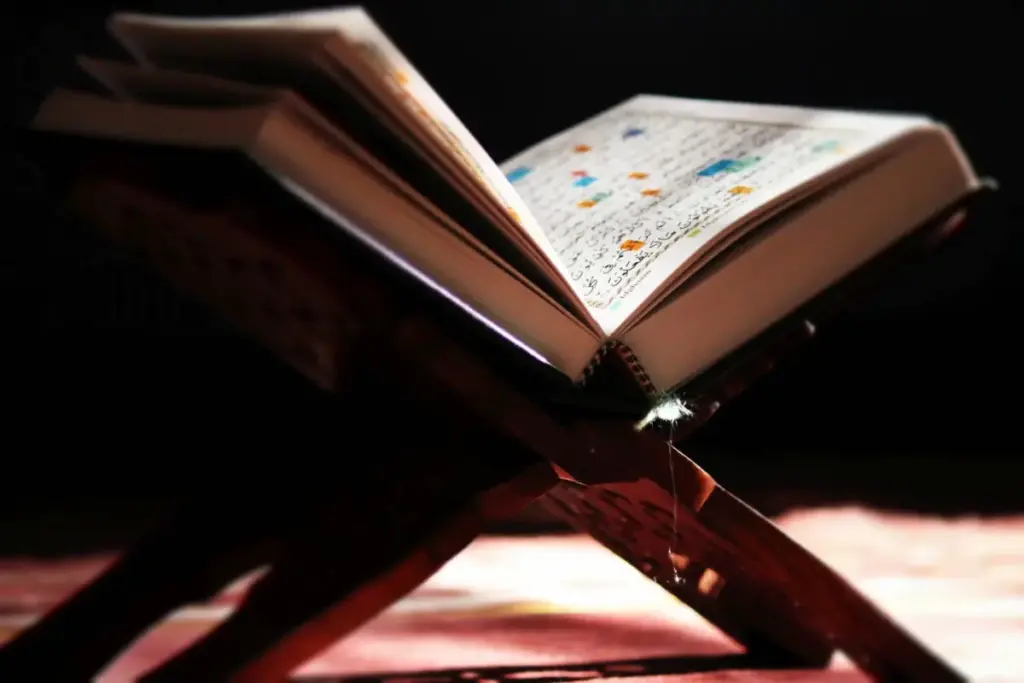
In the latest installment of the "Eternal Challenge" video series, prominent Islamic scholar Sheikh Sohaib Saeed tackles one of the most enduring historical and theological questions surrounding Islam: Who taught Prophet Muhammad the Quran? Through rigorous scholarly analysis, Sheikh Saeed addresses and refutes long-standing allegations claiming that the final Prophet of Islam was instructed by human clergymen or that he merely compiled and quoted from previous Abrahamic scriptures.
The episode, which forms part of a broader exploration into the divine nature and linguistic supremacy of the Quran, dives deep into the historical context of seventh-century Arabia. During this era, critics of Prophet Muhammad frequently sought external explanations for the sudden emergence of the Quran, a text that fundamentally reshaped the theological, social, and political landscape of the Middle East. Among these early claims were accusations that the Prophet learned the narratives, laws, and spiritual insights contained within the Quran from Christian monks, Jewish rabbis, or foreign travelers.

Sheikh Saeed systematically dismantles these assertions, pointing out the chronological, geographical, and cultural discrepancies that render such human instruction impossible. He emphasizes that the Prophet Muhammad was famously known among his contemporaries as Ummi—an unlettered individual who neither read nor wrote conventional texts. To suggest that an unlettered man in the isolated desert environment of Mecca possessed access to deep theological libraries, esoteric biblical commentaries, and sophisticated historical records directly contradicts the historical consensus regarding his background and early life.
Furthermore, the discussion in the "Eternal Challenge" series extends beyond the refutation of human authorship to examine the internal evidence of the Quran itself, with a particular focus on the profound significance of prophecy. In theological and historical terms, a true prophecy is defined as precise, foretold news concerning future events that lies completely outside the realm of educated guesses, logical forecasts, or wise political calculations. Sheikh Saeed highlights that predictive prophecy serves as one of the most vital empirical and spiritual proofs for the truthfulness of prophets throughout history.

Unlike general predictions that rely on observable trends, the prophecies found within the Quran detailed specific future geopolitical events, such as the eventual victory of the Byzantine Empire over the Persians after the Romans had suffered a devastating defeat. These precise timelines and outcomes were articulated at a time when such a reversal of fortunes seemed practically impossible to contemporary observers. According to the analysis presented in the series, these accurate foretellings reinforce the premise that the source of the Quran transcends human intellect and temporal limitations.
The ongoing "Eternal Challenge" series continues to attract significant viewership and academic interest, offering structured intellectual responses to modern and classical skepticism regarding the Islamic faith. Previous episodes in Sheikh Sohaib Saeed’s comprehensive media project have explored fundamental questions such as the precise definition of the Quran, the relationship between the Prophet and the divine book, and the impossibility of human fabrication. By engaging with these complex themes, the series aims to provide viewers with a nuanced understanding of Islamic theology, scripture, and historical verification.

As discussions surrounding the origins of religious texts remain a staple of interfaith dialogue and academic research, presentations like Sheikh Saeed’s offer a detailed look into the traditional Islamic perspective on revelation. Through careful examination of historical context, literary style, and predictive elements within the text, the "Eternal Challenge" series maintains its focus on establishing the Quran’s unique status in world literature and religious history.