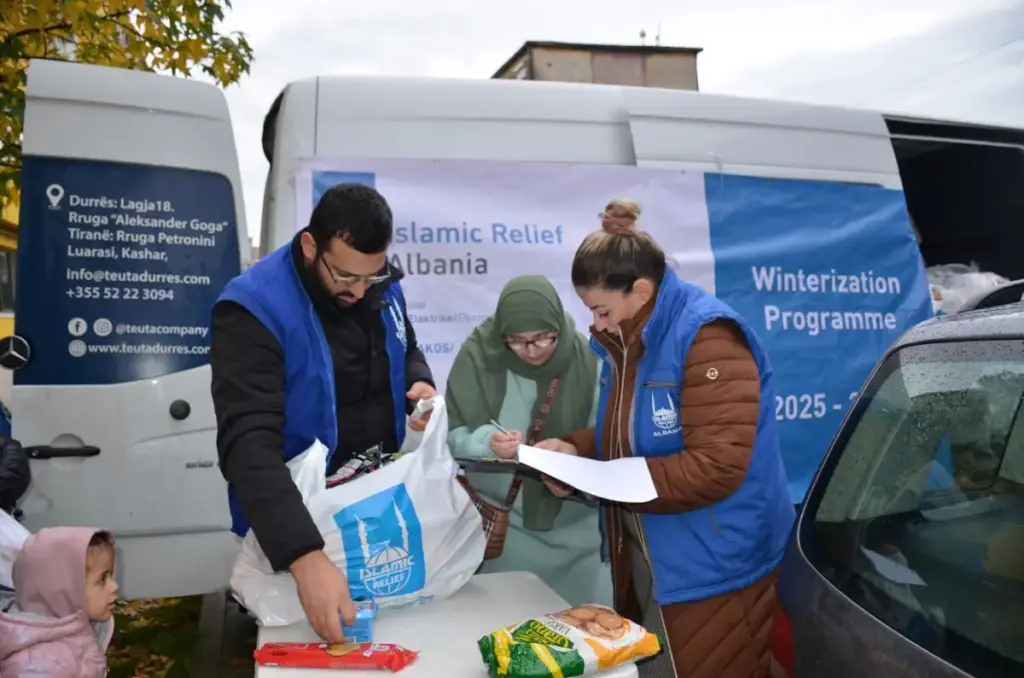
As winter descends with its harshest elements across regions ill-equipped for freezing temperatures, vulnerable families are routinely forced into agonizing, impossible choices. Across the Middle East, Eastern Europe, and Asia, skyrocketing costs for food and basic energy leave millions of impoverished households stranded between heating their homes or feeding their children. For widows, orphans, and marginalized communities living in fragile shelters, the winter season represents a prolonged battle for survival against biting cold, seasonal illness, and economic destitution.
Amid these compounding crises, international humanitarian efforts led by organizations like Islamic Relief continue to offer a vital lifeline. Through comprehensive winterization programs providing everything from fuel and blankets to life-saving financial assistance, humanitarian workers are stepping in to restore dignity, health, and warmth to households on the brink.
The Grinding Reality of Winter in Displacement Camps
In an expansive displacement camp in East Mosul, Iraq, the daily struggle against the elements is unrelenting. Umm Khaled, a widow who has suffered profound losses, including much of her immediate family during years of conflict, now bears the solitary responsibility of raising her orphaned granddaughter. Living within the stark confines of a fabric tent that lacks both electricity and fundamental infrastructure, Umm Khaled faces the brunt of dropping seasonal temperatures with profound anxiety.
"I pray to Allah that the winter ends soon; we suffer the most severe types of oppression and pain because of these harsh, cold days," she shares, capturing the immense psychological and physical toll that freezing weather extracts from displaced populations.
In regions like East Mosul, homes and shelters are structurally designed to endure scorching summer heat rather than insulated against severe winter storms and sub-zero night temperatures. Without reliable access to electricity or municipal heating grids, families living in camps are completely exposed to brutal winds and rain.
However, targeted interventions have begun to alleviate some of this acute suffering. Islamic Relief has maintained a consistent presence in Umm Khaled’s camp, distributing essential relief items designed to counter the bitter environment. Over the course of several months, humanitarian teams have provided the family with vital supplies, including sturdy foam mattresses, heavy blankets, and a functional kerosene heater.
Reflecting on the profound impact of these provisions, Umm Khaled expresses immense relief and gratitude. "Islamic Relief has been providing us with relief baskets for several months, as well as foam mattresses and blankets. You are the ones helping us. Thanks be to God, after you provided us with heating materials, my daily suffering has greatly eased, and the heater now works all day."
Families in Need Are Being Forced to Choose Food or Fuel
The crisis of winter poverty extends far beyond formal displacement camps, reaching deep into vulnerable communities across Eastern Europe. In Albania, widowed mother Jetmira faces a grueling daily reality as she struggles to provide for her household. Relying on a combination of modest financial support from Islamic Relief alongside the meager pensions of her mother and aunt, Jetmira navigates an economic landscape dominated by soaring inflation and rising food prices.
With much of the family’s limited income swallowed up by expensive living costs and mounting medical bills, nutritious food is frequently treated as a luxury they cannot afford. The financial strain is heavily concentrated around the health needs of Jetmira’s 4-year-old daughter, Ajsla, whose fragile condition demands continuous medical attention.
"I think malnutrition has affected Ajsla’s weak immunity. Almost every month I take her to hospital with various viruses. All Islamic Relief sponsorship has been used only for her medication," Jetmira explains.
While Jetmira attempts to supplement their income by taking on odd jobs during the milder spring and summer seasons, winter remains the most difficult and perilous period of the year. The compounding pressures of cold weather, seasonal sickness, and the astronomical cost of heating fuel push the family to their absolute limits, forcing a constant triage between essential nutritional needs and medical care.
Despite these overwhelming hardships, the human impact of humanitarian intervention transcends material aid. For Jetmira, the support offered by charitable networks carries a deeply emotional and psychological dimension.
"It’s not just in-kind practical help, it’s more, it’s spiritual, psychological, and emotional healing," Jetmira reflects. "Alhamdulillah, thanks go to Allah SWT, the charitable donors, and you. I remember the day you came to my house; it was not long after my husband had passed away. I am infinitely grateful that you came in and stood like sunshine for us, warming our hearts and homes on our coldest days."
Give Warmth, Save Lives
The experiences of Umm Khaled in Iraq and Jetmira in Albania mirror the broader vulnerabilities faced by communities across the Middle East and Asia. In these geographical zones, residential architecture is predominantly engineered to cope with blistering summer conditions, leaving populations dangerously exposed when brutal storms, heavy snowfalls, and freezing blizzards strike.
To address these seasonal emergencies, humanitarian organizations mobilize large-scale operations designed to preposition supplies and deliver rapid assistance before severe weather peaks. The operational scope of these relief efforts is substantial. During the 2025/26 winter cycle, Islamic Relief successfully delivered essential winterization aid to more than 89,322 individuals spread across 19 countries, helping vulnerable populations withstand life-threatening conditions. Furthermore, in 2025, a dedicated winter food drive was strategically timed to coincide with the holy month of Ramadan, resulting in the distribution of 7,300 food packs that reached over 21,000 people in urgent need of nutritional support.
Building upon these achievements, the organization has set an even broader target for the 2026/27 winter season, aiming to assist 142,402 people who continue to face harsh and unyielding winter environments.
The comprehensive annual Winterisation Programme serves as a cornerstone of these efforts, delivering a multi-layered package of survival goods. These include thermal blankets, vital heating materials such as fuel, firewood, wood stoves, and olive pomace, alongside warm clothing distributions and emergency food rations.
In addition to traditional in-kind distributions, humanitarian agencies are increasingly utilizing cash assistance programs. Providing direct financial support has proven to be an exceptionally effective tool, granting families the autonomy and flexibility to purchase precisely what they need most, whether that means clearing local utility and heating bills or buying specific provisions tailored to their household’s immediate health and nutritional requirements.
As temperatures continue to plunge across fragile regions, the continuity of these life-saving programs remains entirely dependent on sustained public generosity and ongoing charitable contributions. By shielding marginalized families from the bitter cold, donors around the world directly contribute to preserving health, dignity, and human life through the most dangerous months of the year.