The question of who taught Prophet Muhammad the Quran remains one of the most central topics in discussions regarding Islamic theology, historical analysis, and comparative religion. In a compelling episode of the acclaimed video series The Eternal Challenge, prominent scholar Sheikh Sohaib Saeed tackles this profound question head-on, offering a detailed and analytical response to long-standing historical allegations and theological misconceptions.

Addressing viewers from a rigorous academic and spiritual standpoint, Sheikh Saeed directly refutes claims often raised by critics—namely, the assertions that various religious clergymen secretly instructed the Prophet Muhammad or that he merely compiled and quoted passages from previous Abrahamic scriptures. Through the ongoing series, which dives deep into the linguistic, historical, and spiritual dimensions of Islam’s holy text, the scholar provides context to the environment of 7th-century Arabia and the unique nature of the revelation received by the Prophet.
At the core of the discussion is the meticulous examination of how the Quran was transmitted and its distinct stylistic and theological independence from any contemporary human sources. Sheikh Saeed breaks down the common skepticism surrounding the origins of the text, explaining that the historical record of pre-Islamic Arabia, combined with the illiterate status of the Prophet Muhammad as traditionally understood in Islamic scholarship, firmly contradicts the theory of human tutelage. The episode contextualizes these debates to help audiences understand the intellectual and spiritual atmosphere in which Islam emerged.

Beyond addressing the allegations of human authorship or external instruction, the episode shifts its analytical focus toward a remarkable and often debated feature of the Quranic text: its inclusion of explicit prophecies. In the framework presented by the series, a true prophecy is defined carefully as foretold news concerning future events that lies completely outside the realm of an educated guess, a lucky gamble, or a wise psychological prediction.
Sheikh Saeed emphasizes that prophecy serves as one of the most vital empirical and spiritual proofs for evaluating the truthfulness of prophets throughout history. Within the context of the Quran, these foretold events—ranging from geopolitical shifts of neighboring empires to specific future milestones within the early Muslim community—unfolded precisely as described, adding another layer to the discourse on the divine origin of the scripture. The program illustrates how these predictive elements challenge external critics to account for their accuracy outside of a framework of divine revelation.

The ongoing Eternal Challenge series continues to serve as a comprehensive resource for students of Islamic studies, researchers, and general audiences seeking deep scholarly engagement with the Quran. Across multiple installments, Sheikh Sohaib Saeed has systematically addressed various facets of the scripture’s unmatched eloquence, its historical preservation, and the impossibility of human imitation.
Previous episodes in the series have laid foundational groundwork for these discussions. In earlier segments, such as The Eternal Challenge: What is the Quran?, viewers are introduced to the fundamental thesis of the series, exploring what makes the text distinct in world literature and religious history. Subsequent episodes, including Eternal Challenge: Prophet and Book of Allah and installments examining whether the Prophet Muhammad could have authored the text, further dismantle reductionist theories about the origins of Islam.
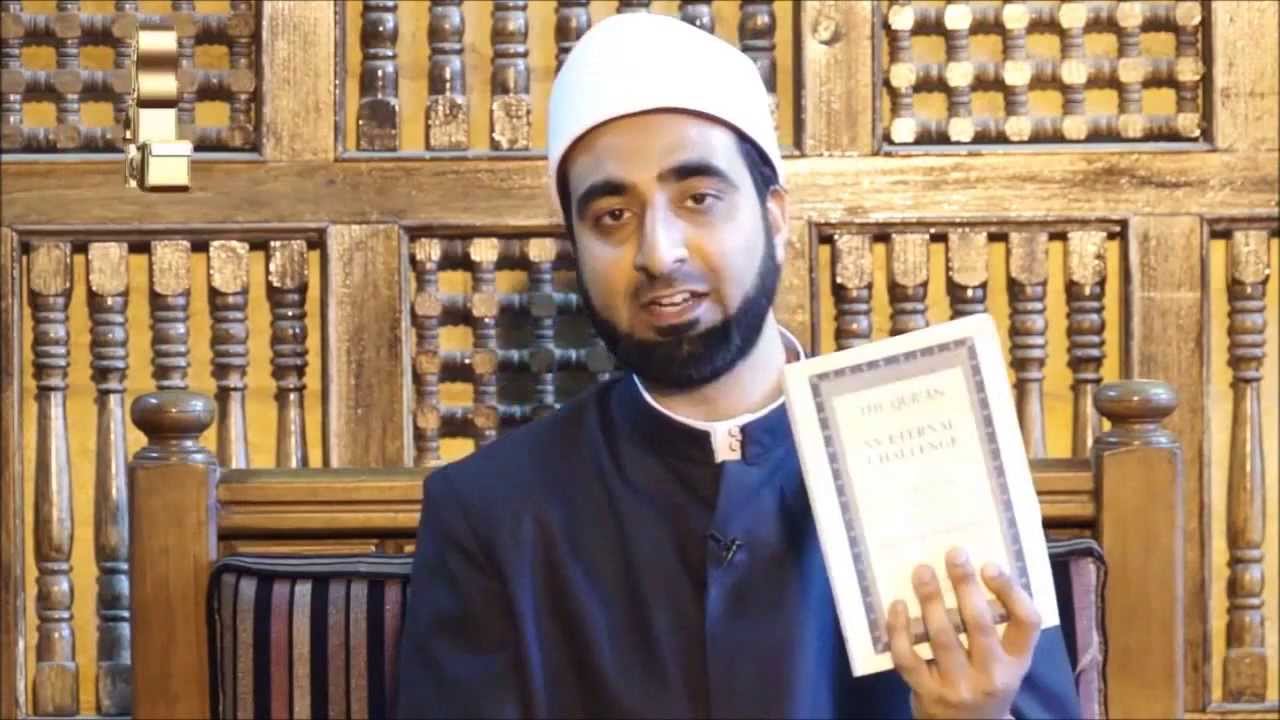
As captured in discussions like the assertion that "The Prophet Didn’t Make the Quran—Rather, the Quran Made Him," the series consistently argues that the profound personal transformation of Prophet Muhammad and the structural integrity of the early Muslim community were products of the divine text shaping its recipients, rather than the Prophet engineering the scripture to suit personal or political ambitions.
Through these deep dives, Sheikh Sohaib Saeed bridges classical Islamic scholarship with contemporary discourse, ensuring that complex theological concepts remain accessible and thoroughly examined for modern audiences navigating questions of faith, history, and scripture.