The origins of the Holy Quran and the profound manner in which it was revealed to Prophet Muhammad have long been subjects of deep theological study, historical inquiry, and spiritual reflection. In a compelling new installment of the acclaimed video series The Eternal Challenge, prominent scholar Sheikh Sohaib Saeed tackles one of the most fundamental questions surrounding the Islamic faith: Who actually taught Prophet Muhammad the Quran?

The episode, released by the platform and hosted on digital channels, addresses long-standing allegations and historical misconceptions regarding the source of the Quranic text. Specifically, Sheikh Saeed sets out to thoroughly refute claims advanced by various critics over the centuries—suggestions that the Prophet may have been tutored by human clergymen of other faiths, or that he merely compiled and quoted material from earlier religious scriptures. Through careful academic analysis and contextual reasoning, the series demonstrates how such claims fail to align with both historical realities and the internal evidence of the text itself.

Central to the discussion is an examination of the nature of prophecy within the Quran, particularly the presence of specific prophecies embedded throughout its verses. In scholarly and theological terms, a true prophecy is defined as foretold news concerning future events that are entirely beyond human calculation, foresight, or speculation. Sheikh Saeed emphasizes that genuine prophecy is distinctly different from an educated guess, a wise conjecture, or a socio-political prediction based on current trends. Instead, it serves as a critical, objective proof for evaluating the truthfulness and authenticity of prophets throughout history. By highlighting these predictive elements, the episode invites viewers to examine the Quran not just as a moral or legal code, but as a text bearing transcendent markers of divine origin.
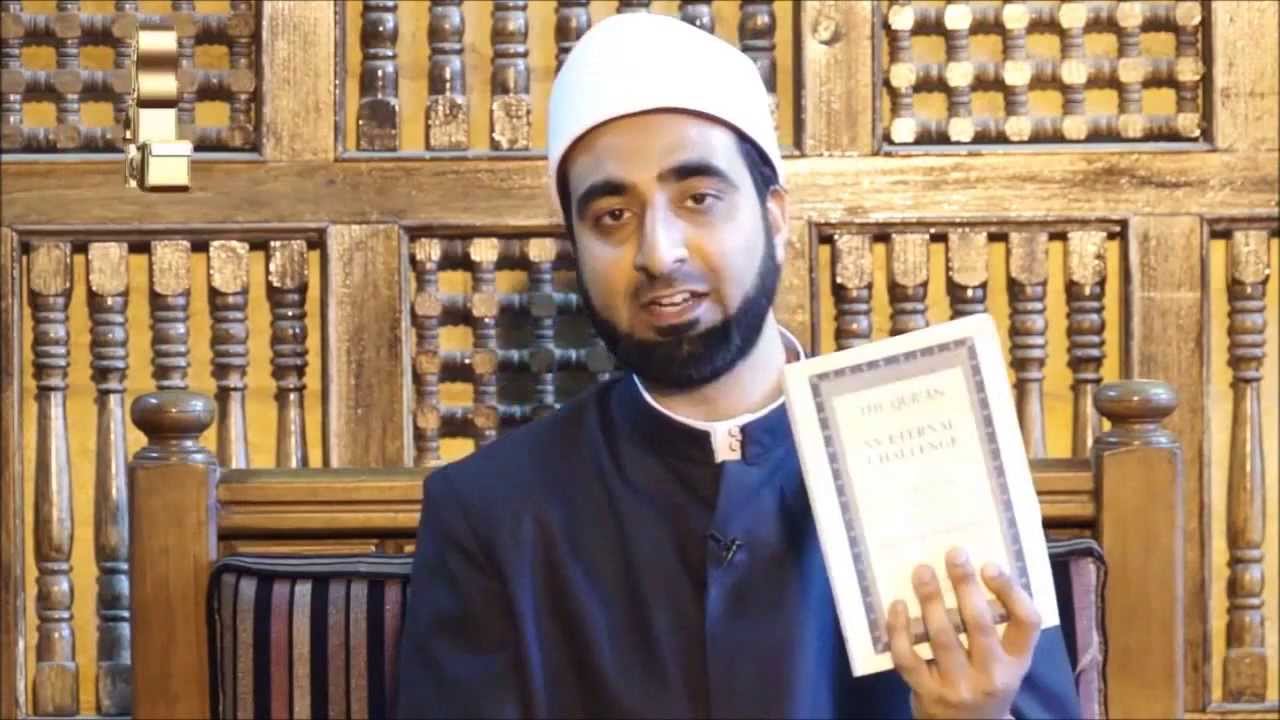
The ongoing discourse presented in The Eternal Challenge builds upon a broader framework established across previous episodes of the series, which collectively examine the literary, historical, and spiritual dimensions of Islam’s holy scripture. Earlier segments in the curriculum have systematically explored fundamental questions such as the general definition and impact of the Quran, the unique relationship between the Prophet and the Book of Allah, and the critical question of whether the Prophet Muhammad authored the text himself. These foundational topics reinforce the overarching theme that the emergence of the Quran cannot be explained through conventional human authorship or external cultural influences of seventh-century Arabia.
Sheikh Sohaib Saeed’s academic exploration continues to resonate with audiences seeking rigorous intellectual defenses of Islamic theology. By engaging directly with complex historical criticisms and contrasting them with traditional Islamic scholarship, the series provides viewers with the analytical tools necessary to understand the unique historical context of the revelation. As modern audiences continue to grapple with questions of faith, history, and textual integrity, programs like The Eternal Challenge offer a structured, evidence-based approach to exploring the divine roots of the Quran and the legacy of Prophet Muhammad.