In the latest installment of the widely followed educational and spiritual video series The Eternal Challenge, prominent scholar Sheikh Sohaib Saeed tackles one of the most foundational questions regarding Islamic history and theology: Who taught Prophet Muhammad the Quran? Through careful historical analysis and theological discourse, the episode directly confronts and dismantles long-standing allegations that the final prophet of Islam was instructed by contemporary human authorities, religious clergymen, or that he merely compiled and quoted material from previous Abrahamic scriptures.

The episode, hosted and distributed across digital platforms including Facebook and YouTube, is part of a broader scholarly effort to examine the inimitable nature of the Quranic text. By breaking down the socio-historical environment of seventh-century Arabia and analyzing the internal mechanics of the Quran itself, Sheikh Saeed offers viewers a comprehensive look at why external authorship or human tutorship theories fail to hold up under rigorous academic and theological scrutiny.
Addressing Historical Allegations of Human Tutorship
Throughout history, critics of Islam have attempted to attribute the origins of the Quran to human sources, suggesting that Prophet Muhammad learned the stories, laws, and spiritual philosophies contained within the text from Christian monks, Jewish rabbis, or other learned figures of late antiquity. In this episode, Sheikh Saeed systematically refutes these claims, pointing out the stark contrasts between the socio-religious landscape of the Arabian Peninsula at the time and the unique linguistic, theological, and legal framework presented in the Quran.

The scholar emphasizes that the Prophet was known among his contemporaries as Ummi—an unlettered individual who had no prior formal instruction, exposure to deep theological academies, or access to vast libraries of translated scriptures. To suggest that a man living in the isolated mercantile hub of Mecca could synthesize complex theological doctrines, correct historical narratives found in earlier texts without possessing physical copies of them, and deliver a universally resonant scripture in unmatched classical Arabic defies both historical evidence and logical probability. Furthermore, the Quran itself directly addresses and challenges these very accusations raised by its earliest detractors, inviting humanity to produce a single chapter like it if they truly believed its origin was anything other than divine.
The Role of Prophecies as a Proof of Truthfulness
Moving beyond the question of human instruction, the episode shifts its focus to a critical pillar of prophetic validation: prophecies within the Quran. In theological discourse, a genuine prophecy is defined as foretold news concerning future events that are entirely hidden from human perception, making it fundamentally distinct from an educated guess, a sociological prediction, or wise foresight.

Sheikh Saeed elaborates on how predictive elements embedded within the Quran serve as vital empirical proofs for the truthfulness of prophets. Throughout the text, specific future events—ranging from geopolitical shifts and military victories to unseen spiritual outcomes—were explicitly detailed long before they transpired in reality. According to Islamic scholarship, the fulfillment of these predictions with absolute historical accuracy stands as a testament to the divine source of the revelation, reinforcing the argument that the author of the text possesses comprehensive knowledge of both the past and the future.
Continuing the Exploration of the Eternal Challenge
The ongoing series hosted by Sheikh Saeed continues to draw significant interest from students of Islamic studies, researchers, and individuals seeking a deeper understanding of the Quranic text. Previous episodes in The Eternal Challenge series have laid essential groundwork by exploring foundational inquiries, such as defining the true nature of the Quran, examining the dynamic relationship between the Prophet Muhammad and the Book of Allah, and addressing whether the Prophet authored the scripture himself.
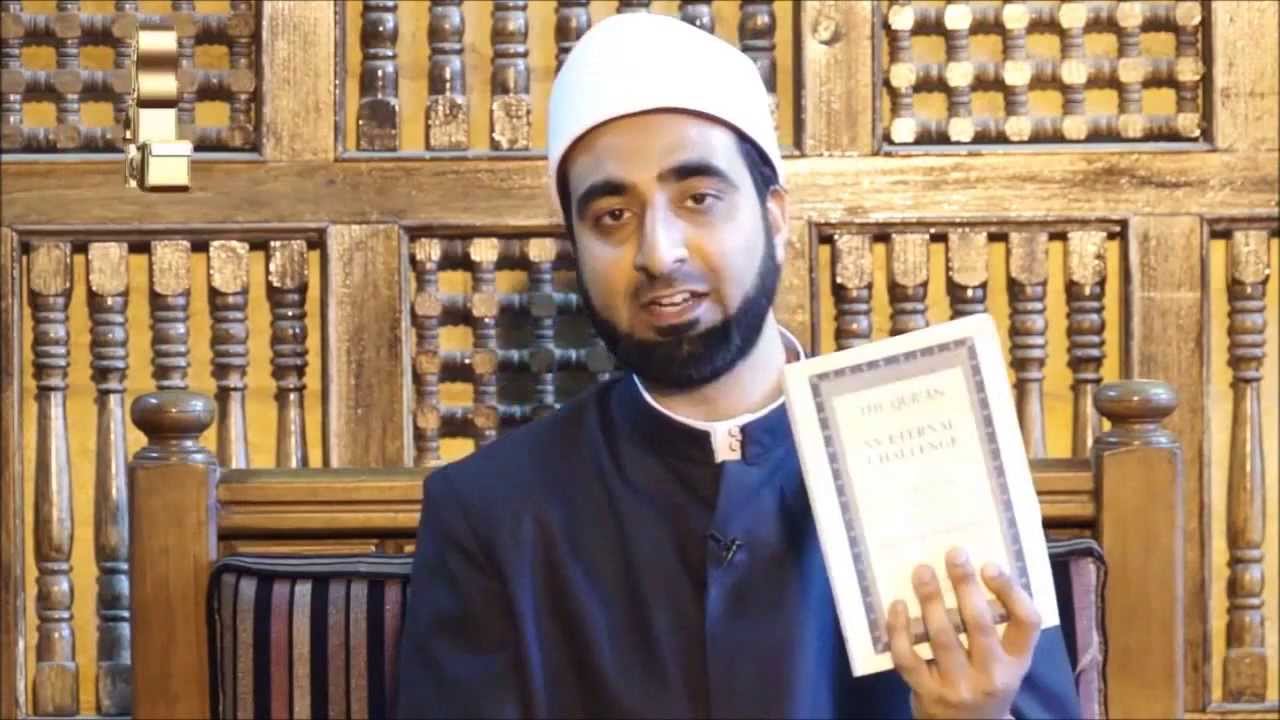
As digital media continues to play a central role in contemporary religious education, programs like The Eternal Challenge provide accessible yet intellectually rigorous responses to complex theological questions. By combining traditional Islamic scholarship with modern analytical frameworks, Sheikh Saeed’s discussions offer viewers a structured pathway to understanding the historical preservation, literary miraculousness, and spiritual depth of Islam’s holy book.