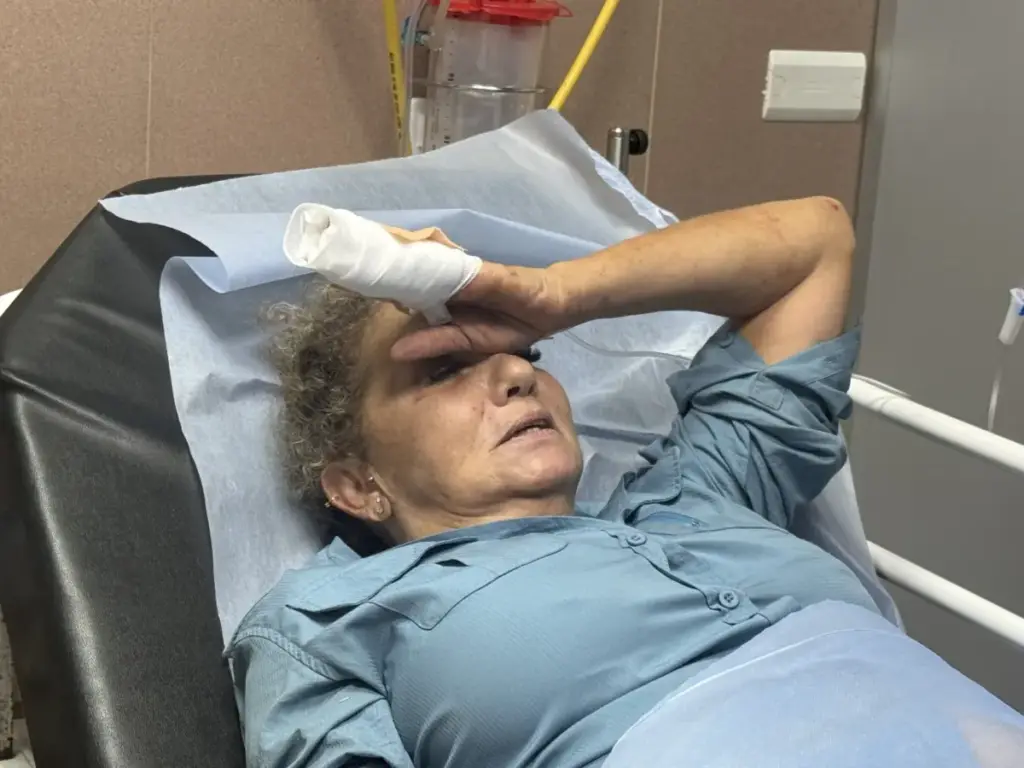
Writing on the social media platform X, Ambassador Huckabee adopted a significantly harsher and more direct tone than earlier official statements issued out of Washington. "Attacking a female photographer is a despicable act of terror carried out by masked cowards," Huckabee wrote, highlighting the severe nature of the violence that unfolded in the Israeli-occupied West Bank.
The condemnation stems from a coordinated attack that occurred on Friday, when dozens of militant Israeli settlers—clad entirely in black and with their faces concealed by masks—targeted a local village’s olive harvest. Armed with rocks and fire, the attackers burned olive trees and assaulted Palestinians. The violence resulted in at least two injuries, including that of veteran photojournalist Heidi Levine, who was on assignment for The Washington Post.
The condemnation from the U.S. envoy was mirrored by political figures within Israel. Gadi Eisenkot, a prominent political rival to Prime Minister Benjamin Netanyahu, publicly denounced the violence, calling it "Jewish terror." This terminology aligned directly with how Levine herself described the assault. Speaking from her hospital bed on Saturday in an interview with The Associated Press, Levine reflected on the gravity of the situation after decades of covering the region.
"I’ve been covering this region for over 40 years, and I have never seen this country in such a state as it is today," Levine said. She added that she was deeply "shocked and insulted" by Prime Minister Netanyahu’s characterization of the attack on her and other victims as an alleged incident rather than an acknowledged fact.
Prime Minister Netanyahu has historically attributed settler violence in the occupied territories to a small, isolated group of troublemakers. However, the reality on the ground paints a much broader picture of conflict and destruction. Across numerous Palestinian communities throughout the West Bank, vehicles have been torched, agricultural lands and ancient trees damaged, and civilians physically injured. Many local residents, international observers, and human rights advocates have characterized this period as one of the most dangerous harvest seasons yet recorded in the region.
The wider issue of Israeli settlements remains a critical flashpoint in international diplomacy. Under international law, Israeli settlements in the occupied West Bank are illegal, a foundational legal position consistently upheld by the United Nations and overwhelmingly supported by the international community. Over the decades, many of these settlements have expanded from small outposts into sprawling residential and commercial communities. Furthermore, illegal Israeli settlers have established hundreds of additional outposts across the territory without official government authorization, frequently operating under the direct protection or passive presence of the Israeli military.
The historical roots of the territorial conflict trace back to the 1967 Middle East war, during which Israel occupied the West Bank, the Gaza Strip, and East Jerusalem. Palestinians have long sought these territories for the establishment of an independent, sovereign state. Despite these aspirations, the West Bank remains heavily governed by Israeli military occupation, and settlement expansion continues to proceed despite global opposition.
International pressure and condemnation regarding Israel’s settlement policies have intensified significantly in recent diplomatic circles. Among the latest high-ranking global officials to demand a halt to the expansion is Chinese Foreign Minister Wang Yi. During high-level talks with Israeli President Isaac Herzog, Wang formally urged the Israeli government to reverse its forced settlement expansion policies in the occupied West Bank, according to a government spokesperson. As diplomatic scrutiny mounts alongside escalating violence on the ground, the incident involving the Washington Post photographer has brought renewed international focus to the complex and volatile security landscape of the occupied territories.