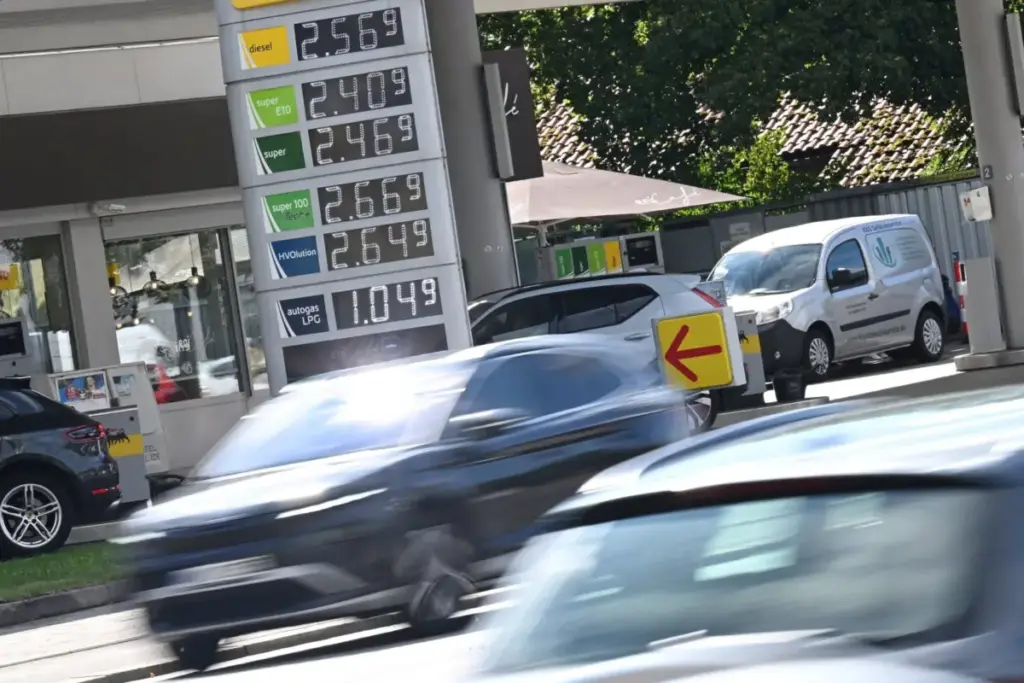
The United States has urged its European allies to take immediate action to lower soaring global diesel prices by releasing strategic fuel reserves. The demand comes as European Union member states prepare to convene an emergency meeting to address the mounting energy crisis.
According to reports, the administration of U.S. President Donald Trump has specifically targeted major European powers, including Germany and France, instructing them to draw down their emergency diesel inventories. The pressure from Washington carries a heavy ultimatum: European nations must help ease the historic spike in global fuel prices or face the potential imposition of a U.S. diesel export ban.
The pressure campaign was underscored by U.S. Treasury Secretary Scott Bessent, who took to social media to call on European capitals to act. "Our European partners should accelerate delivery on their existing commitments and make additional supplies immediately available to address ongoing disruptions," Bessent wrote in a public post.
In response to the escalating crisis, EU member states are scheduled to meet with the European Commission to discuss a coordinated continental response to the soaring fuel costs, a Commission spokesperson confirmed.
The hardline stance from Washington represents the latest flashpoint in transatlantic relations. The relationship between Europe and the United States has already experienced considerable friction under President Trump, strained by ongoing trade and tariff disputes, as well as recurring disagreements over military spending and defense commitments.
For the European Union, the prospect of releasing additional strategic petroleum stocks presents a complex and delicate policy dilemma. European leaders must carefully balance the immediate domestic necessity of bringing down runaway fuel prices for consumers and businesses against the vital security requirement of maintaining high reserve stocks. This caution is driven by the fear of a potential worsening of the fuel crisis, particularly if President Trump and Iran fail to reach a lasting peace deal following the recent military conflict.
Despite the diplomatic friction, some U.S. officials have emphasized the mutual benefits of cooperation. "It is in Europe’s best interest to work with the United States as we pursue multiple pathways to boost the supply of refined products and lower costs for consumers," a senior U.S. official told Agence France-Presse (AFP).
The diplomatic tone has shown moments of fluctuation. At a meeting of G-20 trade ministers in Milwaukee, U.S. Trade Representative Jamieson Greer adopted a more conciliatory approach, telling reporters that there was an "eagerness on both sides to work together" to resolve the pressing diesel issue. Meanwhile, President Trump told reporters in Texas that he "may" formally ask European countries to release their emergency diesel reserves.
The current vulnerability of European energy markets stems from significant geopolitical shifts over recent years. Europe became increasingly dependent on United States fuel imports after enacting sweeping bans on Russian energy products following the Russian invasion of Ukraine. This reliance was further exacerbated when the combined U.S. and Israeli military campaign against Iran severely disrupted traditional energy supplies originating from the Middle East.
‘Unexpected’
The prospect of Washington blocking American fuel shipments has sent shockwaves through European capitals. EU trade chief Maros Sefcovic told reporters that any move by the United States to implement a diesel export ban would be "unexpected for Europeans."
Sefcovic made his remarks on the sidelines of the two-day G-20 ministerial talks in Milwaukee, following a bilateral meeting with U.S. Trade Representative Jamieson Greer. While Sefcovic noted that he did not delve into the granular details of energy export volumes during his discussions with Greer, he emphasized that the transatlantic partners had "decided to stay in close touch to avoid any surprises here."
A unilateral ban by Washington, Sefcovic warned, "would have very dramatic consequences for our economic performance."
European trade ministers have echoed these concerns while expressing confidence that a diplomatic solution can be reached. France’s minister delegate for international trade, Nicolas Forissier, told AFP in Milwaukee that he "can’t imagine that there will be a ban." Forissier underscored the critical importance of diesel supplies to the economic stability of both the United States and European nations, expressing optimism that both sides will "try to find solutions."
"In France, we’ll try to find balanced solutions all over the world," Forissier added, suggesting alternative procurement avenues. "If not with the Americans, it will be with other countries."
U.S. Energy Secretary Chris Wright expressed confidence earlier in the week, stating that the global market would soon "hear announcements from our friends in Europe" aimed at driving diesel prices down.
However, the path toward a coordinated reserve release remains diplomatically nuanced. Asked about whether a formal demand had been made, the French presidency noted that no such request was brought up during talks between French President Emmanuel Macron and President Trump on the sidelines of the United Nations General Assembly.
To address the mounting crisis, President Macron is set to convene a virtual meeting of G-7 leaders. The gathering is intended "to make progress on the various levers that can be used to address the rising fuel prices… including coordination on releasing reserves," according to Macron’s press office, which announced the initiative in mid-September with the virtual summit expected to take place in mid-October.
The urgency driving Washington’s demands is rooted in domestic political pressures. Average U.S. diesel prices have skyrocketed by more than 70%, climbing to $6.39 a gallon since the onset of the war involving Iran, according to data compiled by the AAA motor club.
The dramatic surge in fuel prices has caused the cost of living to soar across the United States, threatening economic stability and casting a long political shadow. With the pivotal midterm elections scheduled for November, members of President Trump’s Republican Party fear that voter anger over cost-of-living pressures could cost them their majority control of Congress.