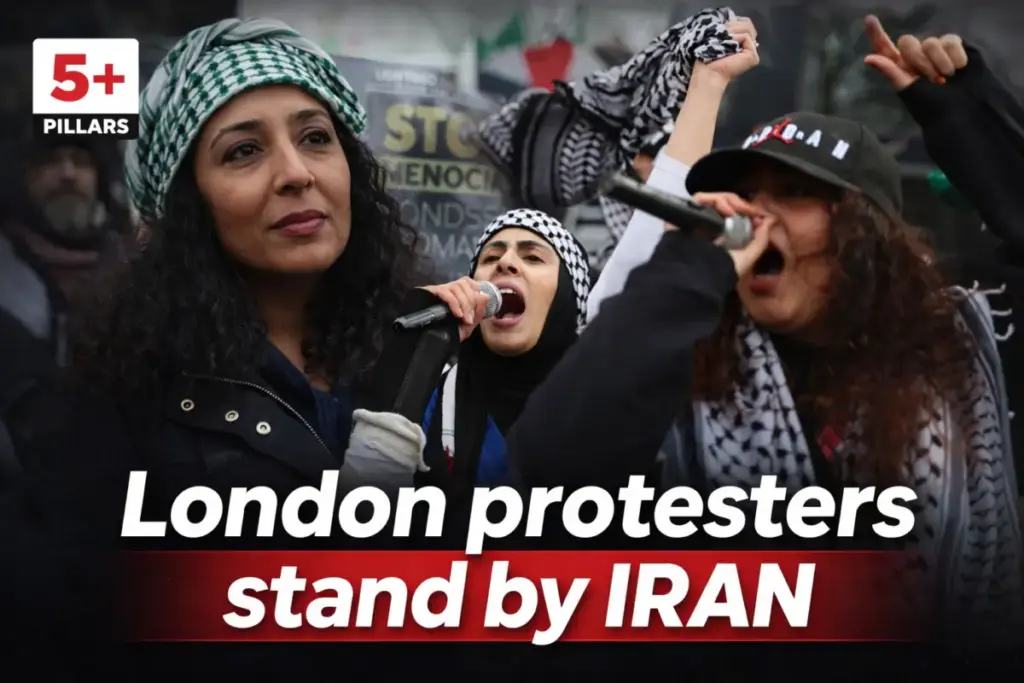
The demonstration drew a diverse coalition of peace activists, community organizers, British Muslims, and anti-war campaigners who marched through major thoroughfares before converging on key government and institutional sites. Participants utilized the platform to explicitly demand that the British government maintain strict neutrality, urging Prime Minister Keir Starmer and his administration to steer clear of any military entanglement, logistical support, or diplomatic complicity in what protesters characterized as an illegal and devastating campaign.

A central theme of the London mobilization was the urgent need to restrain foreign military interventions in the Middle East, particularly those spearheaded by Washington and Tel Aviv. Activists carried a wide array of visual messaging, with prominent placards bearing slogans such as "Stop Trump’s wars," "Tell Starmer: Stop arming Israel," "End nuclear hypocrisy," and "Stop bombing Iran." Alongside these political statements, demonstrators prominently displayed Palestinian and Iranian flags, underscoring a broader intersectional solidarity among anti-war networks linking the ongoing devastation in Gaza and Lebanon with the newly intensified hostilities directed at Tehran.
The march highlights growing domestic tension within the United Kingdom regarding London’s foreign policy stance on the Middle East. Public scrutiny has intensified following months of widespread public mobilization over British arms exports, diplomatic alignment, and military intelligence sharing related to regional conflicts. Saturday’s turnout demonstrates that grassroots opposition to foreign military campaigns remains robust, with organizers vowing to sustain public pressure until British authorities commit to halting arms sales and diplomatic backing for aggressive military actions abroad.

Speakers at the rally underscored the existential dangers of a protracted military confrontation involving Iran, warning that further escalation could destabilize the entire region and trigger global economic and security consequences. Protesters echoed similar sentiments voiced in anti-war demonstrations across various European capitals, arguing that decades of Western intervention in the Middle East have yielded only catastrophic human suffering, displacement, and the erosion of international law. By targeting both domestic leadership and foreign allies, the marchers sought to hold British policymakers accountable for their tacit approval or active participation in policies that fuel ongoing hostilities.
As the demonstration concluded, organizers urged participants to remain vigilant, active, and mobilized against any future escalation. The vibrant presence of banners, chants, and unified speeches served as a stark reminder of the persistent gap between official government foreign policy and public sentiment on the streets of the British capital, signaling that opposition to foreign wars will continue to be a dominant force in UK public discourse.