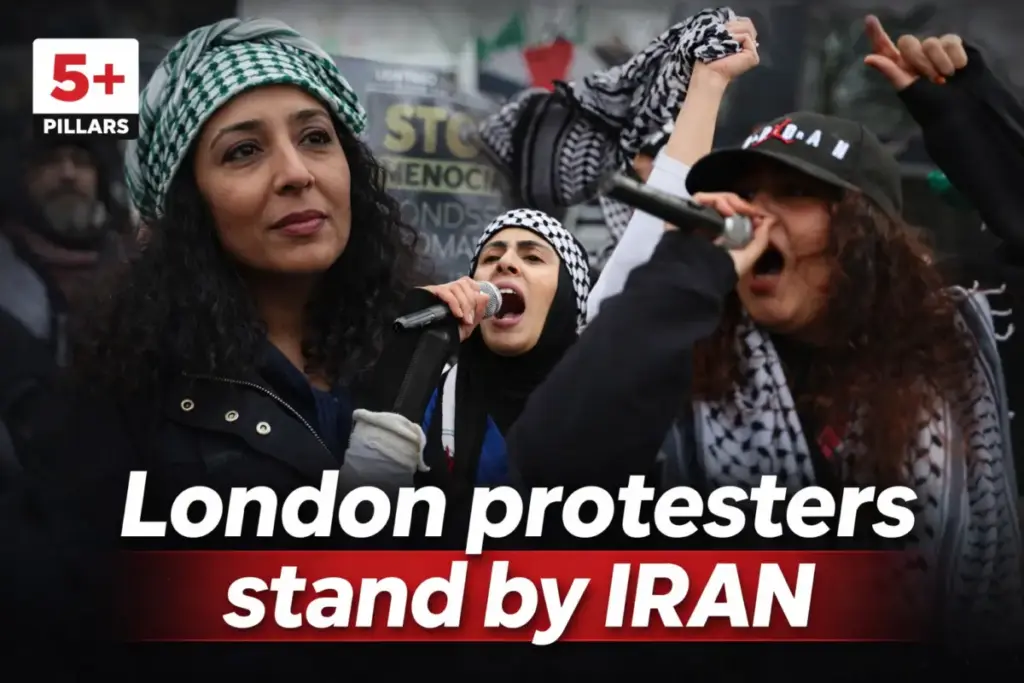
The demonstration, which drew significant crowds holding banners and flags, served as a focal point for public anxiety regarding the trajectory of regional conflicts. Participants voiced profound concern over the prospect of a wider war, directly challenging the foreign policies of both Washington and London. Throughout the march, speakers and attendees alike emphasized the urgent need for diplomatic resolutions rather than military confrontation, warning that any direct involvement by the United Kingdom in hostilities against Iran would have catastrophic consequences for global stability and regional peace.
Placards carried by the demonstrators reflected a broad spectrum of anti-war and political grievances, capturing the multifaceted nature of the protest movement. Protesters waved a sea of Palestinian and Iranian flags alongside prominent banners bearing direct messages directed at political leaders. Slogans inscribed on the placards included "Stop Trump’s wars," "Tell Starmer: stop arming Israel," "End nuclear hypocrisy," and "Stop bombing Iran." The messaging highlighted widespread dissatisfaction with the current British government’s foreign policy positions, particularly regarding military alliances and arms exports that activists argue contribute to civilian suffering and regional destabilization.

The atmosphere in central London was charged with urgency as organizers addressed the crowds through amplification systems, calling for sustained public pressure against military interventions. Activists argued that ordinary citizens in Western nations must actively oppose foreign policies that risk plunging the Middle East into an even deeper humanitarian and security crisis. Many speakers drew connections between ongoing conflicts in Gaza and the escalating tensions involving Iran, framing them as part of an interconnected pattern of Western-backed aggression in the region.
The protest also underscored domestic political pressures facing Prime Minister Keir Starmer’s administration. Demonstrators specifically targeted the UK government’s diplomatic and military posture, urging officials to distance themselves from aggressive military strategies pursued by foreign allies. Chants echoing through the streets demanded an end to British complicity in conflicts abroad, with particular emphasis on halting arms supplies and military cooperation that activists claim fuels violence and undermines international law.
As the march proceeded along its designated route, it drew widespread attention from onlookers and disrupted standard traffic flow across central London. Police forces maintained a visible presence to monitor the demonstration and ensure public safety, though the event largely proceeded without major incident. Organizers utilized the platform to announce plans for future mobilizations and educational campaigns, signaling that the anti-war movement intends to maintain pressure on policymakers as long as the threat of regional war persists.

The demonstration concluded with rally speeches that reiterated the core demands of the movement: an immediate cessation of military actions against Iran, a halt to British arms sales linked to Middle Eastern conflicts, and a renewed commitment to diplomacy and international law. For the thousands who participated, the march in London stood as a clear declaration that public sentiment strongly opposes military adventures and demands a peaceful, diplomatic approach to international relations.