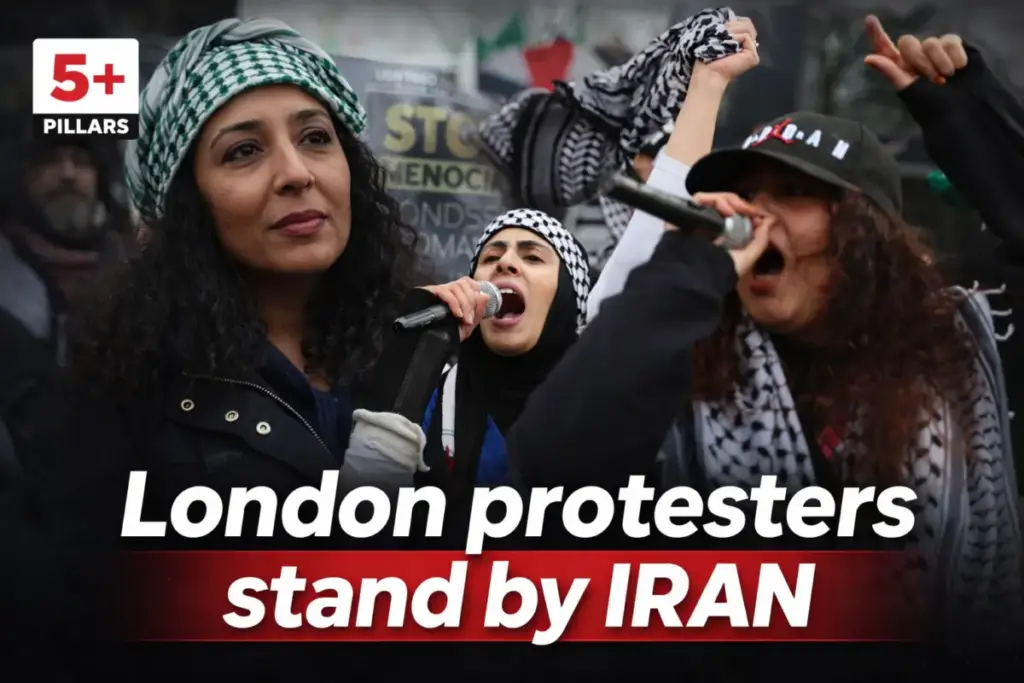
The demonstration brought together a broad coalition of anti-war activists, community organizers, and concerned citizens who converged to demand that the British government distance itself entirely from any military entanglements or diplomatic backing of Washington and Tel Aviv’s hostile policies in the Middle East. Protesters chanted slogans and carried signs bearing sharp criticisms of foreign policy decisions made by Western leaders, underscoring deep public anxiety over the potential fallout of a prolonged and devastating conflict.

Among the prominent messages displayed on the placards carried by the marchers were demands directly targeting political leaders on both sides of the Atlantic. Placards reading "Stop Trump’s wars," "Tell Starmer: stop arming Israel," "End nuclear hypocrisy," and "Stop bombing Iran" were held aloft throughout the procession. The inclusion of these slogans reflected a multi-layered critique encompassing ongoing grievances regarding Western arms supplies to Israel, historical double standards concerning nuclear capabilities in the region, and the persistent threat of direct military intervention against Tehran.
The atmosphere during the march was tense yet resolute, with speakers addressing the assembled crowds through sound systems, warning that any military confrontation involving Iran would carry catastrophic humanitarian, economic, and geopolitical consequences that would reverberate far beyond the borders of the Middle East. Activists repeatedly emphasized that working-class people in the West have nothing to gain from foreign military adventures and that public resources should instead be prioritized for domestic needs rather than funding overseas conflicts.

Saturday’s mobilization in London forms part of a broader wave of international concern over the deteriorating security situation in the region. Tensions have steadily escalated following a series of direct and proxy escalations, drawing intense scrutiny from human rights advocates and peace movements worldwide. In the United Kingdom, public scrutiny has increasingly focused on Prime Minister Keir Starmer’s administration, with anti-war groups applying persistent pressure regarding the government’s export licensing of military equipment and its diplomatic alignment with foreign allies engaged in active hostilities.
Protest organizers stressed that the demonstrations are intended to send an unmistakable message to Whitehall that the British public rejects complicity in military escalations that threaten international peace and security. As the crowds wound their way through central London toward their final rally point, the demonstration remained largely peaceful, marked by disciplined marshalling and widespread participation from diverse communities united in their opposition to war.