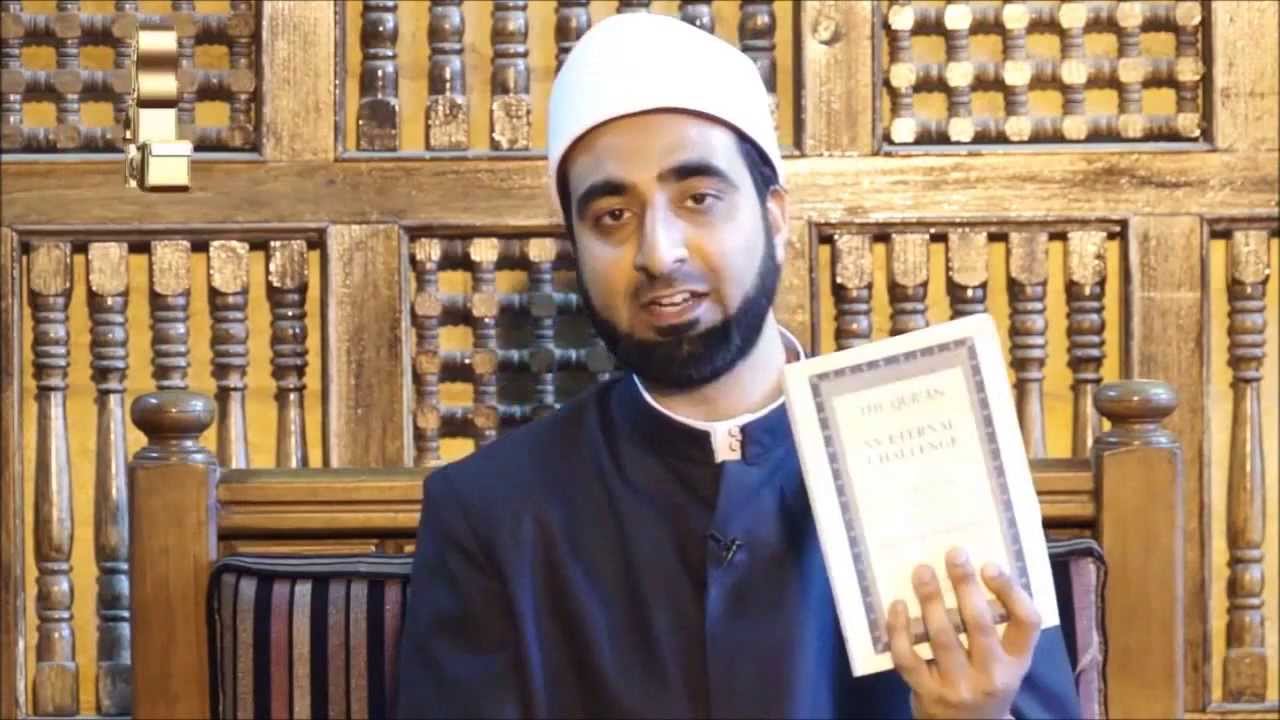
In the latest installment of the acclaimed video series The Eternal Challenge, scholar Sheikh Sohaib Saeed addresses one of the most foundational and frequently debated questions regarding the origins of Islam: Who taught Prophet Muhammad the Quran?

The episode dives deep into historical and theological arguments, systematically dismantling long-standing allegations that the Prophet was tutored by external clergymen or that he merely compiled and quoted material from previous scriptures. Through a rigorous examination of the text, historical context, and the nature of revelation, the series continues its overarching exploration of the divine authenticity of the Quran.
For centuries, critics of Islam have sought to attribute the source of the Quran to human instruction, suggesting that Prophet Muhammad learned its narratives, laws, and spiritual insights from Christian or Jewish scholars, monks, or regional intellectuals of late antiquity. In this episode, Sheikh Sohaib addresses these claims directly, providing scholarly counter-arguments that highlight the contextual impossibility of such theories. He emphasizes that the socioeconomic, cultural, and literary landscape of seventh-century Arabia—coupled with the Prophet’s well-documented status as an unlettered individual—makes the human authorship or tutorship hypothesis untenable.

Furthermore, the discussion expands into the nuanced topic of scriptural parallels. While acknowledging that the Quran shares thematic overlaps and historical figures with earlier Abrahamic traditions, the series explains that these similarities stem from a shared divine source rather than plagiarism or derived quotation. The presentation demonstrates how the Quran corrects, refines, and contextualizes narratives from previous scriptures, offering a distinct theological voice and moral framework that challenged the prevailing norms of both the Arabian Peninsula and neighboring empires.
A significant portion of the episode is dedicated to exploring prophecies within the Quran. In theological discourse, a prophecy is defined as foretold news concerning future events that are entirely beyond human calculation, foresight, or educated guessing. Unlike generalized predictions or wise observations based on current political trends, genuine prophecies carry a specificity and certainty that defy probability.

Sheikh Sohaib highlights how prophetic statements embedded within the Quran serve as one of the most vital empirical and spiritual proofs for the truthfulness of the prophetic mission. By detailing future events that subsequently unfolded exactly as predicted—such as the eventual victory of the Byzantines over the Persians after a crushing defeat—the Quran established a verification mechanism that challenged contemporary skeptics to disprove its divine origin.
The release of this episode builds upon a broader framework established by The Eternal Challenge, a series designed to engage contemporary audiences with the literary, historical, and spiritual dimensions of the Islamic holy book. Previous episodes in the curriculum have tackled foundational questions about the nature of the Quran itself, the intricate relationship between the Prophet and the Book of Allah, and the profound theological reality that the Quran shaped the character and mission of Prophet Muhammad rather than being a product of his own intellectual composition.
As the discourse surrounding comparative religion, scriptural history, and faith continues to evolve in digital spaces, educational resources like Sheikh Sohaib Saeed’s series aim to provide structured, academic, and faith-based responses to complex intellectual challenges. By leveraging modern media platforms, including video lectures distributed via social media and scholarly networks, the production seeks to make deep theological and historical arguments accessible to a global audience interested in Islamic studies.
The ongoing series remains a central offering for viewers seeking to understand the academic defense of the Quranic text, offering both believers and academic inquirers a structured look at the proofs of prophethood and the historical integrity of early Islam.