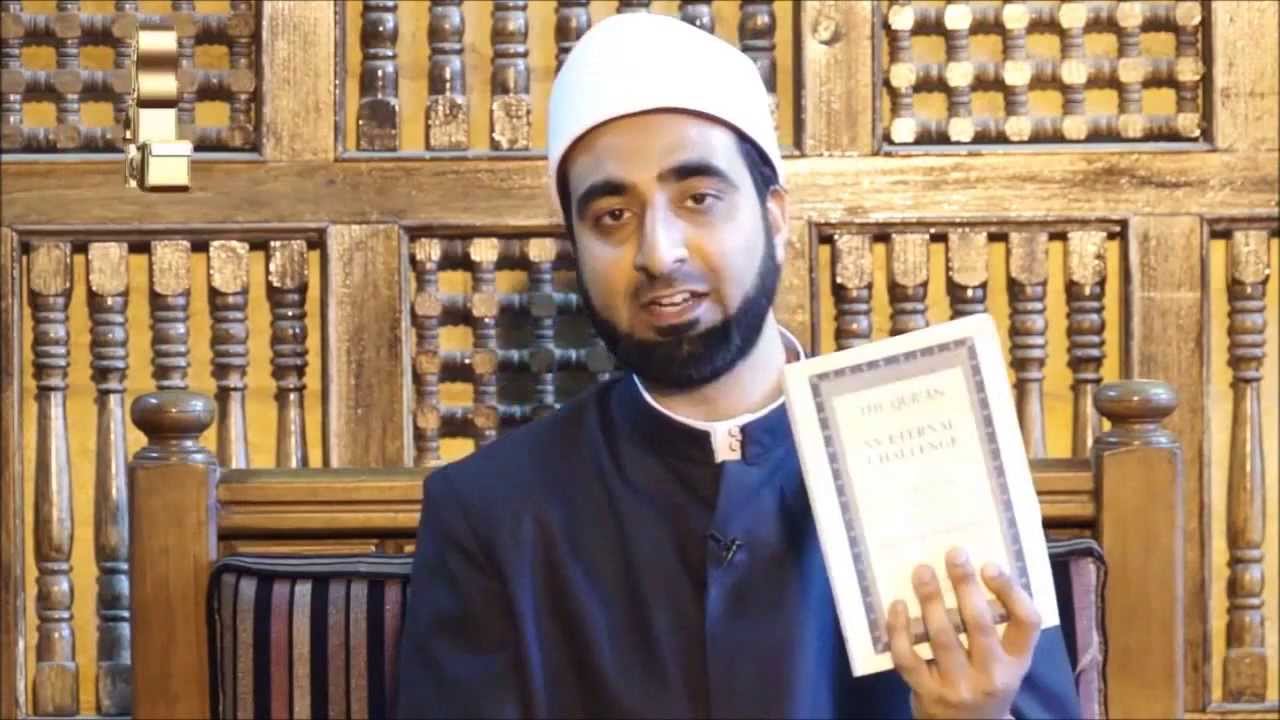
The question of the origins of the Quran and the source of the teachings brought by Prophet Muhammad has been a subject of theological discussion, academic inquiry, and historical debate for centuries. In a recent installment of the educational media series The Eternal Challenge, prominent scholar Sheikh Sohaib Saeed addresses this fundamental query head-on, offering a detailed exploration into who—or what—taught the Prophet Muhammad the Quran.

In this specific episode, Sheikh Saeed tackles and refutes longstanding allegations and historical claims suggesting that various religious clergymen, scholars, or external human instructors secretly tutored the Prophet, or that the contents of the Quran were merely compiled or quoted from earlier, preexisting scriptures. Through a structured examination of Islamic history, theology, and the internal evidence of the Quran itself, the series aims to dismantle these assertions while providing viewers with a deeper understanding of the divine nature of the Islamic holy text.
The discussion goes beyond mere refutations of historical skepticism, delving deeply into the mechanics of prophetic revelation, divine communication, and the concept of prophecy within the Abrahamic traditions. Central to Sheikh Saeed’s presentation is an analysis of prophecies embedded within the Quranic text, examining how these future-oriented predictions serve as a cornerstone for validating the authenticity of the prophethood.

Understanding Prophecy and Its Significance in the Quran
A significant portion of the discourse centers on the precise definition and theological weight of prophecy. Within the framework presented in the episode, a true prophecy is defined as foretold news regarding future events that transcends human estimation, probability calculations, or educated historical guesses. Unlike wise forecasts made by astute observers analyzing current political or social trends, scriptural prophecies offer specific, unalterable glimpses into the unseen future, designed to manifest precisely as predicted over the passage of time.
Sheikh Saeed emphasizes that prophecy functions as one of the most vital, empirical proofs for establishing the truthfulness—or conversely, the falsehood—of any individual claiming to be a messenger of God. In the context of the Quran, several passages contain explicit predictions about geopolitical shifts, historical outcomes, and future triumphs that materialized during the lifetime of the early Muslim community and beyond. By examining these occurrences, the series invites viewers to consider the impossibility of a human author in seventh-century Arabia accurately foretelling complex geopolitical outcomes without divine intervention.

The episode addresses the persistent historical allegations that Prophet Muhammad, who was known in Islamic tradition as an unlettered man (ummi), must have acquired his profound theological knowledge, legislative wisdom, and narrative accounts of previous prophets from Christian or Jewish scholars residing in the Arabian Peninsula or during his commercial travels to neighboring regions. Critics throughout history have suggested that encounters with figures such as the monk Bahira or various Judeo-Christian informants provided the raw material for the Quranic text.
However, Sheikh Saeed dismantles these theories by pointing out the profound theological, literary, and historical discrepancies between the Quran and the apocryphal or canonical literature of the era. The Quran often corrects, refines, or presents distinct theological perspectives on narratives found in earlier biblical traditions, doing so with an authoritative tone that contrasts sharply with the derivative nature expected of someone merely borrowing from contemporary human teachers. Furthermore, the socio-historical reality of seventh-century Mecca—a pagan trading hub largely isolated from deep centers of theological learning—makes the sudden emergence of a text matching the linguistic and philosophical sophistication of the Quran an enigma for any purely human-derived explanation.
The Broader Scope of The Eternal Challenge Series
This episode forms part of a broader, comprehensive media exploration titled The Eternal Challenge, hosted and guided by Sheikh Sohaib Saeed. The series is designed to systematically address contemporary and historical questions surrounding the authenticity, preservation, literary miracle, and divine origin of the Quran. Over the course of multiple episodes, the program guides audiences through foundational concepts regarding Islam’s primary scripture, encouraging critical thinking and deep academic engagement with the text.
Earlier installments in the series have laid the groundwork for this ongoing discussion by asking fundamental questions about the identity of the Quran itself. In the opening episodes, viewers are introduced to the core premise of what constitutes the Quran—distinguishing it from the sayings of Prophet Muhammad (known as Hadith) and examining its unique status as the uncreated word of God transmitted through the Angel Gabriel. Subsequent segments explore the deep interdependence between the Prophet and the Book of Allah, illustrating how the revelation shaped the character, mission, and historical trajectory of the final messenger.
Another key theme previously tackled in the series addresses the authorship of the Quran directly: whether it could have been authored, consciously or subconsciously, by Prophet Muhammad himself. Through literary and historical analysis, the program argues that the stylistic divergence between the prophetic traditions and the Quranic text points away from human authorship, leading to the philosophical proposition that the Quran ultimately shaped and defined the prophetic mission rather than the other way around.
By bringing these complex theological arguments to digital platforms, the series bridges traditional Islamic scholarship with modern communication methods. Through platforms like Facebook and dedicated Islamic educational portals, scholars such as Sheikh Sohaib Saeed continue to engage global audiences seeking rigorous intellectual responses to questions regarding Islamic faith, scripture, and history. As the discussion on who taught the Prophet continues to resonate with modern seekers and students of religion, The Eternal Challenge remains a notable resource for those examining the historical and spiritual foundations of Islam.