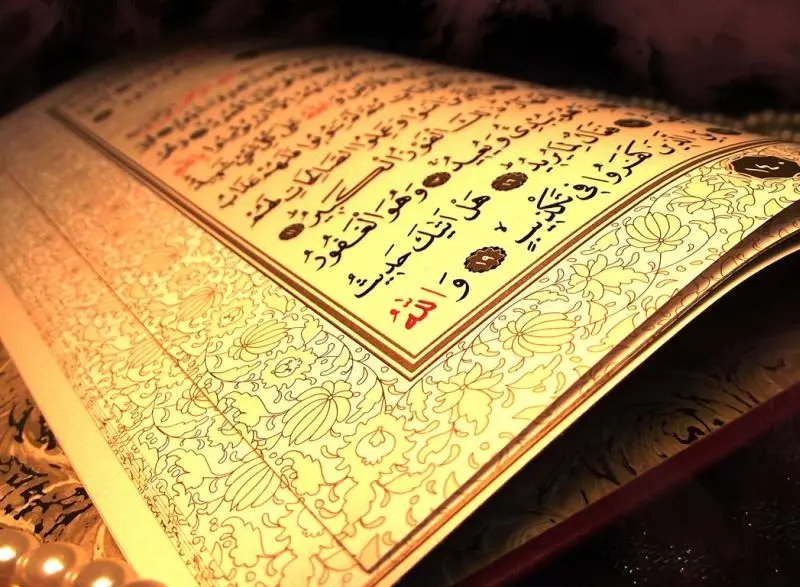
At the heart of the Islamic worldview lies the primordial principle of justice, a concept represented in the Qur’an primarily through three foundational terms: `adl, qist, and mizan. While the first two terms are often treated as synonyms, classical linguistic interpretations distinguish `adl as justice and qist as equity or fairness. Meanwhile, mizan serves as the critical scale or balance that determines how justice is administered, maintained, and observed in human affairs.
However, the term `adl carries a much deeper and more profound philosophical meaning: equilibrium, or the act of putting things in their correct and rightful places. Consequently, it stands as the direct opposite of zulm, a term typically translated into English as oppression, tyranny, or despotism, but which fundamentally denotes disequilibrium, imbalance, or placing things in their wrong places. Throughout the Qur’anic text and prophetic traditions, immense emphasis is placed on upholding `adl while condemning zulm in all its forms.
This expansive conceptual framework extends far beyond legal or interpersonal dynamics.
It applies equally to how human beings handle physical objects, approach nature, and even relate to the Divine. For instance, acknowledging God with the proper awe, respect, and gratitude that are rightfully His due—alongside faithfully abiding by His explicit commands—is considered an act of `adl. Failing to do so, conversely, is viewed as a form of zulm.
Applying this same logic to the Holy Qur’an itself, approaching and utilizing the sacred text for its intended, primary purposes constitutes `adl. Conversely, utilizing it incorrectly, isolating it from its core mission, or relegating it exclusively to secondary or non-primary roles amounts to a form of conceptual zulm. Viewing the issue through this critical lens sheds light on a pressing conversation within contemporary Muslim societies: how believers at times inadvertently trivialize the Qur’an without fully understanding or implementing its comprehensive message.

How Do Muslims Trivialize the Qur’an Through Imprecise Use?
When discussing the mistreatment of holy scriptures, physical desecration immediately comes to mind as a grave and profound sin. Muslims certainly do not disrespect their holy book in tangible, physical ways. Their outward reverence for the scripture and extreme caution when handling it remain paradigmatic. In the vast majority of Muslim homes and places of worship, copies of the Qur’an are meticulously wrapped in clean cloth and placed on elevated surfaces to ensure they never rest on the floor or in inappropriate locations.
Yet, despite this profound physical veneration, a subtler form of irreverence often manifests—frequently entirely unaware to the practitioners. This conceptual irreverence generally materializes in two distinct ways: restricting the scripture to lesser, non-primary purposes and fragmenting its text into isolated portions, both of which can ultimately amount to a trivialization of the Divine word.
Why Should the Qur’an Primarily Be Used for Guidance?
The Qur’an states its primary mission unequivocally in Surah Al-Baqarah (2:2), declaring: "This divine writ – let there be no doubt about it – is [meant to be] a guidance for all the God-conscious." Furthermore, verse 2:38 proclaims, while recounting humanity’s descent from Paradise: "[For although] we did say, ‘Down with you all from this [state],’ there shall, none the less, most certainly come unto you guidance from Me: and those who follow My guidance need have no fear, and neither shall they grieve."
These foundational declarations establish that the Glorious Qur’an serves first and foremost as a comprehensive instruction manual for human beings. Its primary function is the provision of providential guidance to navigate mortal existence successfully. In view of this divine mandate, `adl demands that people—particularly Muslims—approach the scripture primarily as a living source of guidance. This means they are expected to read, deeply appreciate, and actively implement its moral, ethical, and spiritual message in their daily lives.
While the Qur’an may accommodate secondary, tertiary, and other non-primary applications, allowing these secondary uses to overshadow or completely replace its primary purpose constitutes a serious misdemeanor. This principle governs countless aspects of daily life. For instance, the primary function of a pen is to write; a professor’s core responsibilities are to teach and conduct research; and a head of state is entrusted with running the administration and shaping national policy.
If a pen were used solely to scratch one’s body or puncture delicate surfaces, if a professor were given exclusively clerical filing tasks, or if a president or prime minister were restricted entirely to ceremonial ribbon-cutting events while being barred from policymaking, the result would be zulm. Justice demands that any object or individual be utilized chiefly for its intended primary purpose.

Regrettably, many believers fail to apply this straightforward logic to the Holy Qur’an. It is common practice to read the Arabic text without comprehension, thereby failing to engage with it as the primary source for comprehensive life guidance. Because prophetic traditions indicate that reciting a single letter of the Qur’an can yield multiple units of spiritual virtue, many individuals read it purely to acquire baraka (divine blessings) or spiritual rewards, often doing so without understanding the meaning of the verses passing their lips.
In domestic and commercial spheres, verses are frequently invoked or mounted on walls as protective amulets to shield homes and businesses from evil spirits, hazards, and break-ins. Business owners may incorporate Qur’anic verses into advertising campaigns, hoping to secure auspicious commercial activities, divine blessings, and profitable margins. Similarly, students occasionally recite specific verses to enhance their memory and cognitive abilities ahead of examinations, while job applicants may do the same to secure employment.
In times of physical illness, many Muslims turn to the Qur’an for remedial treatment. Verses from specific chapters, such as Surah Yasin, are frequently recited over water, which is then given to the sick to drink, or are recited directly over the patient in the belief that these ritualistic practices will bring about physical healing.
While none of these secondary uses are inherently condemned—and many have historical precedents sanctioned by earlier generations of Muslims—they were never designated by God as the primary reasons for sending down the Qur’an. When these non-primary functions eclipse the core purpose of seeking active guidance, the inevitable result is the marginalization and undermining of the sacred text.
Why Is Fragmenting the Qur’an Problematic?
Another widespread and problematic approach involves the fragmentation of the Qur’anic text. Dividing the scripture into isolated segments frequently leads to an overemphasis on specific chapters or verses while resulting in the total neglect or ignorance of the broader book.
Muslims are bound to abide by the rules, ethics, and regulations contained within the entire Qur’an, alongside drawing guidance from authentic Hadith literature and emulating the Prophet Muhammad’s exemplary words and deeds. However, failing to engage with the entirety of the Qur’an makes it impossible to fully comprehend or implement its teachings in a balanced, holistic manner.

Unfortunately, many believers remain highly selective, concentrating almost exclusively on verses detailing ritual acts of worship or passages renowned for their protective and healing properties. This selective approach is frequently mirrored in weekly Friday khutbahs (sermons), where imams often emphasize familiar routines and specific verses while bypassing the deeper, systemic concepts of Islamic ethics, social justice, and governance.
A particularly visible manifestation of this fragmentation is the commercial publication of isolated chapters—such as Surah Yasin—printed as standalone booklets. Believers frequently read only these brief excerpts while rarely turning their attention to the rest of the Qur’an. These miniature booklets can be found in mosques across the globe. Such physical and conceptual fragmentation impedes the transmission of the complete Qur’anic message, fostering a sense of complacency among those who feel absolved of studying the wider text simply because they regularly recite a familiar fraction of it.
How Can Muslims Restore the Qur’an to Its Rightful Place?
These observed patterns raise a profound and urgent question for contemporary religious scholarship. Scholars universally agree that comprehensive reform within Muslim societies is long overdue; yet, how can meaningful reform take place if believers fail to restore the Qur’an to its rightful place—and fail to practice `adl toward it—in their daily lives?
For reform to occur, individuals must approach the sacred text primarily for guidance, armed with the conscious intention to study, understand, and act upon its teachings. The scripture’s non-competitive, secondary functions can no longer be permitted to overshadow its primary mission.
Even external observers and non-Muslim scholars frequently acknowledge that the Qur’an is a literary and spiritual masterpiece, unmatched by any other historical work. For Muslims, it remains an invaluable treasure whose true worth must be recognized through active implementation rather than mere sentimental attachment.
As communities grapple with these realities, the trajectory of future progress depends heavily on correcting the collective relationship with the sacred text. Restoring the Qur’an to its comprehensive, guiding role remains an essential step for those seeking renewal and stability in an increasingly complex world.