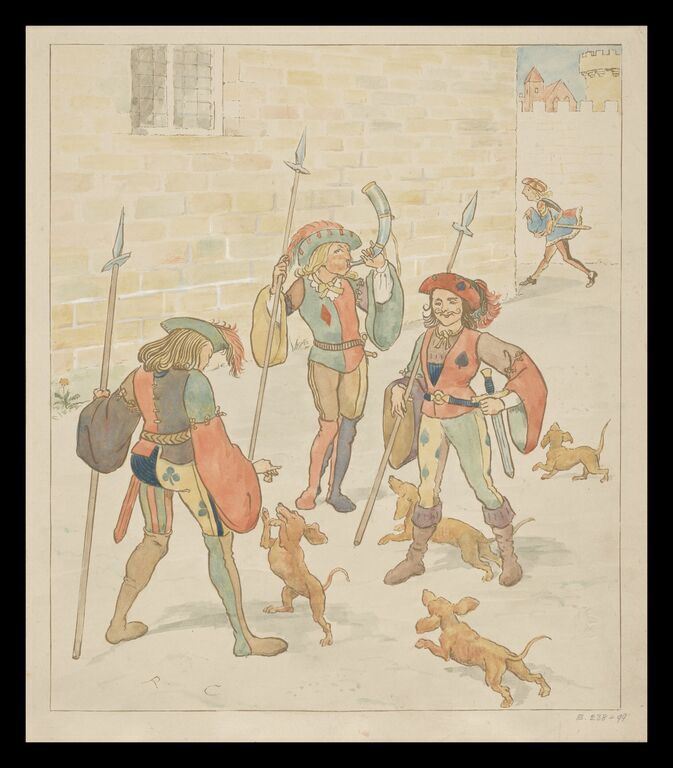
Behind the well-loved Victorian pages of "The House that Jack Built" and "Babes in the Wood" lies a rich, interwoven history of art, marriage, and archival discovery. At the Victoria and Albert Museum (V&A) in London, a dedicated five-month cataloguing project is currently breathing new life into the museum’s extensive collection of works on paper by Randolph Caldecott (1846–1886). Supported by The Randolph Caldecott Collection Trust, an ongoing internship at the institution is offering unprecedented insight into the celebrated artist’s life, career, and the fascinating journey his works took to enter the museum’s permanent holdings.
Caldecott remains a towering figure in the history of illustration, best remembered for his pioneering annual "Picture Books" that transformed children’s literature in the late 19th century. Yet, his legacy extends far beyond published volumes. The V&A houses more than 700 drawings, hand-coloured proof prints, and unpublished illustrations that offer a rare glimpse into the artist’s creative process. Crucially, nearly half of this invaluable collection was acquired directly from Marian Caldecott, the artist’s wife, following his untimely death.
Marian and Randolph’s Life in Kent
The story of Randolph and Marian Caldecott is deeply rooted in the picturesque county of Kent. Marian Brind, the daughter of a Chelsfield businessman whose family enterprise traded as wine merchants alongside various other commercial ventures, met Randolph in the late 1870s. At the time, Randolph was living in Kemsing, situated about seven miles away from Chelsfield. The couple married in 1880, after which Marian joined him in his artistic pursuits.
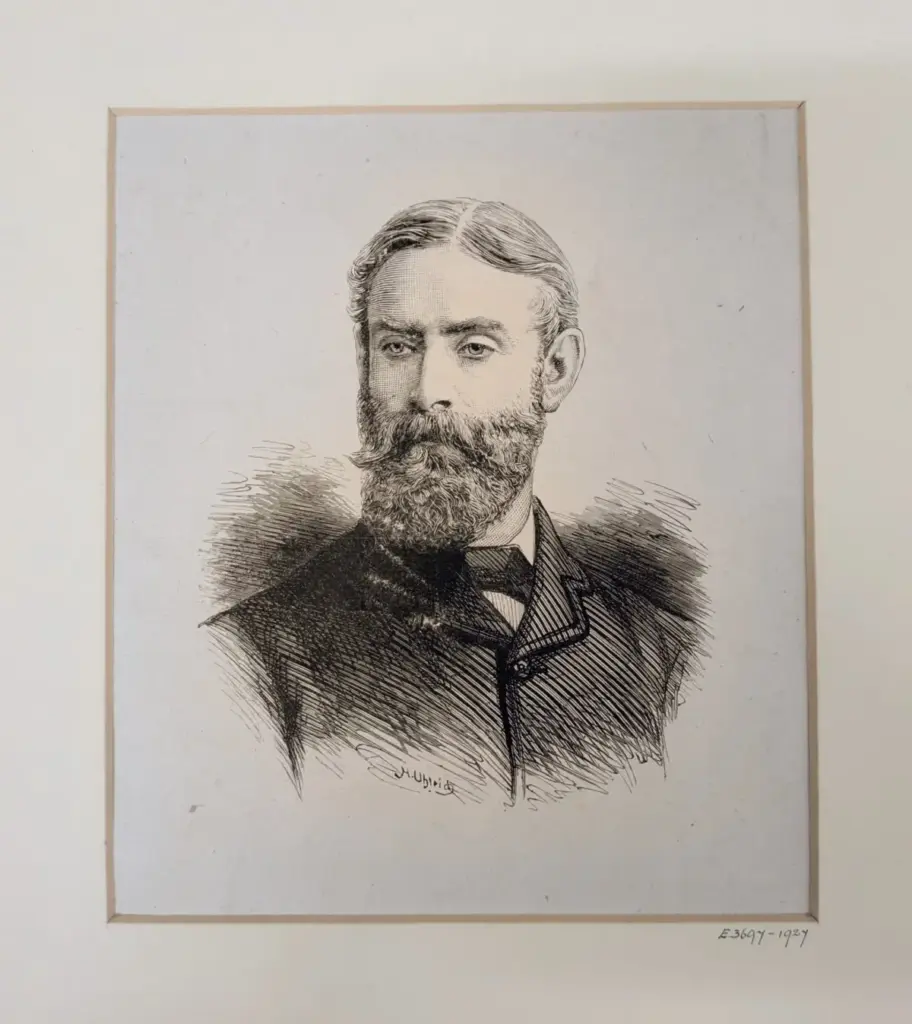
Intriguingly, the Brind family home in Chelsfield shared a garden wall with the local parish church, placing them in close proximity to Heinrich Sigismund Uhlrich (1846–1937), a German wood engraver who had emigrated from Norway in the early 1870s. Uhlrich lived nearby and contributed to The Graphic newspaper—a prominent publication that also featured illustrations by Caldecott. The professional and personal circles of these men intersected deeply; Uhlrich was ultimately responsible for engraving the poignant portrait of Randolph Caldecott that accompanied the artist’s memorial in The Graphic following his death in 1886.
While it might seem an extraordinary coincidence that two major contributors to the same London newspaper lived doors apart in a small Kent village, historical timelines suggest a more organic connection. Caldecott was still residing in London when Uhlrich arrived in England and began his work with The Graphic. Caldecott did not relocate to Kent until a full year after Uhlrich married Sarah Anne Morgan, the daughter of a local Chelsfield farming family, in 1878.
Given that Sarah Morgan and Marian Brind were very close in age and lived adjacent to the church where the wedding took place, it is entirely possible that this ceremony served as the introduction between Caldecott and his future wife. Although Randolph’s published letters remain quiet on the exact details of how he met Marian, the proximity of the wedding in the village makes it a compelling hypothesis. Randolph and Marian would be married in that very same church just two years later.
Depictions of Marian Caldecott
Throughout their marriage, Marian and Randolph travelled extensively together, undertaking journeys driven by both artistic inspiration and the demands of Randolph’s increasingly fragile health. They frequently spent the harsh winter months in the milder climates of the French Riviera. According to the Randolph Caldecott Society, Marian is believed to be depicted in one of the illustrations created for Breton Folk, though art historians have long debated which specific figure she represents. Curator and researchers have also pondered whether the female figure on the right of the watercolor painting "The Gavotte," executed in 1880 during their time in England or France, might be a portrait of Marian.
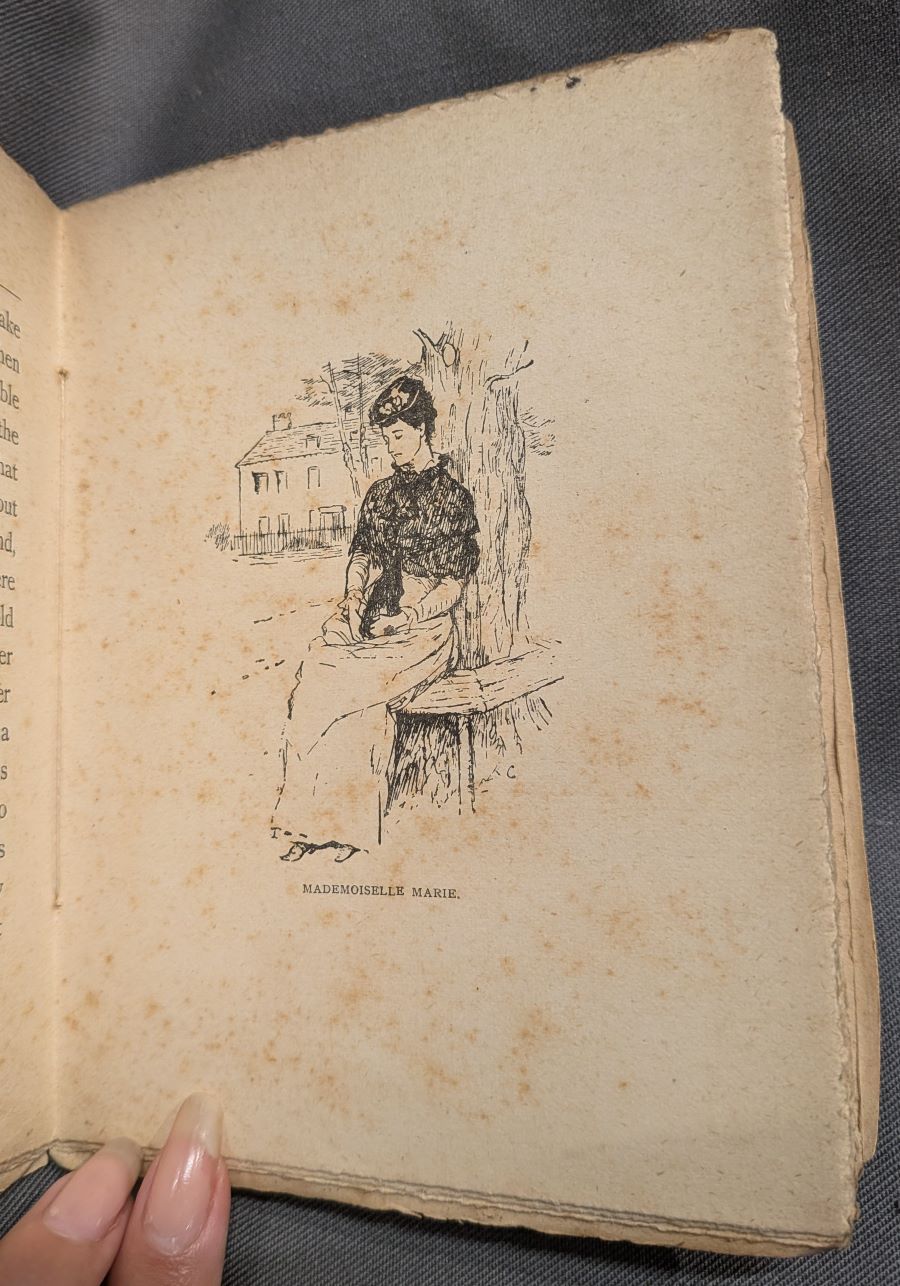
Direct visual comparisons remain challenging because formal, confirmed depictions of Marian are exceptionally rare. However, archival discoveries continue to yield surprises. An annotated copy of The Owls of Olynn Belfry, discovered posthumously among Randolph’s effects, revealed that the drawing of the character "Mademoiselle Marie" was directly modelled on Marian.

While her physical likeness may not appear frequently across his published output, Marian is a constant presence in Randolph’s surviving correspondence, where she is affectionately referred to as "Mrs. C." Randolph moved within an elite social and professional circle of high-profile Victorian artists, maintaining close ties with luminaries such as Sir Frederic Leighton, John Everett Millais, and George du Maurier. Marian was warmly introduced to this distinguished network, frequently corresponding with notable literary figures like the writer Juliana Horatia Ewing. At one point, Marian even offered to act as Randolph’s personal secretary to manage his heavy administrative workload, though the artist politely declined, noting that he was far too particular to let anyone else handle his correspondence.
Marian Caldecott and the V&A
The deep partnership between Randolph and Marian faced tragic circumstances in the winter of 1885 and early 1886. In a letter written in November 1885, Randolph expressed concern that "Mrs. C. was not very well," having suffered from severe seasickness during an ocean voyage to the United States. Tragically, just a few months later, unseasonably harsh and cold weather in Florida severely worsened Randolph’s already delicate health, leading to his death in February 1886 at the age of 39.
In the wake of her husband’s passing, Marian demonstrated a fierce dedication to preserving his memory on her own terms. Writing to the couple’s mutual friend, Frederick Locker-Lampson, she outlined her vision for a memorial committee, insisting that it should include "no one who is not known to have some interest in and admiration for Randolph’s work, or him self, no dragging in of names of people who don’t care, just to make a ‘boom’."

Admirers of Caldecott’s whimsical, highly influential style were fortunately not difficult to marshal. Among his prominent friends was the painter Thomas Armstrong, who conveniently served as the Director of Art at the V&A—then known as the South Kensington Museum. Through arrangements facilitated by Armstrong, Marian successfully negotiated the sale of numerous original drawings and proof prints to the museum in the years following Randolph’s death. These acquisitions were prized not merely as fine examples of Victorian illustration, but as vital pedagogical tools for training the next generation of art students.
Yet, a deep dive into Marian Caldecott’s nominal file within the V&A archive reveals that her relationship with the institution extended far beyond her role as the custodian of her late husband’s artistic estate. In 1896, Marian loaned an authentic 18th-century sack dress to the museum. Dating from the 1770s, the garment bears clear signs of having been altered for fancy dress during the late 19th century—transformations that naturally raise the question of whether Marian herself wore or modified the piece for artistic or social gatherings.
Because Randolph frequently utilized costumed models and populated his illustrations with generalized "historical" dress heavily reminiscent of the late 18th century, the discovery of this loan has sparked a new treasure hunt for the current cataloguing team. Researchers now maintain a sharp eye for familiar silhouettes and garments appearing across Caldecott’s illustrated corpus.

Historical records trace the trajectory of this loaned garment through the early decades of the 20th century. By 1918, the sack dress remained on public display within the museum’s "Loan Court," also known as the Octagon Court and now designated as Gallery 40. In August of that year, amid heightening anxieties surrounding the "possible increase of attack from enemy aircraft" during the First World War, the V&A dispatched an administrative letter to Marian’s recorded London address, asking her to review the terms of the loan and confirm whether she wished for the garment to remain secured within the museum.
Unfortunately, the museum’s correspondence was returned stamped as "not known" and "gone away." While this administrative dead end initially threatened to obscure Marian’s later years, deeper archival investigation revealed that she had departed London and returned to Kent at least two decades prior. She spent her later years living alongside her sister, Amy, in Tunbridge Wells until Amy’s passing in 1931. Marian herself passed away the following year. Decades later, in 2005, the historic sack dress that she had entrusted to the institution was formally accessioned into the V&A’s permanent textile collection, where it remains accessible to the public online through the museum’s digital archives.
Through meticulous archival research and ongoing cataloguing projects, the life of Marian Caldecott is finally stepping out from the shadow of her celebrated husband. From her rural beginnings in Kent to mingling with the titans of Victorian high art and voyaging across the United States, Marian navigated a varied and remarkable life. Her proactive efforts to place Randolph’s drawings, proofs, and personal items within institutions like the V&A ultimately ensured that his vibrant artistic vision would endure for generations to come.