To mark World Children’s Day on November 20, humanitarian organizations and advocates are reflecting not only on the systemic challenges facing youth across the globe, but also on the remarkable power of grassroots intervention. Nowhere is this more vividly illustrated than in the story of Sara, a 14-year-old girl in Bangladesh whose life trajectory was permanently altered by a coordinated web of support involving a local children’s club, her neighbors, and a village religious leader. Her story serves as both a testament to the efficacy of community-led protection networks and a sobering reminder of the millions of young girls still vulnerable to early marriage.
Sara was just 14 years old when she discovered that her parents were secretly planning her wedding. At an age when her primary concerns should have been attending secondary school, mastering her studies, and navigating adolescence, she was suddenly confronted with the prospect of an entirely adult life for which she was profoundly unready. She was still enrolled in school, and she desperately wanted to stay there, harboring dreams of a future far beyond the immediate confines of her domestic sphere.
However, her family was struggling severely to get by financially. Plunged into economic precarity, her parents found themselves facing the heavy strain of daily survival. Like countless other parents in similarly dire circumstances, they genuinely believed that marrying off their daughter would secure her future, providing her with a stable household while simultaneously easing the economic burden on their own family. In their minds, they were making a difficult, sacrificial choice that they thought was the best they could possibly do for her under the weight of crushing poverty.
In many societies and communities facing acute economic distress, girls in Sara’s exact position feel entirely powerless, believing they have no alternative but to quietly acquiesce to their parents’ decisions. They bow to cultural pressures, family expectations, and the overwhelming current of tradition. Instead of resigning herself to this fate, however, Sara made a courageous choice: she decided to speak out and tell someone.
A Message to the Children’s Club
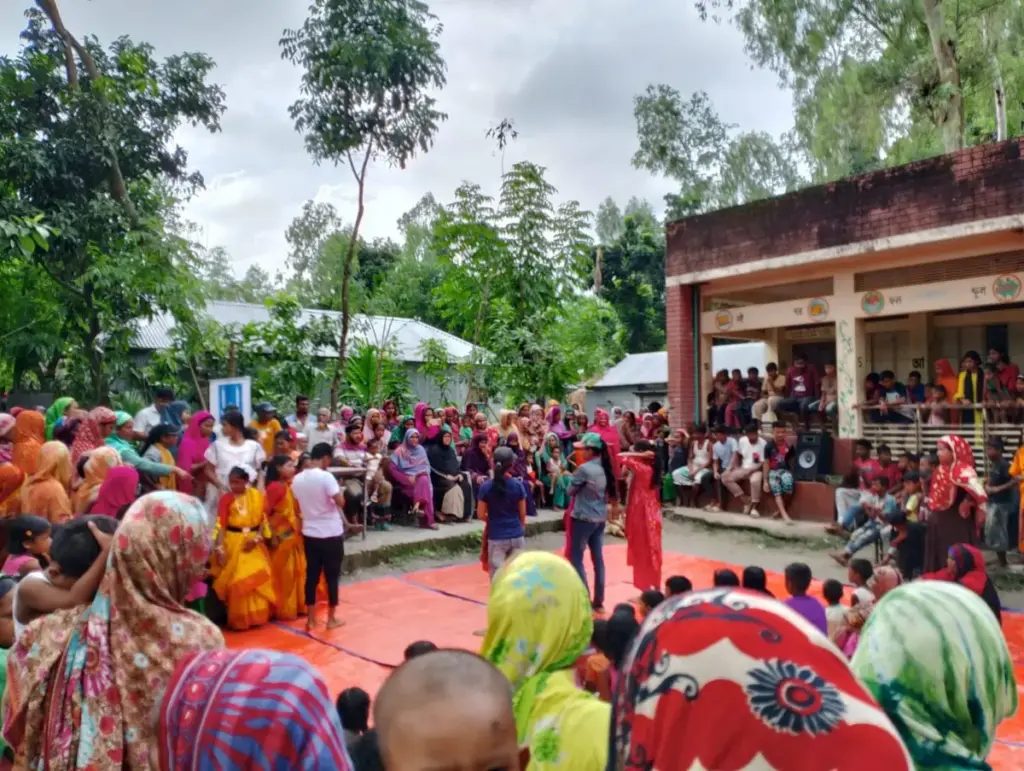
Sara’s first step toward altering her destiny was reaching out to a peer leader from her local children’s club. These vital grassroots clubs operate under the umbrella and support of Islamic Relief’s Improving Protection of Children at Risk through Socio-Economic Empowerment, commonly known as the PRiSE project. The overarching objective of these clubs is to provide children with a secure, nurturing environment where they can meet regularly, learn comprehensively about their fundamental human rights, and look out for the welfare of one another. Crucially, the peer leaders heading these initiatives are children themselves. Because they speak the same language, share the same daily realities, and understand the social pressures unique to their generation, they act as accessible bridges, helping their friends comprehend their rights and guiding them on precisely where to turn when danger arises.
In Sara’s instance, this robust peer network meant that the local youth leader immediately recognized the gravity of the situation and knew exactly what protocols to follow. Without hesitation, action was taken. Together with other dedicated members of the children’s club, the peer leader escalated Sara’s situation to the leaders of local self-help groups. Within a remarkably short span of time, this initial ripple of concern expanded to draw in members of the formal child protection committee, watchful and empathetic neighbors, and the local village imam.
Conversation, Not Confrontation
What distinguished the intervention in Sara’s case was the method of engagement chosen by the community coalition. Nobody arrived at Sara’s family home with the intention of passing harsh judgment, pointing fingers, or shaming her parents for a decision born out of desperation. Instead, the collective group approached the family with deep respect, engaging them in constructive dialogue as fellow members of the same community who shared a mutual investment in the well-being of their children.
During these sensitive discussions, the group methodically explained the profound and lasting consequences that early marriage can inflict upon a young girl. They detailed how an underage union invariably cuts a girl’s education frustratingly short, effectively closing the door on her future independence and potential. Furthermore, they highlighted how early marriage exposes young girls to a significantly heightened risk of domestic violence and places their physical health in severe jeopardy if they become pregnant while their bodies are still maturing through childhood and adolescence.
Beyond these stark warnings, the group gently reminded the family of the legal framework governing the nation, noting that the law in Bangladesh strictly sets 18 as the minimum legal age of marriage for girls. They pivoted the conversation toward hope rather than mere restriction, painting a vivid picture of what Sara could realistically achieve, contribute, and accomplish if she were simply granted the opportunity to finish her formal studies.
The voice of the local imam carried particular weight and resonance throughout these discussions. In conservative or traditional rural settings, families frequently look directly to their faith leaders for moral guidance, spiritual counsel, and direction on major life milestones such as marriage. Consequently, when a respected religious leader boldly stands up to advocate for a girl’s fundamental right to learn, education, and personal development, the community listens with a profound level of attention and trust.
Confronted with these compassionate yet firm arguments, Sara’s parents openly admitted that their decision had been shaped entirely by a combination of grinding poverty, intense social pressure from people around them, and a fundamental lack of awareness regarding the full spectrum of severe risks associated with early marriage. Armed with this new perspective and supported by their community rather than alienated by it, they swiftly changed their minds. The planned wedding was permanently called off.
Today, Sara remains proudly enrolled in school. Looking ahead, she harbors a clear ambition: she wants to grow up to become a teacher so that she can actively support, mentor, and uplift other children emerging from communities precisely like hers. Reflecting on how the crisis was averted, it becomes clear that no single individual saved Sara. Instead, protection was achieved through an unbroken chain of human solidarity—starting with a child who knew who to trust, moving through other children who resolutely refused to stay silent, and culminating in adults who were humble and compassionate enough to listen to the youth.
A Risk Facing Millions of Girls
Tragically, Sara’s harrowing near-experience is far from an isolated incident; it represents a widespread systemic challenge. According to the latest national surveys in Bangladesh, an alarming 47.2 percent of women aged between 20 and 24 were married off before they reached their 18th birthday. While this statistic reflects a modest improvement from the 51 percent recorded in a previous national survey in 2019, it nonetheless underscores the sobering reality that nearly half of all young women in the country continue to experience the disruptive reality of early marriage.
On a global scale, the numbers are equally staggering. The United Nations Children’s Fund, or UNICEF, estimates that approximately 12 million girls around the world are married before the age of 18 every year, disrupting countless childhoods and depriving societies of immense human potential.
Poverty remains the primary engine driving many of these devastating decisions. When agricultural harvests fail unexpectedly, when catastrophic floods devastate local economies, or when a primary breadwinner loses their employment, marrying off a daughter prematurely can deceptively appear to desperate families as the only viable coping mechanism to survive economic collapse. Compounding this, recent findings by UNICEF indicate that extreme weather events and climate change shocks directly push child marriage rates upward—a terrifyingly growing threat in a geographically vulnerable nation as heavily exposed to environmental and climate shocks as Bangladesh.
This stark socioeconomic reality is precisely why comprehensive developmental initiatives like PRiSE focus on dual fronts simultaneously. The project works actively to protect children from immediate physical and social harm while concurrently assisting vulnerable families in building stronger, more resilient livelihoods. By addressing the root economic causes of distress, the project ensures that parents are not cornered by circumstance into making harmful, irreversible decisions regarding their children’s futures.
How We Work to Prevent Early Marriage
At Islamic Relief, the foundational belief is that every single child possesses an inherent, unalienable right to grow up safe from harm and to personally shape the trajectory of their own future. Effectively ending early and forced marriage—frequently referred to simply as child marriage—requires a holistic, community-wide strategy. This entails working closely and continuously with every demographic that exerts an influence over a child’s daily life, including the children themselves, their parents and extended family members, local educators, faith leaders, and institutional stakeholders.
Organizations working in this space support local community child protection committees and youth-led children’s clubs, helping families fully recognize and internalize the profound risks of underage unions. At the same time, they ensure that children who find themselves in imminent danger can swiftly and safely access the appropriate support services. Furthermore, cultivating close partnerships with religious and faith leaders remains a cornerstone of these efforts, as their authoritative voices possess the unique capacity to shift how an entire community perceives marriage, formal education, and the fundamental rights of girls.
My Day. My Rights. My Future.
That empowering phrase serves as the official theme for World Children’s Day, and Sara is living proof of its truth in action. She is sitting in a classroom, eagerly planning a future career as an educator, and actively making her own informed choices about where her life will take her. Every child on earth deserves that exact fundamental opportunity.