WASHINGTON — Exactly one year after an internationally backed peace plan for Gaza was officially launched under the endorsement of the United Nations Security Council, five of the world’s leading humanitarian organizations have issued a scathing joint evaluation, giving the initiative a failing grade.
According to the new comprehensive scorecard released on November 19, 2026, the 20-point Gaza plan—originally introduced during the Trump administration—scored a dismal 4 out of 26 points. This represents a further decline from a score of 5 recorded in a previous evaluation conducted at the six-month mark in April 2026. The deteriorating numbers reflect a deepening crisis on the ground, where promised safety, reconstruction, and relief have failed to materialize for the civilian population.
The assessment was led by a coalition of five major international humanitarian agencies: the Danish Refugee Council, the Norwegian Refugee Council, Oxfam, Refugees International, and Save the Children. The collaborative scorecard measures ongoing developments against the explicit objectives outlined in the 20-point plan itself, focusing on crucial metrics such as civilian protection, humanitarian access, reconstruction and economic development, and freedom of movement and return.
The findings paint a grim picture of life in the enclave over the past year. Between the official declaration of the ceasefire in October 2025 and mid-November 2026, at least 1,650 Palestinians have been killed and 5,975 wounded. This tragic milestone means the death toll has more than doubled since the six-month evaluation period. Furthermore, territorial dynamics have shifted unfavorably for displaced civilians; Israeli forces now maintain control over up to 70 percent of Gaza, an increase from 58 percent at the commencement of the ceasefire. Throughout the year, the United Nations has consistently reported near-daily Israeli airstrikes striking densely populated residential areas.
A central pillar of the ceasefire agreement, which was formally endorsed by UN Security Council Resolution 2803 on November 17, 2025, mandated that a minimum of 600 UN-coordinated aid trucks must enter Gaza daily to sustain the population. In stark contrast to this agreed-upon target, data from September showed an average of just 49 UN-coordinated aid trucks entering the territory each day. Even more alarming, only 2 percent of those limited shipments carried critical medical supplies.
This severe restriction on medical logistics has triggered catastrophic shortages of basic medicines and essential healthcare supplies, directly resulting in preventable deaths from treatable injuries and illnesses. Consequently, the humanitarian access metrics within the ceasefire deal received a score of zero—matching the failing grade assigned during the April 2026 assessment.
Humanitarian workers report that the Government of Israel continues to actively obstruct the delivery of essential shelter materials, specialized medical equipment, and the necessary supplies required to rehabilitate fractured water and sanitation infrastructure. As a result, nearly the entire civilian population of 2.1 million people continues to struggle daily to access clean water, adequate healthcare, and sufficient food.
The infrastructure collapse is nearly total. All six wastewater treatment plants across Gaza remain completely out of service, and not a single hospital is currently operating at full capacity.
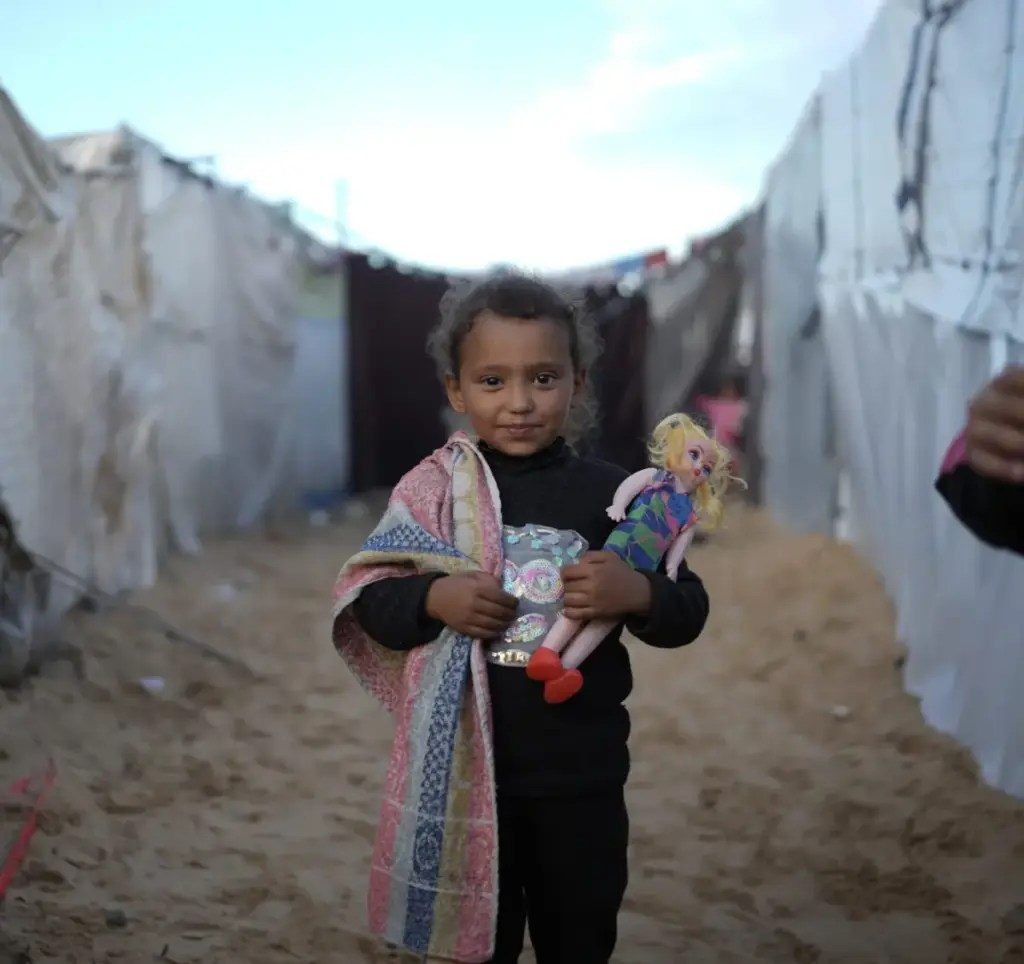
Compounding these compounding tragedies, Gaza is now facing its fourth winter with virtually no protection from freezing temperatures, wind, and heavy rain. Nearly 1 million Palestinians are currently sheltering in sites that have been designated as being at medium or high risk of severe flooding. Additionally, 89 percent of households report the presence of rodents inside their makeshift shelters, creating an escalating public health hazard.
The vulnerability of the population was starkly illustrated earlier this month when a severe rainstorm flooded more than 70,000 tents. Amid the freezing conditions, the death of a 9-month-old infant from hypothermia was reported, underscoring the lethal combination of inadequate shelter and withheld aid.
In response to these catastrophic conditions, the coalition of humanitarian organizations has issued an urgent plea, urging the UN Security Council, the Board of Peace, and all Member States to leverage their diplomatic and political influence to secure immediate, unconditional humanitarian access and strictly enforce the terms of the ceasefire.
Prominent leaders from the participating organizations voiced profound frustration over the international community’s failure to enforce the commitments made a year ago.
“One year into the so-called ceasefire, Palestinians are still waiting for the safety and humanitarian relief they were promised,” said Jeremy Konyndyk, President of Refugees International. “People are still being killed, Israeli forces are expanding control of Gaza, and families are facing another winter in flooded tents while desperately needed supplies sit just across the border. None of this is inevitable. Israel has clear obligations both under Trump’s peace plan and under international law to protect civilians and allow humanitarian aid into Gaza. The United States and other UN Security Council members must use their leverage to ensure those obligations are met. The commitments made a year ago mean little if they do not change the reality on the ground.”
Jan Egeland, CEO of the Norwegian Refugee Council, echoed these sentiments, emphasizing that the immense suffering of Gaza’s population is a man-made crisis that demands an immediate international response.
“The suffering of Gaza’s 2.1 million people is not inevitable. The world must stop accepting it,” Egeland stated. “Palestinians should have the opportunity to recover, rebuild their lives and work towards a better future. But this is not possible unless Israel fulfils its obligations under international law: opening all crossings, allowing humanitarian aid to enter, and ending its unlawful occupation of Palestinian land.”
The impact on the younger generation remains one of the most devastating aspects of the ongoing stalemate. Ingest Ashing, CEO of Save the Children International, highlighted the unfulfilled promises made to the children of the enclave.
“One year ago, the world was promised that Gaza’s children would finally see safety, relief and a chance to rebuild their lives. Instead, they are colder, hungrier, more traumatized and more at risk than they were before. This was supposed to be a roadmap out of catastrophe. Instead, catastrophe has deepened. The international community cannot continue to look away. The children of Gaza do not deserve this,” Ashing said.
Local civil society voices also condemned the systemic failures of regional and international bodies. Mohsen Abu Ramadan, a Board Member of the Palestinian NGOs Network, offered a sharp critique of the political structures governing the peace process.
“Regretfully, the Board of Peace failed the international community and continue to provide political cover for ongoing genocide and atrocities,” Abu Ramadan said. “We call on member states—especially those with leverage over Israel—to stop issuing plans and take concrete actions: impose an arms embargo, ensure unconditional humanitarian access, and pursue accountability for war crimes. Protecting Palestinian lives and dignity is not only for Palestinians—it is the last line of defense for what remains of our shared humanity and human values.”
Abby Maxman, President and CEO of Oxfam America, placed direct responsibility on political decisions made by participating governments.
“The ceasefire in Gaza is failing and Palestinians are still dying, which is a direct result of policy choices made in Israel, the US, and at the UN,” Maxman said. “Instead of abiding by the ceasefire plan, the Israeli government is continuing its attacks, forcing Palestinians to try and survive without adequate food, water, shelter, or sanitation, amid open sewage and freezing rain—all while the United States does little to stop it. As we have been saying, the government of Israel must allow aid to enter, end its attacks and collective punishment on all Palestinians in Gaza, and allow the long process of rebuilding to begin.”
Detailing the physical confinement and ongoing displacement of civilians, Lilu Thapa, Executive Director for the Middle East, Asia, and Europe at the Danish Refugee Council, described how military expansion has squeezed the remaining population into precarious conditions.
“A year into the ceasefire, Palestinians in Gaza are being confined as the Yellow Line expands. Israeli forces now control nearly 70 percent of Gaza, and 1.8 million people are squeezed into displacement sites lacking clean water and sanitation,” Thapa noted. “Families that have already fled up to a dozen times are forced to move again when gunfire and explosions erupt, often with no warning. This is displacement by design, and a ceasefire that allows it is a ceasefire in name only. The international community must use its leverage to halt the expansion of the Yellow Line and guarantee Palestinians’ right to return safely to their homes.”