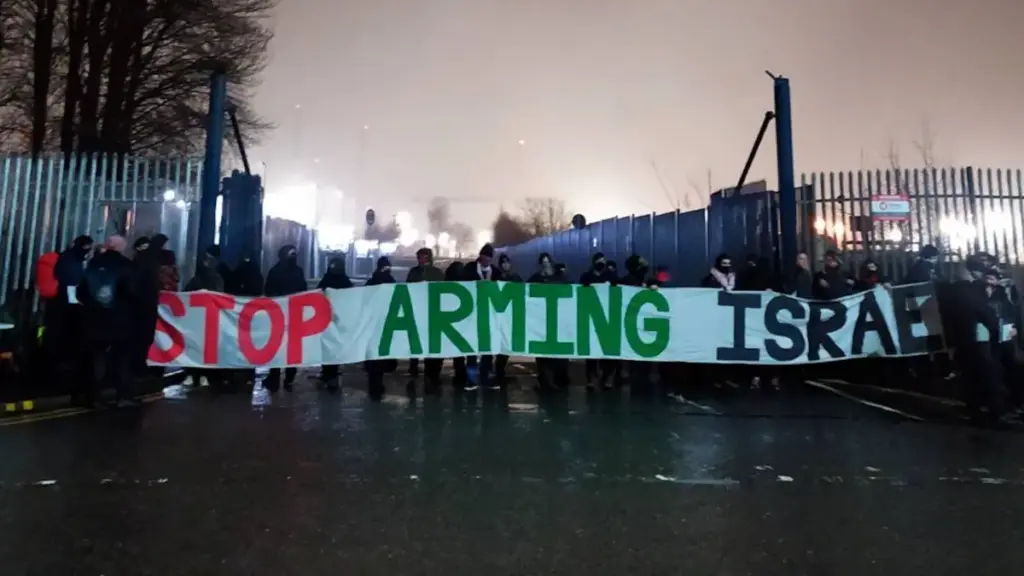
GLASGOW — Local residents, community organizers, and anti-war activists have staged a major blockade at the gates of major defense manufacturer BAE Systems in Glasgow, Scotland, halting operations and demanding an immediate halt to military exports linked to ongoing conflicts in the Middle East.
Beginning in the early morning hours at 5:00 am, a crowd of approximately 100 demonstrators converged on multiple entrances to the facility. The gathering is part of a growing wave of direct action across the United Kingdom targeting defense plants that supply components for military aircraft and munitions utilized in international conflicts.
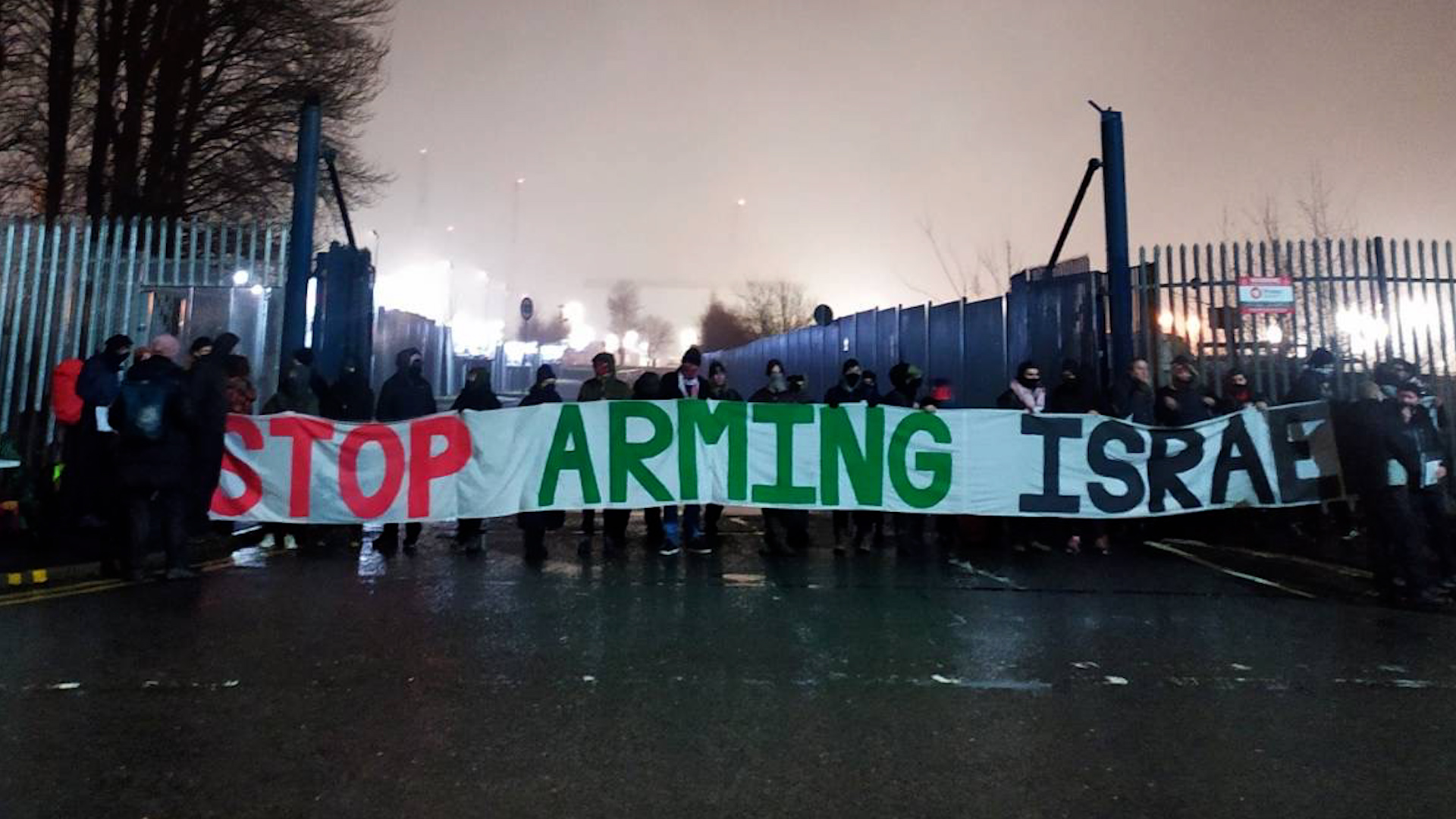
The demonstrators gathered outside the Scottish facility with a clear and urgent set of demands, calling for an immediate and permanent ceasefire in Gaza, an end to the ongoing military bombing campaign in Yemen, and a comprehensive halt to all British arms exports to Israel.
Participants at the blockade emphasized the role that multinational defense corporations play in fueling foreign conflicts through the manufacture and supply of critical military hardware. Among the crowd was 24-year-old John, an electrician from the local area who explained his motivation for joining the early morning protest.
"We are not going to stand by while Israel continues to indiscriminately bomb innocent civilians using weapons manufactured by BAE, Thales, and Leonardo," John said. "I’m here today because clearly, we are being ignored in our calls for a ceasefire and because direct action works in forcing change."

The facility in Glasgow is a key site for manufacturing and engineering components utilized in advanced military aircraft, including parts for the F-35 fighter jet. Human rights organizations and international monitors have documented the deployment of these multi-role stealth aircraft in ongoing military operations in the Gaza Strip. Activists argue that the continuous supply of replacement parts and technological components implicates British manufacturing facilities in severe violations of international humanitarian law.
Today’s demonstration follows a similar high-profile protest that took place in December, which successfully shut down BAE’s Glasgow factory as part of a coordinated nationwide day of action targeting arms manufacturing sites across the United Kingdom. Organizers behind these demonstrations maintain that public pressure and physical blockades are necessary tools to disrupt the supply chains feeding foreign military campaigns when traditional political lobbying fails to yield policy shifts from Westminster.
In response to the demonstrations and mounting public scrutiny regarding the humanitarian crisis in Gaza, a spokesperson for BAE Systems issued a formal statement addressing the company’s position on the conflict and its regulatory compliance.

"We’re horrified by the situation in Israel and Gaza and the devastating impact it’s having on civilians in the region and we hope it can be resolved as soon as possible," the BAE Systems spokesperson said. "We operate under the tightest regulation and comply fully with all applicable defence export controls, which are subject to ongoing assessment."
Despite these assurances from defense contractors, the legal and political framework governing arms exports is facing unprecedented international challenges. The protest in Glasgow unfolded against the backdrop of significant legal developments regarding military exports in Europe. Just days prior, a Dutch court issued a landmark ruling ordering the government of the Netherlands to halt the delivery of F-35 fighter jet parts destined for Israel. The Dutch court based its decision on the finding that there was a "clear risk" that the exported components would be used to commit or facilitate serious violations of international humanitarian law.
As the morning protest in Glasgow continued, demonstrators maintained their positions outside the facility gates, holding banners and chanting slogans directed at corporate management and government officials alike. Local authorities monitored the demonstration as traffic around the industrial site experienced disruptions. Activists have vowed to continue their mobilization efforts and direct actions until policymakers implement a comprehensive arms embargo and take concrete steps to secure a lasting ceasefire in the region.