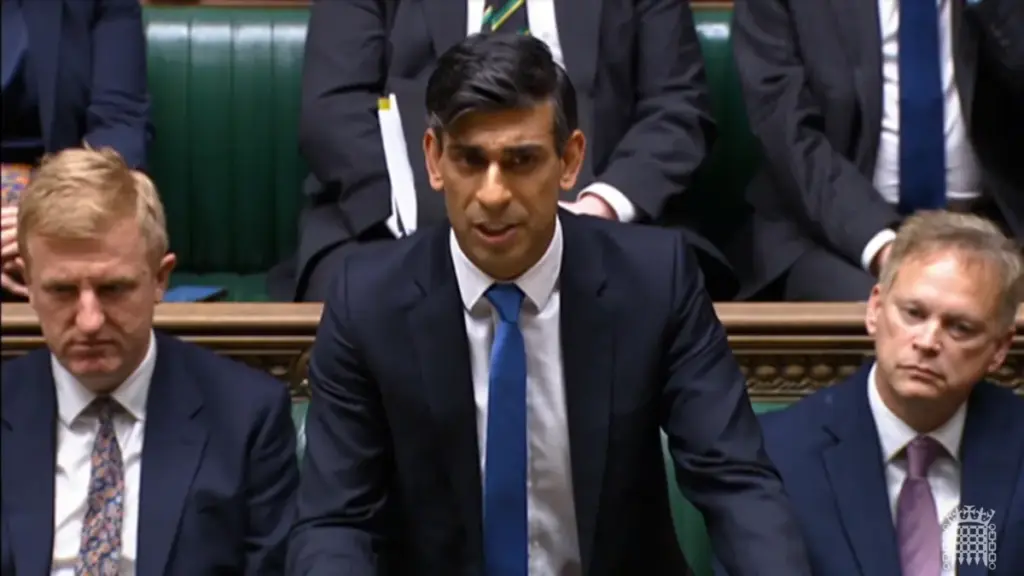
British Prime Minister Rishi Sunak has adopted a hardline stance regarding domestic reactions to the escalating crisis in the Middle East, declaring that anyone within the United Kingdom who glorifies the attacks carried out by Yemen’s Houthis is effectively glorifying terrorism. Speaking in a recent address, the Prime Minister announced a strict "zero tolerance" policy directed at individuals and groups within the country who express support for the militant group’s military campaigns. The remarks come as geopolitical tensions continue to spill over from the region, sparking intense domestic debates across British society concerning free speech, national security, and the ongoing conflict in Gaza.
During his address, Prime Minister Sunak formally rejected any direct correlation between the ongoing military operations launched by the Houthis in the Red Sea and Israel’s military campaign in Gaza. While international observers and regional actors have frequently pointed to the humanitarian catastrophe in Gaza as the primary catalyst for the maritime disruptions, the UK government has firmly maintained that the Houthi assaults on international shipping lanes are unjustified acts of aggression that threaten global trade and maritime security. By separating the two issues in official policy rhetoric, the British administration aims to frame the maritime security crisis not as a localized protest or solidarity movement, but as a direct challenge to international law and freedom of navigation.

The Houthis, officially known as Ansar Allah, have repeatedly stated that their targeting of commercial and military vessels in the Red Sea and surrounding waters is a direct response to the plight of Palestinians in the besieged Gaza Strip. The movement has publicly maintained that its maritime operations will only cease when the ongoing military actions and what they describe as crimes in Gaza are brought to an end. Furthermore, the group has outlined specific humanitarian demands, insisting that adequate quantities of food, essential medicines, and vital fuel supplies must be allowed to reach the civilian population trapped inside the blockaded territory.
Despite these stated motivations from Sanaa, the British government remains resolute in its refusal to link the two conflicts, emphasizing instead the immediate threat posed to global supply chains and international merchant shipping. The disruption of maritime traffic through the Bab el-Mandeb strait and the Red Sea has forced numerous major shipping companies to reroute their vessels around the Cape of Good Hope, leading to significantly extended transit times, increased shipping costs, and heightened economic concerns for international markets. In response to these escalating threats, the UK, alongside international allies, has engaged in defensive measures and military strikes aimed at degrading Houthi capabilities and deterring further attacks.
Domestically, the government’s newly announced "zero tolerance" approach signals a significant intensification of scrutiny regarding public demonstrations, online commentary, and political discourse concerning the Middle East conflict. Prime Minister Sunak stressed that domestic expressions of support for Houthi actions cross the line from legitimate political debate into the realm of supporting terrorism, warning that authorities will be monitoring such activities closely. This stance has raised important questions among civil liberties advocates regarding the boundaries of free expression and the legal definitions surrounding the endorsement of overseas armed groups. As the situation in both the Red Sea and Gaza continues to evolve, the British government’s dual approach of international deterrence and domestic enforcement underscores the profound domestic and international ramifications of the ongoing crisis.