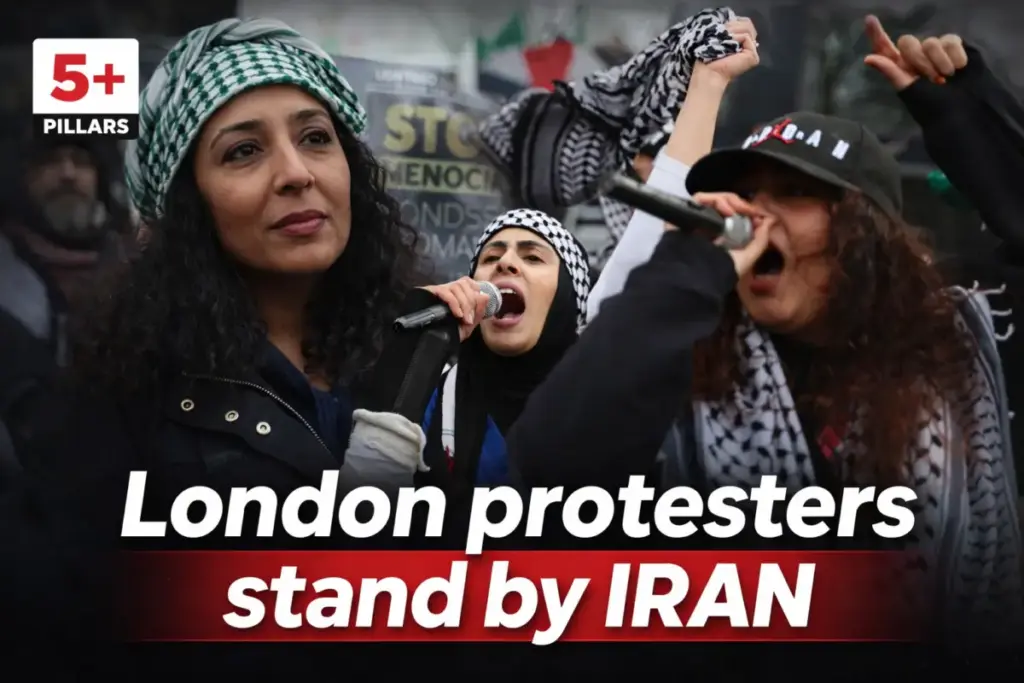
The demonstration brought together a diverse coalition of peace activists, community organizers, anti-war campaigners, and concerned citizens who marched through the British capital to demand an immediate de-escalation of hostilities. Protesters carried an array of prominent banners bearing direct messages aimed at international and domestic political leaders. Slogans clearly visible throughout the march included "Stop Trump’s wars," "Tell Starmer: Stop arming Israel," "End nuclear hypocrisy," and "Stop bombing Iran." Alongside these political demands, demonstrators displayed numerous Iranian and Palestinian flags, drawing visible parallels between ongoing regional military actions and broader geopolitical struggles across the Middle East.
Speakers and organizers addressing the crowds at the demonstration focused heavily on the immediate danger of a wider regional war. Activists voiced acute anxiety that ongoing military strikes and strategic escalations by Washington and Tel Aviv risk plunging the entire region into irreversible devastation. The overarching sentiment among the participants was a firm insistence that the United Kingdom must maintain a strict policy of non-intervention, staying entirely clear of any involvement, logistical support, or diplomatic backing for what speakers repeatedly characterized as an illegal and destabilizing military adventure.

A major focal point of the London protest was the domestic political landscape within the United Kingdom, specifically targeting Prime Minister Keir Labour and his government’s foreign policy posture. Protesters explicitly called on Downing Street to halt British arms sales and military assistance that they argue facilitate ongoing violence in the region. The inclusion of placards targeting the Prime Minister underscored a growing domestic disconnect between the official policy lines of the UK government and sections of the British public who reject foreign military alignments that risk drawing the nation into prolonged international conflicts.
The march also brought forward broader critiques regarding international double standards, particularly concerning nuclear policies in the Middle East. Placards demanding an end to "nuclear hypocrisy" highlighted longstanding grievances held by anti-war groups regarding the asymmetrical scrutiny applied to regional military capabilities. Protesters argued that Western policy toward Iran ignores broader regional nuclear realities, thereby exacerbating tensions rather than fostering diplomatic solutions or regional security frameworks.
As the large-scale procession moved through designated routes in central London, it caused considerable public attention, drawing onlookers, media coverage, and expressions of solidarity from bystanders. Marshals and security personnel coordinated the movement of the thousands-strong crowd to ensure the demonstration remained orderly while maximizing its visual and auditory impact. Chants calling for peace, an end to foreign interventions, and immediate ceasefires echoed across iconic London thoroughfares as demonstrators made their collective voices heard.

The event in the British capital forms part of a wider international wave of public unease and demonstrations responding to the heightened state of confrontation involving Iran, the United States, and Israel. Peace organizations across Europe and beyond have increasingly mobilized in recent weeks as diplomatic channels strain under the weight of military escalations. For the thousands who marched in London, the demonstration served as a vital platform to register dissent, challenge official government narratives, and demand an immediate pivot toward diplomacy, restraint, and international law in place of military confrontation.