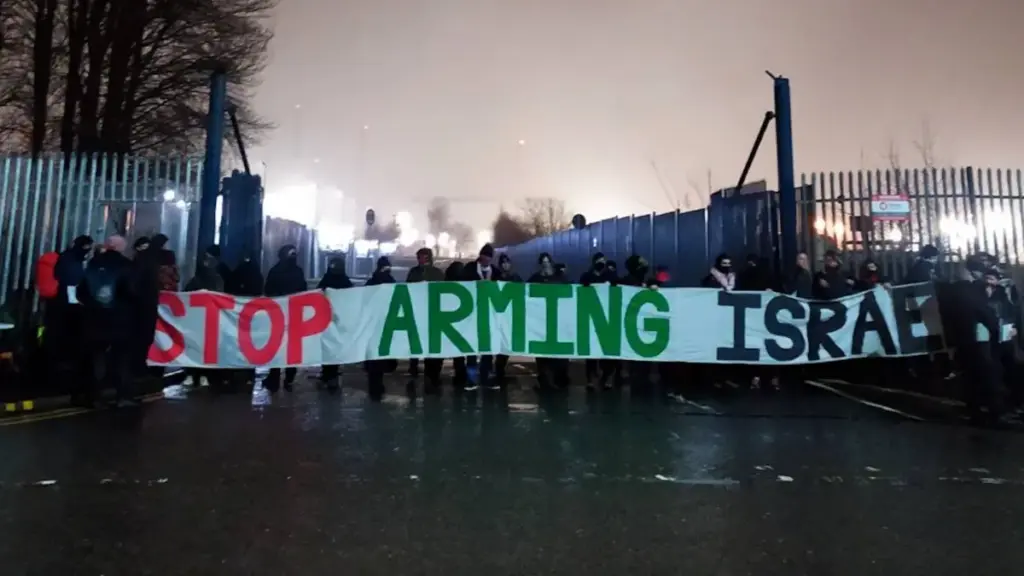
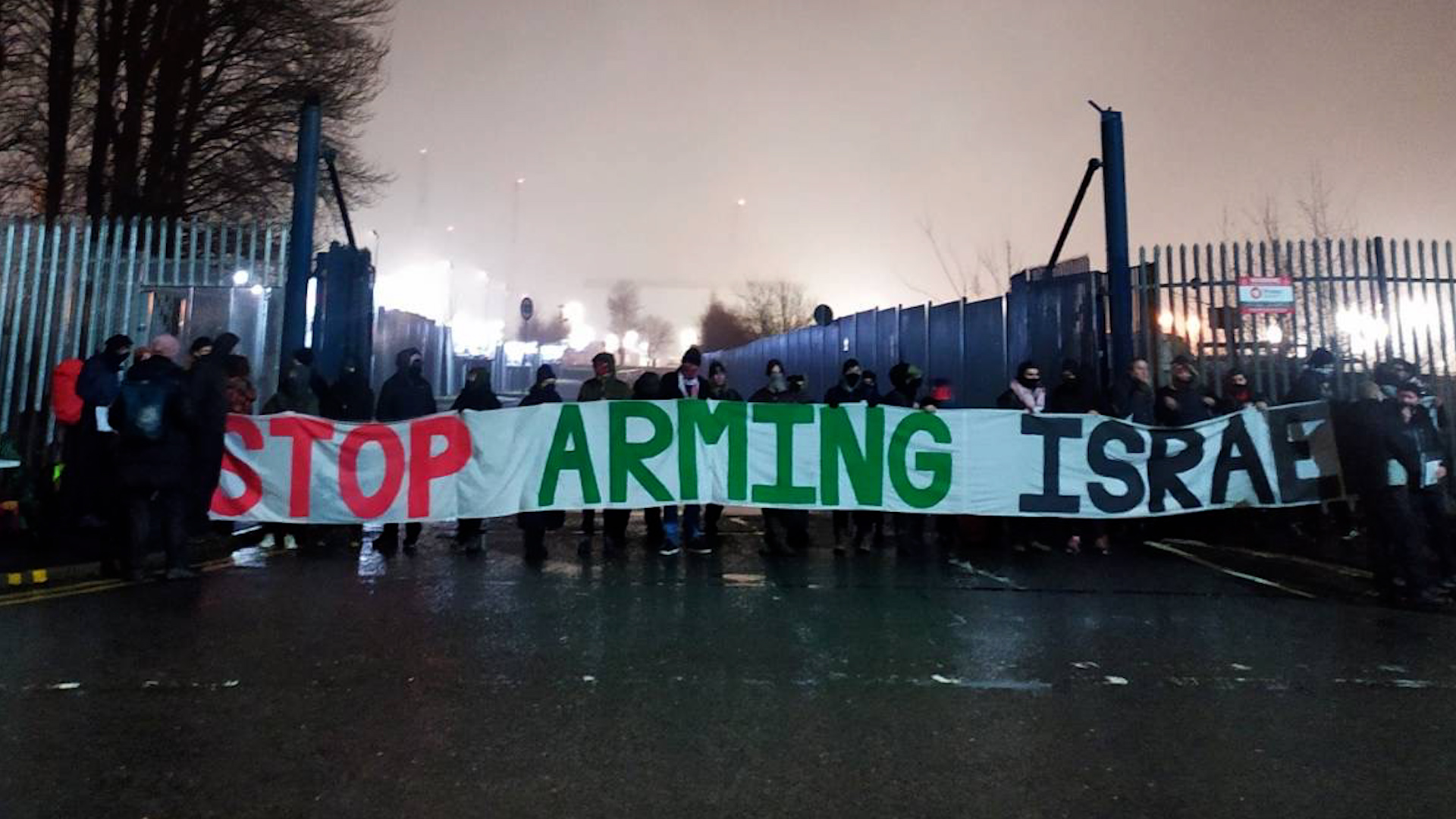
GLASGOW — Local residents and anti-war activists gathered in the early hours of the morning to blockade the gates of defense manufacturer BAE Systems in Glasgow, Scotland, demanding an immediate halt to arms exports to Israel, an end to the bombing of Yemen, and a permanent ceasefire in Gaza.
Beginning at 5 a.m., approximately 100 demonstrators assembled at the facility, positioning themselves to block multiple access gates and disrupt normal operations at the major defense manufacturing site. The protest is part of an ongoing wave of grassroots direct action targeting military supply chains across the United Kingdom amid the escalating humanitarian crisis in the Middle East.
Participants at the Glasgow demonstration highlighted BAE Systems’ role in manufacturing components for advanced military hardware utilized by the Israeli military, including critical parts for the F-35 lightning II fighter jet program. Critics and humanitarian organizations point to these aircraft as central to the extensive aerial bombardment campaign in Gaza, which has resulted in widespread civilian casualties and infrastructure devastation.
"We are not going to stand by while Israel continues to indiscriminately bomb innocent civilians using weapons manufactured by BAE, Thales, and Leonardo," said John, a 24-year-old electrician participating in the blockade. "I’m here today because clearly, we are being ignored in our calls for a ceasefire and because direct action works in forcing change."
The demonstration in Glasgow follows a similar mobilization in December, when protesters successfully shut down the same BAE Systems facility. Across the United Kingdom, activists have increasingly turned their focus toward defense contractors, logistics hubs, and government offices, arguing that existing UK arms export licensing processes are inadequate in preventing complicity in violations of international humanitarian law.

The blockade also comes against the backdrop of widening geopolitical tensions involving military interventions in Yemen and ongoing diplomatic standoffs over international trade routes and regional stability. Protesters explicitly linked the demand for an end to the bombing in Yemen with the wider call for Middle East de-escalation, emphasizing that the flow of Western-made military equipment fuels multiple concurrent conflicts.
In response to the demonstrations, a spokesperson for BAE Systems addressed the situation, expressing sympathy for those affected by the conflict while defending the company’s adherence to regulatory standards.
"We’re horrified by the situation in Israel and Gaza and the devastating impact it’s having on civilians in the region and we hope it can be resolved as soon as possible," the spokesperson said. "We operate under the tightest regulation and comply fully with all applicable defence export controls, which are subject to ongoing assessment."

Despite these assurances from defense manufacturers, legal and political pressure regarding arms exports has intensified internationally. Just days prior to the Glasgow blockade, a Dutch court issued a landmark ruling ordering the Netherlands to halt the delivery of F-35 fighter jet parts to Israel. The court based its decision on the determination that there was a "clear risk" that the exported components would be utilized in committing or facilitating serious violations of international humanitarian law.
The Dutch ruling has energized activist networks and legal campaigners across Europe, who are increasingly utilizing domestic courts and direct action to challenge government-approved defense trade with nations engaged in active military conflicts. Legal scholars and human rights advocates suggest that such rulings could set significant precedents for other nations supplying military hardware components, including the United Kingdom, where similar legal challenges have been mounted by civil society organizations.
As the morning progressed, the Glasgow blockade continued to draw local attention, with passing motorists honking in support and local solidarity networks supplying hot drinks and provisions to the assembled crowd. Police maintained a monitoring presence outside the facility as activists vowed to maintain their positions for as long as possible to disrupt the workday routine at the defense contractor’s Scottish manufacturing plant.