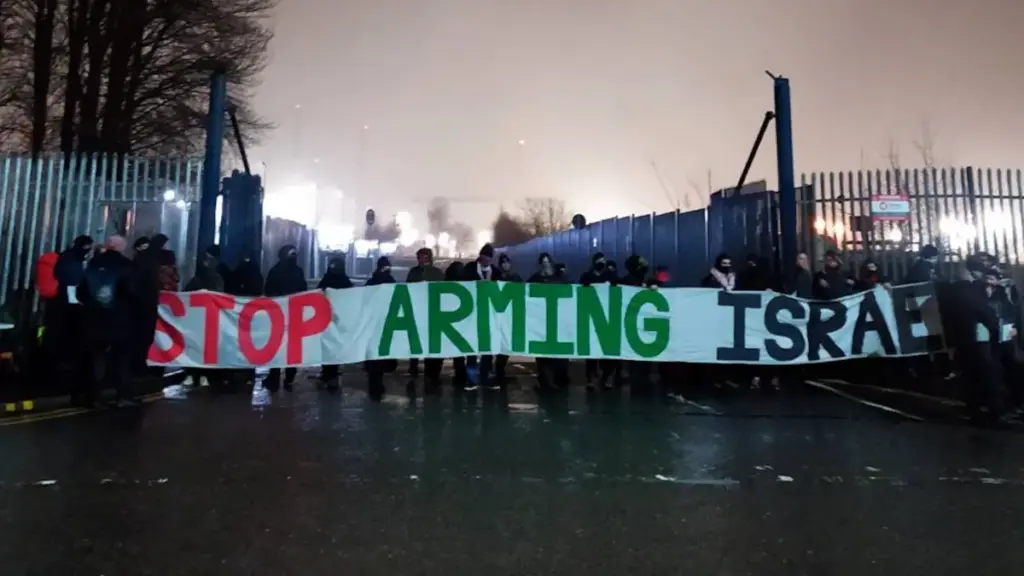
GLASGOW — Local residents and anti-war activists launched a blockade at the gates of major defense manufacturer BAE Systems in Glasgow, Scotland, early Thursday morning, demanding an immediate halt to arms exports to Israel, an end to the bombing of Yemen, and a permanent ceasefire in Gaza.
Beginning at 5:00 a.m., a crowd of approximately 100 demonstrators blocked multiple access gates to the facility, disrupting operations at the site. The action marks the latest in a series of direct-action protests targeting defense manufacturers across the United Kingdom over their supply chains linked to the ongoing conflict in the Middle East.
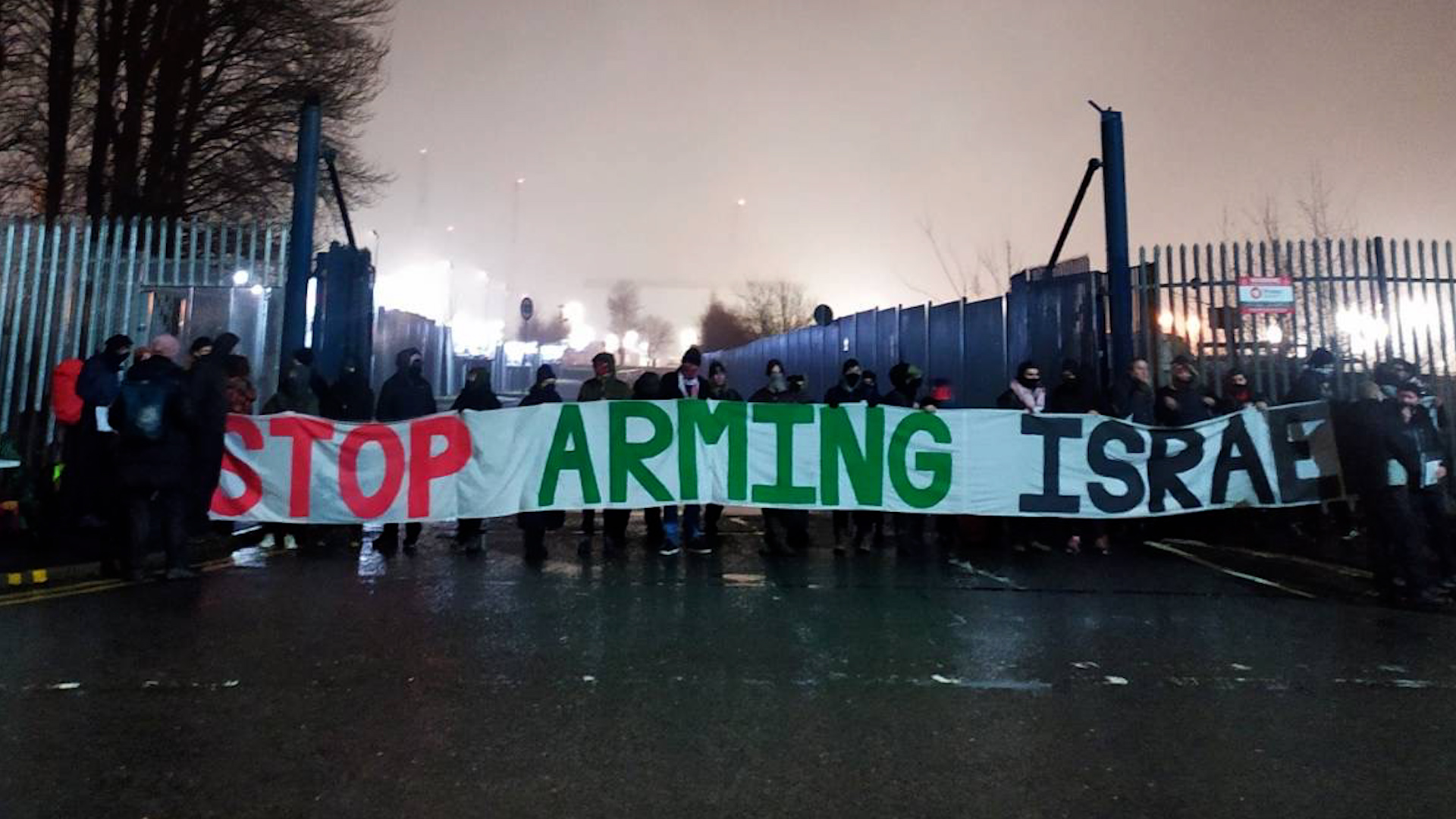
Demonstrators gathered in the Scottish city carrying banners and chanting slogans, arguing that British defense companies are complicit in civilian casualties through their manufacturing and export of military components. BAE Systems produces critical parts for weapons systems utilized by the Israeli military, most notably components for the F-35 Lightning II fighter jet program, which has been heavily deployed in the ongoing aerial bombardment of the Gaza Strip.
Among the crowd was John, a 24-year-old local electrician participating in the blockade. Explaining his motivation for joining the early morning protest, he said that public appeals and political lobbying have thus far failed to shift government policy.
"We are not going to stand by while Israel continues to indiscriminately bomb innocent civilians using weapons manufactured by BAE, Thales, and Leonardo," John said. "I’m here today because clearly, we are being ignored in our calls for a ceasefire and because direct action works in forcing change."

Thursday’s demonstration follows a similar mobilization in December, when protesters successfully shut down BAE Systems’ Glasgow factory during coordinated nationwide blockades targeting arms manufacturing facilities across the UK. Activists have increasingly turned their focus toward industrial sites, arguing that corporate supply chains provide the physical material required to sustain military operations abroad.
The protest in Glasgow highlights a broader international debate regarding the legality and ethics of arms exports to nations engaged in active conflicts involving high civilian death tolls. Critics of the defense trade point to mounting international scrutiny and recent legal challenges in other European jurisdictions as evidence that military supply chains are facing unprecedented judicial and public pressure.
Just days prior to the Glasgow blockade, a ruling by a Dutch court ordered the government of the Netherlands to halt the export and delivery of F-35 fighter jet parts to Israel. The court based its decision on the existence of a "clear risk" that the components would be used to commit or facilitate serious violations of international humanitarian law, setting a significant legal precedent for other European nations supplying defense hardware to the region.

In response to the ongoing protests and mounting political pressure, a spokesperson for BAE Systems issued a statement addressing the humanitarian situation in Gaza while defending the company’s adherence to regulatory frameworks.
"We’re horrified by the situation in Israel and Gaza and the devastating impact it’s having on civilians in the region and we hope it can be resolved as soon as possible," the spokesperson said. "We operate under the tightest regulation and comply fully with all applicable defence export controls, which are subject to ongoing assessment."
Despite these assurances, activists remain steadfast in their demands, vowing to continue disruptions until the British government implements a comprehensive arms embargo and takes concrete steps to support an enduring cessation of hostilities in Gaza. Local authorities and police monitored Thursday’s demonstration in Glasgow as protesters maintained their positions outside the facility gates well into the morning.