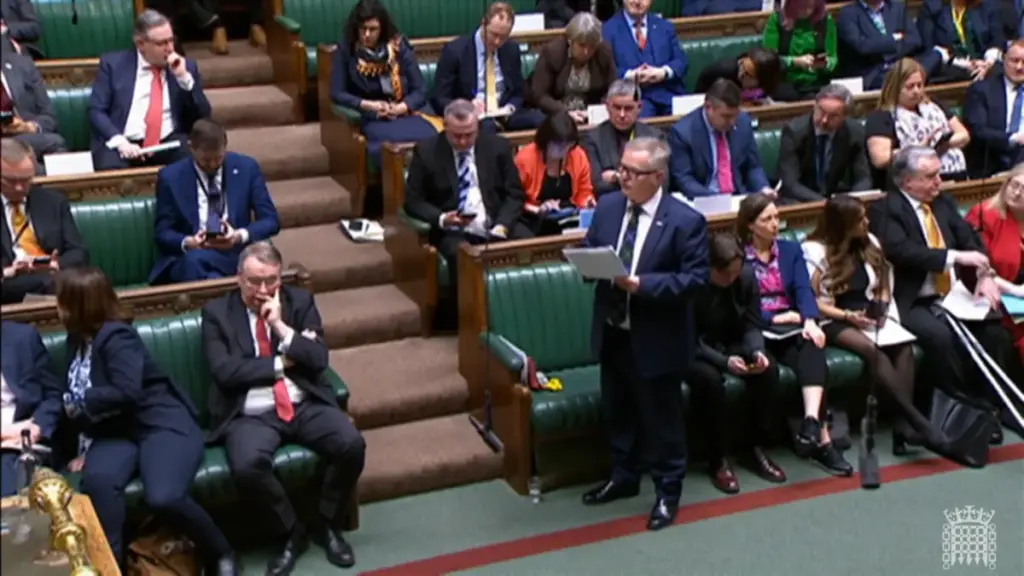
During a passionate and deeply critical address in the United Kingdom Parliament, Scottish National Party (SNP) Member of Parliament Brendan O’Hara delivered a scathing critique of Israel’s military campaign in Gaza, forcefully rejecting the notion that the core principle of self-defence can justify the widespread destruction and civilian casualties witnessed in the ongoing conflict.
Speaking to a hushed House of Commons chamber, Mr O’Hara focused his remarks on the devastating humanitarian toll inflicted upon the Palestinian population, arguing that international law and universal moral standards are being severely compromised. The SNP politician challenged the boundaries of military retaliation, stating unequivocally that no sovereign state possesses the moral or legal right to enforce a total siege upon an entire civilian population, systematically carpet-bomb residential neighborhoods, erase fundamental civilian infrastructure, and slaughter non-combatants under the broad banner of national security.
"Mr Speaker, we cannot allow the core principle of self-defence to be so ruthlessly exploited and manipulated in order to legitimise the slaughter of innocent civilians," Mr O’Hara declared during his parliamentary intervention, which has since drawn significant attention across political and media platforms. His remarks formed part of a broader discourse within British political circles regarding the UK government’s diplomatic stance, arms export policies, and ongoing calls for an immediate and permanent ceasefire in the Gaza Strip.
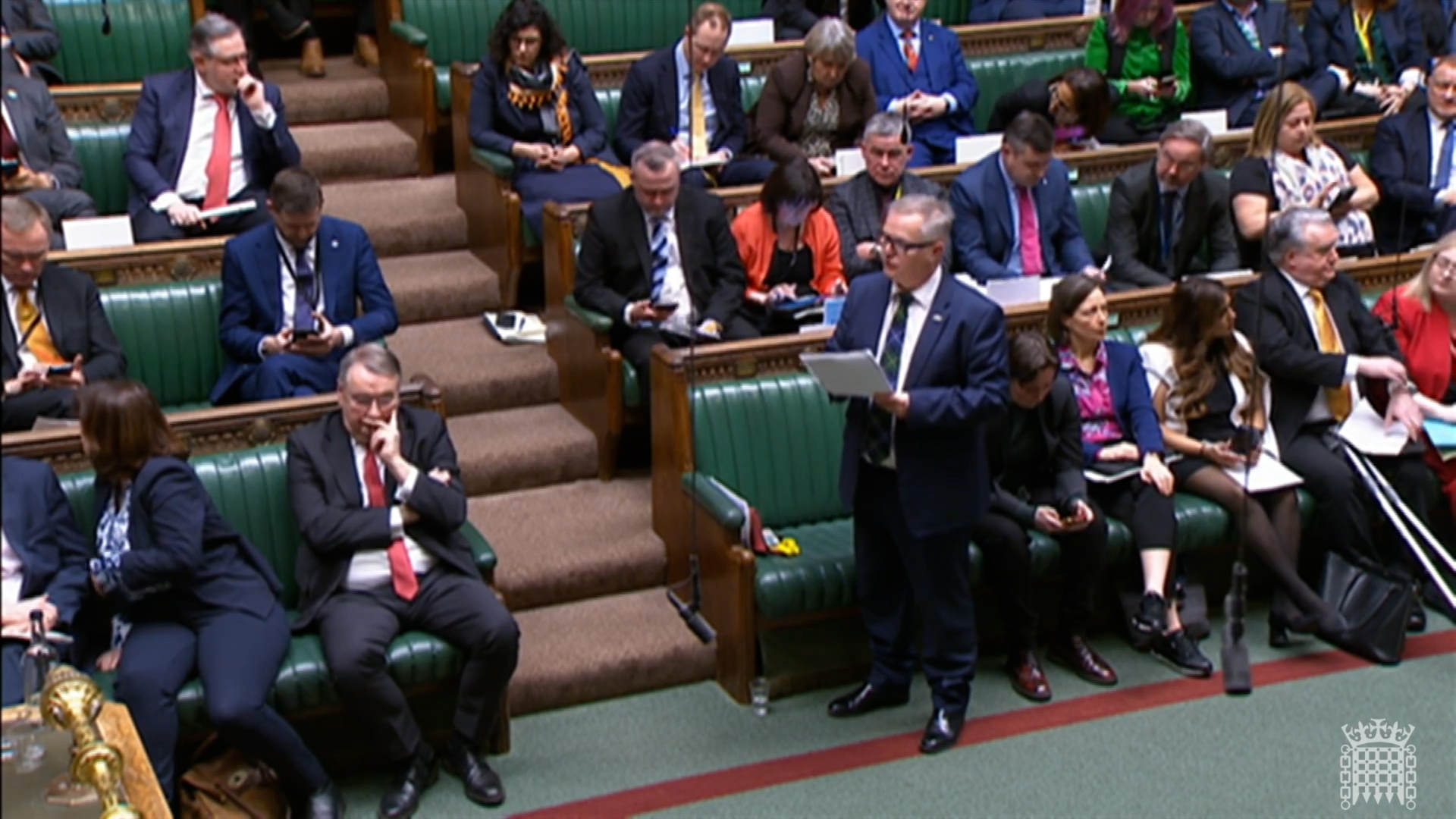
The parliamentary session, captured in official records and parliamentary video broadcasts, highlighted mounting domestic political pressure from opposition MPs urging a more assertive humanitarian stance from Westminster. Throughout the conflict, various parliamentarians have raised concerns over the deteriorating conditions faced by civilians in Gaza, where hospitals, schools, housing blocks, and basic utilities have suffered catastrophic damage. Mr O’Hara’s contribution stood out for its direct challenge to the political rhetoric often used by Western governments to frame the parameters of the conflict.
To underscore the human cost behind the geopolitical debates and diplomatic maneuvering, the Scottish National Party MP turned to the powerful words of renowned literature and direct testimonies from those trapped in the besieged enclave. By invoking the artistic and intellectual heritage of Palestine, Mr O’Hara sought to bring the human element of the crisis directly into the heart of the British legislative assembly, reminding his fellow parliamentarians of their moral responsibilities in the face of widespread human suffering.
"The Palestinian poet Mahmoud Darwish once wrote: ‘In silence we become accomplices. But when we speak, every word has the power to change the world,’" Mr O’Hara told the House, quoting the celebrated literary figure whose works frequently explore themes of displacement, identity, and resilience under occupation. Building upon Darwish’s profound observation, the MP emphasized that British lawmakers carry a duty not to look away from the unfolding humanitarian disaster. "So I want to share with the House the words of those being forced to live through this hell every single day," he continued, aiming to amplify the authentic voices of individuals experiencing the daily bombardment, displacement, and scarcity of food, clean water, and medical supplies in Gaza.
The intervention by Mr O’Hara reflects a sustained effort by various members of the Scottish National Party and other progressive opposition politicians to keep the plight of Palestinians at the forefront of the UK political agenda. Since the escalation of hostilities in late 2023 and throughout subsequent months, SNP representatives have consistently pressed ministers on issues relating to international humanitarian law, accountability, and the UK’s diplomatic role on the international stage, including at the United Nations Security Council and General Assembly.

Human rights organizations and international legal experts have similarly debated the limits of self-defence under international humanitarian law, particularly concerning proportionality, distinction, and the protection of civilians in densely populated urban environments. While allies of Israel, including the UK government and the United States, have repeatedly affirmed the country’s right to defend itself against militant groups following the events of October 7, growing international alarm over the scale of civilian casualties, widespread starvation, and the collapse of the healthcare system has intensified scrutiny of military strategies employed on the ground.
Mr O’Hara’s parliamentary speech serves as a notable reflection of these ongoing global and domestic tensions, illustrating the fierce debate within Western legislatures regarding accountability, ethics, and the responsibility to protect civilian lives during armed conflict. As the humanitarian situation in Gaza remains a matter of urgent international concern, interventions such as those by the SNP representative continue to shape the contours of political debate within the United Kingdom, ensuring that the voices and testimonies from the ground reach the halls of power in Westminster.