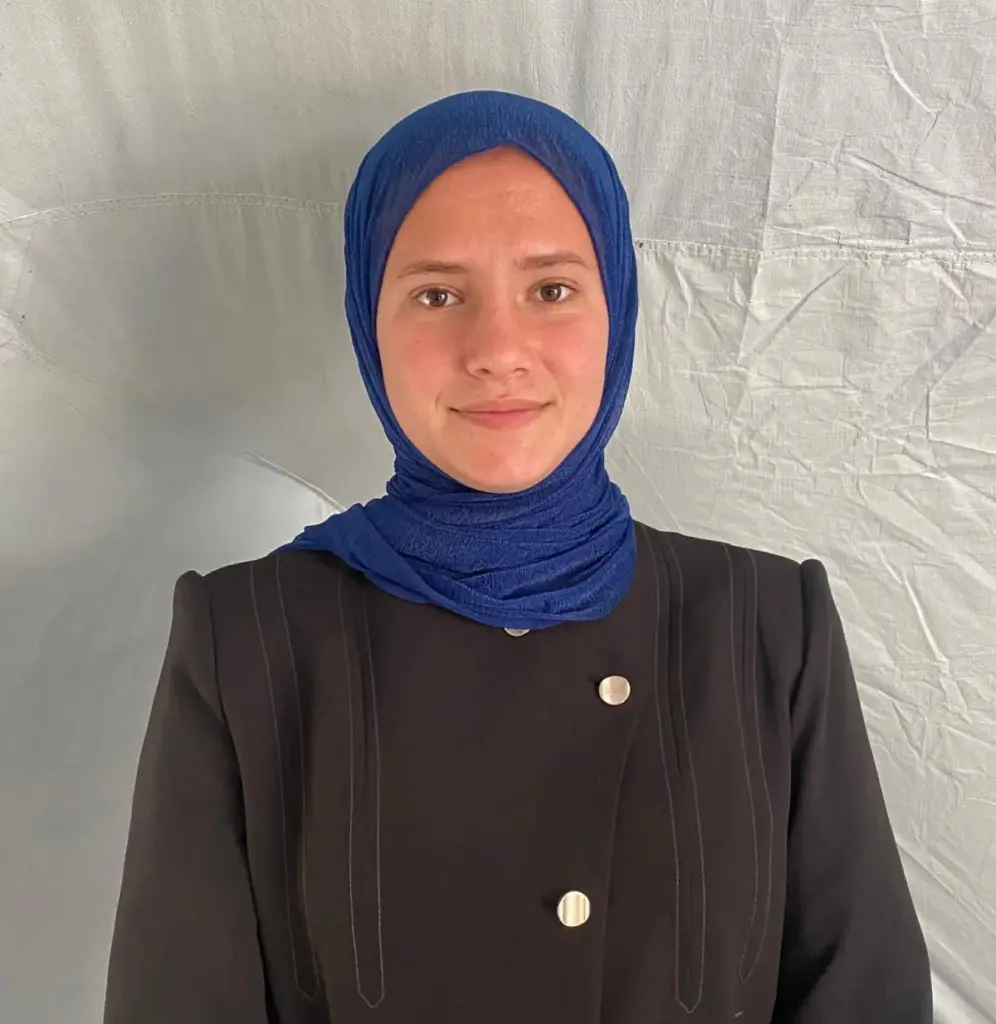
At just 18 years old, Malak embodies a level of resilience that few can fathom. Holding firmly onto a childhood dream of becoming a physician, she navigates the daily realities of life in a makeshift tent in Gaza alongside her mother and her two brothers, Uday and Atef. Their lives were upended when their permanent family home, a sturdy concrete structure, was completely destroyed in the ongoing crisis. Today, existence in the camp is fraught with difficulty, uncertainty, and constant hardship, yet Malak remains remarkably determined to continue her education, heal her community, and build a secure future.
Despite the profound displacement, constant instability, and massive disruption inflicted upon the region’s infrastructure, Malak achieved an extraordinary academic milestone. She completed high school with an impressive score of 96%. With these remarkable grades, she made the decisive step to enroll in medical school, fulfilling the ambition she has nurtured for years. However, translating that academic achievement into actual classroom attendance and long-term graduation is an uphill battle under current conditions.
The path to her degree is lined with formidable structural barriers. Numerous universities, colleges, and educational facilities across Gaza have sustained severe damage or complete destruction during the conflict. To adapt to this shattered landscape, a significant portion of learning has been forced online. For Malak, however, reliable internet access is exceedingly difficult to secure. Furthermore, attending virtual lectures, reviewing medical literature, and completing complex academic assignments require a personal laptop—a critical tool that she currently lacks.
Compounding these technological hurdles are insurmountable financial pressures. Her university tuition fees represent a major economic challenge that her household simply cannot shoulder on its own. Without external financial backing and targeted support, the continuation of her higher education remains hanging in a precarious balance.
Studying While Living with Pain and Physical Hardship
Malak’s daily struggle is not solely academic or economic; she is also coping with a severe, untreated physical injury. During the conflict, she was shot, and the bullet remains dangerously lodged in her abdomen. While she does her best to manage her health by attending routine medical check-ups, the necessary surgical procedure to remove the bullet is currently unavailable to her. The local healthcare system in Gaza is strained to its absolute limits, operating under a state of systemic collapse that prevents many patients from receiving critical surgical interventions.
Even as she lives with physical pain and the looming anxiety of an unperformed surgery, Malak refuses to let her circumstances defeat her. She balances her rigorous medical studies with tireless domestic responsibilities, stepping in to support her mother with everyday tasks around their makeshift home, including cooking, cleaning, and washing.
Her mother works tirelessly in a small local bakery to help support the household, but the minimal income she generates falls far short of covering the family’s most basic, day-to-day survival needs. Before the crisis shattered their lives, the family lived securely in a concrete house. Now, they are relegated to a worn, weathered tent that offers alarmingly little protection against the biting cold of winter, the oppressive heat of summer, or heavy seasonal rains.
The family’s daily existence is defined by scarcity. They urgently require fundamental supplies to endure the elements, including a structurally stronger tent, waterproof coverings to keep out the rain, mattresses, blankets, cooking equipment, household gas, a dependable water tank, nutritious food, essential hygiene supplies, and a reliable source of light. For Malak specifically, the needs extend to basic personal items like weather-appropriate clothes and shoes, alongside the critical financial assistance required to pay her university fees and procure a laptop for her studies.
The Vital Lifeline of the Orphan Sponsorship Programme
In the midst of these compounding crises, Malak’s family has found a crucial source of stability through the support of Islamic Relief. As soaring inflation, rising costs, and widespread displacement make meeting everyday needs an increasingly desperate challenge for families across Gaza, targeted humanitarian aid provides a vital cushion.
Islamic Relief has maintained a continuous presence supporting vulnerable and orphaned children in Gaza since 1999, operating through its well-established Orphan Sponsorship Programme. This long-standing initiative is designed specifically to assist children who have lost one or both parents, offering families a regular monthly financial payment that helps restore a measure of predictability to their lives.
The structure of the programme allows families the dignity and flexibility to use this financial support to address whatever needs they consider most urgent at any given moment. This frequently includes purchasing food, securing necessary healthcare, covering educational expenses, or managing other essential household costs. In addition to regular monthly stipends, Islamic Relief strives to include sponsored families in seasonal assistance initiatives whenever possible. These seasonal efforts encompass vital support such as Ramadan and Qurbani food distributions, Eid gifts for children, and specialized winter assistance packages to help families weather the coldest months.
The scale of this humanitarian response has expanded significantly in direct response to the current crisis. Today, Islamic Relief is actively supporting nearly 25,200 orphaned children across the Gaza Strip. Despite this massive outreach, the depth of the need remains overwhelming. Currently, there are more than 5,100 orphaned children remaining on the organization’s waiting list, all hoping for the vital lifeline of sponsorship.
A Chance to Keep Moving Forward
For Malak, the pursuit of her university education transcends the conventional goal of earning a professional degree. She is deeply motivated by the aspiration that becoming a doctor will ultimately grant her the professional capacity and compassion to care for people who have endured the exact same pain, trauma, and hardship she has lived through herself.
Despite losing the sanctuary of her home, carrying the physical burden of an unextracted bullet, navigating daily danger, and confronting systemic economic and educational barriers, Malak has resolutely refused to surrender her ambitions. Her story underscores the profound tenacity of Gaza’s youth, who continue to seek knowledge and purpose amidst devastation. With continued humanitarian backing and targeted educational support, young people like Malak can preserve their hope, sustain their learning, and work steadily toward a safer, more secure future.