One year since a formal ceasefire was announced, Palestinians living in the Gaza Strip continue to endure deadly military attacks, systematic aid denials, and widespread displacement into increasingly desperate conditions, according to a stark new assessment released by Islamic Relief. The international community, the humanitarian organization warns, is failing in its fundamental commitments to protect Palestinian civilians, uphold international law, and secure a viable future for Gaza’s children and young people.
Over the past year alone, ongoing military attacks orchestrated by Israel have resulted in the deaths of at least 1,454 Palestinians, while leaving more than 5,000 others injured. This devastating tally represents a casualty rate of at least one person every 90 minutes. Among those killed are at least 320 children, translating to the tragic loss of a child’s life on an almost daily basis over the course of the past year.
For the civilian population trapped inside the enclave, daily existence is defined by constant fear and pervasive trauma. The relentless drone strikes and artillery bombardments mean that safety is an illusion, whether out in the open or inside what remains of domestic housing.
An Islamic Relief aid worker on the ground in Gaza, whose identity has been withheld by the organization to protect their safety, described the grim reality on the ground.
"There is no ceasefire in reality," the aid worker said. "They target displacement camps and crowded areas, so there is still a lot of fear. We are scared to even leave our homes, and of the noise of the drones above us. Even our homes themselves are unsafe. It’s hard to think you could be next. The killing is non-stop and we cannot live our lives normally."
In the wake of the initial ceasefire announcement, Israel has expanded and tightened its military control over the vast majority of the Gaza Strip. By utilizing a demarcation known locally as the "Yellow Line," the military has forcibly expelled Palestinians from approximately 65% of the entire territory. As a result, nearly the entirety of Gaza’s 2.1 million residents are now crammed into roughly 35% of the land.
Families are forced to squeeze into dangerously overcrowded displacement sites that lack basic sanitation and infrastructure. These camps have become heavily infested with rodents that frequently bite sleeping children and contaminate the precarious water supplies available to the public.
With the winter months approaching, many displaced families are bracing themselves for their third or fourth consecutive winter living in severely damaged tents or skeletal buildings stripped of their walls. These makeshift shelters offer little to no protection against torrential rain, freezing temperatures, and harsh winter winds.
Despite the profound depth of this ongoing humanitarian catastrophe, a fraction of the necessary aid is permitted to enter Gaza. Israel continues to block the entry of vital supplies, including essential shelter items, heavy construction and rebuilding materials, and the critical fuel required to sustain health facilities, water purification plants, and broader humanitarian operations.
Infrastructure assessments indicate that approximately 82% of all structures across the Gaza Strip have sustained varying degrees of damage or total destruction. Yet, one year after the ceasefire announcement was made, large-scale rebuilding has barely begun, frozen by the ongoing restrictions on building materials.
The healthcare sector is bearing a catastrophic brunt of these restrictions. More than half of all health services in Gaza have completely shut down. The few facilities that manage to keep their doors open are struggling desperately to function amid severe shortages of fuel and critical medical supplies. Field clinics across the territory are regularly forced to close their doors entirely or drastically reduce their operating hours.
Compounding the crisis, more than 20,000 severely ill patients remain blocked from leaving Gaza to seek specialized medical treatment abroad. Islamic Relief aid workers report that basic medications required to treat chronic illnesses, such as diabetes, are exceptionally scarce. Meanwhile, cancer patients and individuals suffering from other severe chronic conditions are forced to live in extreme pain and unabated suffering due to the complete lack of proper therapeutic treatments.
The agricultural foundation of the enclave has also been largely dismantled. The vast majority of Gaza’s arable agricultural land is now completely inaccessible, trapped behind the militarized "Yellow Line." Humanitarian projections warn that by the upcoming winter, an alarming 1.4 million people in Gaza will be thrust into a severe food crisis unless the population regains access to their farmlands and a massive influx of humanitarian aid is permitted to cross the borders. Even in areas where food items can occasionally be found in local markets, the total lack of stable jobs and a crippling shortage of cash liquidity across Gaza mean that countless families simply cannot afford to buy what they need to survive.
Gaza’s younger generations face unprecedented hardships that threaten to permanently fracture their developmental and psychological well-being. With 93% of all schools damaged or destroyed, an entire generation is bearing the deep physical and psychological scars of the protracted violence. Economic prospects are virtually non-existent, leaving young people with few jobs or livelihood opportunities. Furthermore, youth groups report feeling deeply marginalized from broader discussions concerning the political and physical future of Gaza. In response, Islamic Relief is actively collaborating with young people throughout the territory to document their perspectives, amplify their voices, and gather their collective hopes for what Gaza might one day become.
Humanitarian advocates argue that a ceasefire that exists only in name cannot be accepted by the international community as an excuse for inaction. Islamic Relief is urgently calling on world leaders to dramatically increase diplomatic and political pressure to ensure that civilian lives are protected and that international law is strictly upheld.
States must take immediate, decisive action to halt attacks on civilians, guarantee that sufficient humanitarian aid can reach every individual in need, and preempt any permanent, forcible transfer of Palestinians from their ancestral land. Furthermore, the international community must throw its full support behind a genuine reconstruction process—one that is proudly led by Palestinians, with children and young people placed firmly at its heart.
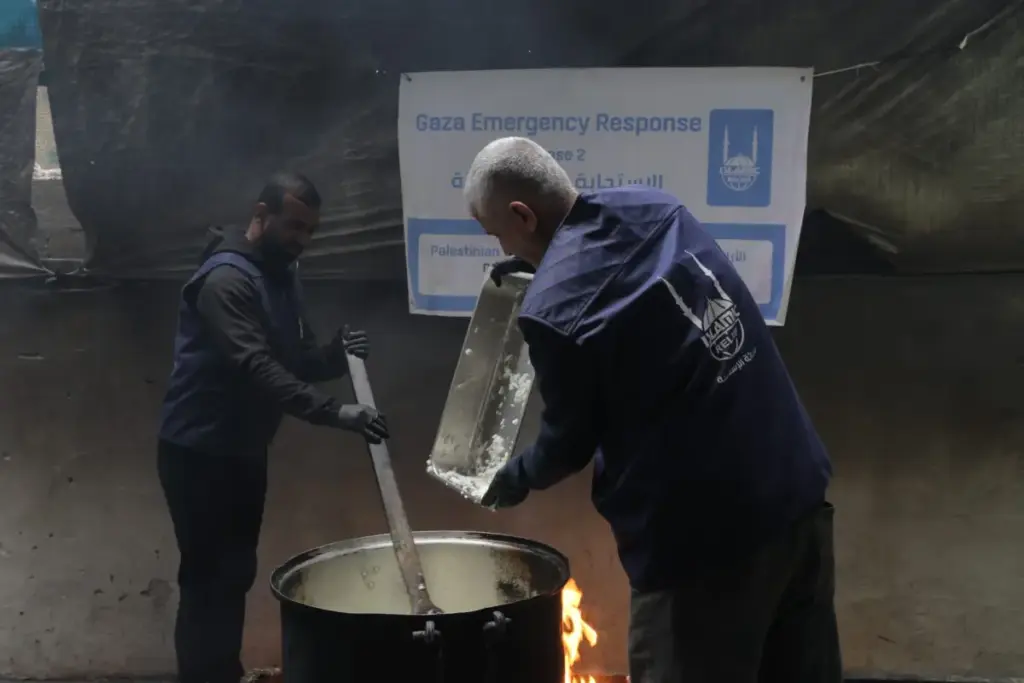
Despite the overwhelming operational challenges, security risks, and bureaucratic hurdles, Islamic Relief and its dedicated local partners continue their vital work on the ground. The organization delivers essential aid to vulnerable populations across Gaza, which includes supporting maternal healthcare initiatives for pregnant women and newborn babies, operating temporary learning spaces, providing children with specialized psychosocial support, trucking in clean water, and distributing hot meals alongside market vouchers that enable families to purchase goods locally.
Islamic Relief Worldwide, Inc. holds registered charity status under number 328158.