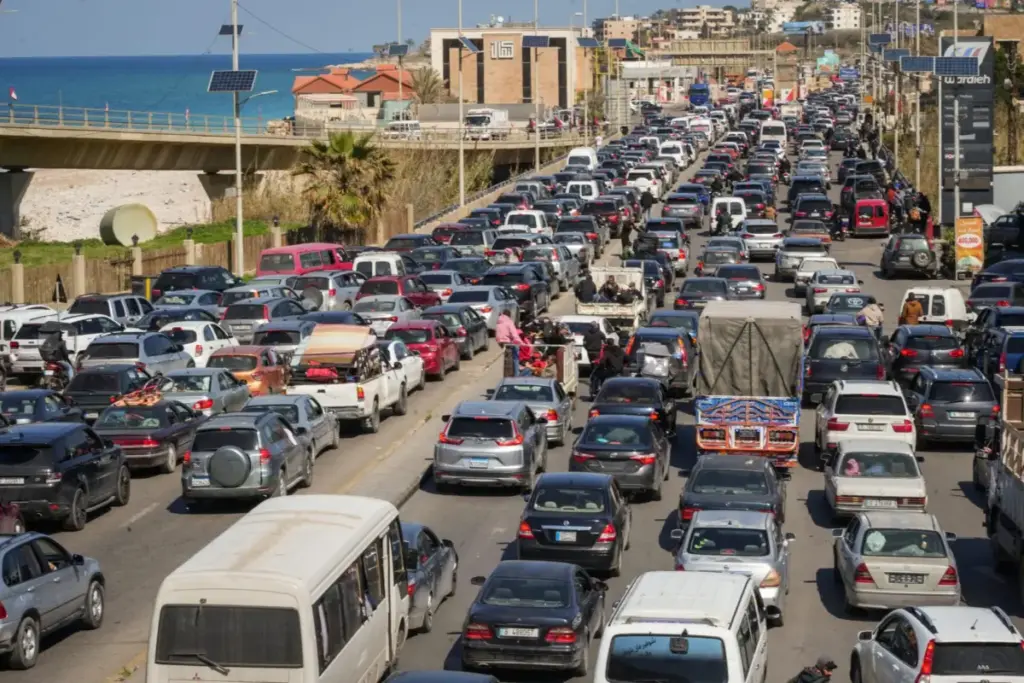
As Lebanon marks a grim milestone in its ongoing protracted crisis, humanitarian workers on the ground are warning that the visible, physical destruction of war tells only a fraction of the story. While bombed-out buildings, shattered infrastructure, and immediate casualties dominate global headlines and humanitarian assessments, a deeper, less visible catastrophe is unfolding quietly within homes, shelters, and communities across the country.
Sana Basim, the head of programmes for Islamic Relief in Lebanon, emphasizes that the true magnitude of the damage inflicted by years of relentless escalation cannot be captured by statistics of physical injury alone. The psychological and emotional toll being exacted on the Lebanese population, she notes, runs far deeper and threatens to scar generations to come.
The standard imagery associated with armed conflict is almost universally familiar: soldiers marching, heavy weaponry, displays of power, bloodshed, and catastrophic physical injury. Yet, this narrow lens consistently fails to capture the hidden human cost—the profound psychological burdens borne by civilians caught in the crossfire.
This hidden reality manifests in the raw, unspoken terror of a parent when an air raid siren wails or sudden evacuation orders are issued in the dead of night. It is visible in the profound confusion and uncertainty etched into the eyes of young children who have been abruptly displaced from their homes, forced to abandon their schools, and squeezed into confined, makeshift living spaces. It is underscored by the quiet helplessness of mothers and fathers who are daily forced to choose between competing survival needs while struggling to put basic food on the kitchen table.
The cascading effects of resource scarcity touch the most vulnerable members of society with particular cruelty. Older citizens and people living with disabilities find themselves stranded without access to essential life-saving medications because supply chains have fractured and resources have dwindled to critically low levels. Meanwhile, pregnant women—who should be resting in safe, stable environments—are forced into harrowing, arduous journeys lasting more than fourteen hours merely to reach a semblance of safety. In many heartbreaking cases, expectant mothers find themselves sheltering outdoors in public parking lots or directly along the shoreline, completely exposed to the elements.
The normalization of violence in children’s daily lives is perhaps one of the most chilling indicators of the conflict’s depth. Ten-year-old children in Lebanon today have developed the tragic capacity to instantly recognize the distinct acoustic signature of various military drones flying overhead. Families routinely bury their dead while actively wondering who among the living might be next. For many, the desperate question of "will this ever end?" has dissolved into a much darker, more permanent dread: the fear that they will never feel truly safe again.
While these psychological wounds leave no visible physical scars, the trauma they generate is persistent, profoundly difficult to heal, and capable of echoing across generations. In contemporary Lebanon, this acute trauma has unfortunately woven itself directly into the fabric of everyday existence.
Tired of Uncertainty
One of the most profound and corrosive consequences of prolonged conflict is how it fundamentally alters a population’s relationship with uncertainty. Human beings possess an innate desire to celebrate milestones, gather with friends, share meals, pursue higher education, fall in love, make long-term plans, and live ordinary, dignified lives. However, in Lebanon today, this normalcy is fragile and constantly under siege. A loud, unexpected noise can shatter the illusion of peace in a split second, instantly reigniting the primal fear of an impending airstrike. Even fleeting moments of happiness and joy are inevitably tainted by the agonizing awareness that they may vanish at any moment.
For the younger generation, this ambient, inescapable uncertainty has become the defining framework of their formative years. Many young people interviewed in the course of humanitarian work report severe disruptions to their basic physiological and mental well-being, including chronic difficulties with sleeping, maintaining concentration, and eating properly. A pervasive sense has taken hold that their futures have been placed indefinitely on hold.
For these youths, everyday activities that once defined adolescence and early adulthood—such as spending time with friends, attending university, or simply allowing oneself to dream about a career or a family—feel like extravagant luxuries they can no longer afford. When an individual’s sole, all-consuming responsibility is immediate survival, long-term aspirations become secondary. Many young people admit to coping through mechanisms like doomscrolling, while others consciously detach themselves from reality because acknowledging the full scale of the crisis feels psychologically overwhelming.
The adaptation mechanisms sparked by chronic fear and trauma vary widely among individuals. Some people develop hypervigilance, living in a permanent state of nervous system arousal where they constantly anticipate the next threat. Others slip into emotional numbness, while some resort to psychological denial simply to get through the day.
Crucially, this environment has completely reshaped economic and personal behaviors. Numerous individuals have abandoned the practice of saving money or planning for the future, shifting entirely to a day-by-day survival model. This shift does not stem from a lack of dreams or ambition, but rather from the grim realization that they can no longer trust in the existence of a future where those dreams could possibly be realized.
Sana Basim recounts a poignant interaction with a colleague who had been displaced alongside her family since the very beginning of the escalation. The colleague shared a heart-wrenching moment from their dinner table, where her young daughter expressed a level of exhaustion that no child should ever feel: "We are tired of this uncertainty. If there has to be another escalation, they should do it now. We are tired of this continuous stress, uncertainty and living in fear."
Hearing such words escape the lips of a child is profoundly unsettling, yet it accurately captures the collective psychological exhaustion permeating Lebanese society. Another young person reflected on how the conflict has abruptly forced their entire generation to mature prematurely, stripping away their innocence and laying bare the extreme fragility of human stability and safety. Simple, taken-for-granted aspects of life—such as being safely at home, attending classes at university, seeing extended family, or making basic weekend plans—have transformed into rare, highly conditional privileges.
In this sense, armed conflict steals far more than physical homes, physical lives, and tangible livelihoods. It systematically robs an entire generation of the foundational human assumption that tomorrow is guaranteed to arrive, and that it will be safe enough to inhabit.
Romanticising Resilience
Interviews with those living through the crisis reveal heavy layers of hopelessness, acute anxiety, frustration, deep grief, and moral injury—the latter defined as the profound psychological pain resulting from witnessing or experiencing severe injustice while possessing virtually no power to intervene or change the circumstances.
The logistical nightmares of the conflict add compounding layers of stress. Evacuation orders frequently arrive without warning in the middle of the night, at one or two in the morning, giving families mere minutes to gather what they can and flee into the dark without any clear destination in mind. In such desperate scenarios, sleeping rough by the sea often becomes the only available refuge.
Yet, despite bearing these unimaginable burdens, external observers and media narratives frequently lean heavily on a single word when describing the population: resilience.
Humanitarian workers on the ground argue strongly against the uncritical use of this term. There is a pressing need to stop romanticizing resilience, because what outsiders often label as remarkable resilience is frequently nothing more than raw, exhausting survival.
When communities are forced to endure wave after wave of catastrophic crisis, they adapt out of sheer necessity. They learn not to invest too heavily in tomorrow because history has taught them that tomorrow’s reality may bear no resemblance to today’s. They learn to hyper-concentrate on the present moment, seizing fleeting opportunities to celebrate or connect with loved ones precisely because the future is entirely opaque.
However, the persistent danger of praising a population endlessly for its resilience is that it shifts the focus away from accountability. It risks celebrating people’s capacity to endure endless suffering instead of aggressively questioning why they are being forced to endure such horrific conditions in the first place.
What Safety Means
Discussions surrounding psychological trauma in protracted crises often focus narrowly on material losses—homes destroyed, businesses ruined, or infrastructure reduced to rubble. However, true safety encompasses much more than the mere physical absence of active violence and falling bombs. Safety is, at its core, the psychological and physical environment that allows a generation to comfortably imagine tomorrow.
Beneath the overwhelming layers of fear, grief, and uncertainty, the fundamental human spirit persists, driven by the instinct to survive, the fierce desire to protect loved ones, and a stubborn determination to carve out islands of normality amidst chaos.
Nevertheless, mere survival must never be mistaken for genuinely living.
A young person should be able to contemplate entering university without the paralyzing fear that their studies will be abruptly truncated by violence. A family should be able to map out their lives without constantly calculating evacuation routes in case danger strikes overnight. A child should be able to hear a sudden, loud noise without their nervous system instinctively interpreting it as an incoming airstrike.
True safety is not simply the absence of war; it is the fundamental human freedom to imagine a future. Prolonged conflict inflicts deep temporal damage, teaching an entire generation to halt their imaginations and stop planning for tomorrow. The most insidious wound of all is the creeping belief that one’s life, dreams, and future no longer hold any value to the wider world.
Yet, even beneath the weight of relentless trauma, the essential human desire remains stubbornly intact: the yearning not just to exist, but to truly live, to dream, to create, to contribute to society, and to enjoy the basic human right to an ordinary, peaceful life.
Ultimately, this may be the true definition of safety: the unshakeable freedom to believe that your life matters, that tomorrow rightfully belongs to you, and that you are permitted to dream it into existence.
Islamic Relief continues to stand in solidarity with vulnerable communities across Lebanon, delivering vital assistance and emergency support throughout this harrowing crisis. To help sustain these critical relief efforts and support families in their greatest hour of need, donations can be made directly to the Islamic Relief Lebanon Emergency Appeal.