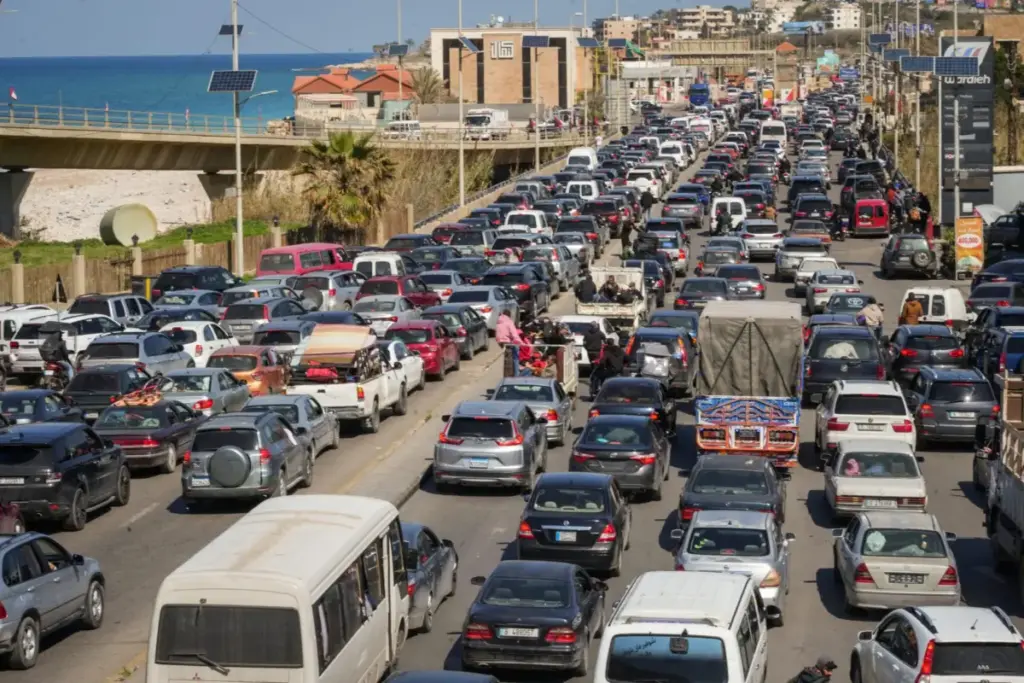
As Lebanon marks a grim and sobering milestone following three years of relentless escalation, humanitarian workers are warning that the physical destruction captured by news cameras only scratches the surface of the true, deeper damage being inflicted upon the population. While flattened buildings, shattered infrastructure, and immediate casualties dominate global headlines, the psychological and emotional toll on everyday Lebanese citizens is creating a silent crisis that risks echoing across generations.
Sana Basim, head of programmes for Islamic Relief in Lebanon, points out that the common imagery associated with war—soldiers, heavy weaponry, displays of power, targeted killings, blood, and physical injuries—fails to capture the full scope of human suffering. There is an entire dimension of distress that remains largely unseen by the outside world, hidden behind closed doors, within overcrowded shelters, and inside the minds of a traumatized populace.
This invisible suffering manifests in quiet, devastating ways across the country. It is found in the sudden terror gripping a parent when an airstrike warning sounds or mandatory evacuation orders are suddenly issued in the dead of night. It is visible in the profound uncertainty etched into the eyes of children who have been forcibly displaced from their homes, now required to share confined, unfamiliar spaces with strangers. It appears in the quiet helplessness of mothers and fathers who stare at kitchen tables, struggling to figure out how they will manage to put food on the table amidst soaring economic collapse and scarcity.
The crisis hits vulnerable populations with particular severity. Older individuals and people living with disabilities find themselves trapped in a state of helplessness, unable to access essential medicines and treatments because critical medical resources have grown desperately scarce. Meanwhile, pregnant women face terrifying ordeals, forced to travel fourteen hours or more just to reach a safer part of the country, with some ultimately having no choice but to seek temporary shelter in open parking lots or along the shoreline.
The normalization of violence has warped childhood in horrifying ways. Ten-year-old children in Lebanon today have become so accustomed to the skies above them that they can readily recognize the specific type of drone flying overhead by its sound. Families regularly bury their loved ones while silently calculating who among them might be next. For many households, the question of "will this ever end?" has given way to a much darker and more permanent fear: the dread that they will never feel safe again.
Humanitarian experts emphasize that while these deep psychological wounds may not leave visible physical scars, the trauma they generate is exceptionally difficult to heal and possesses the dangerous capacity to pass seamlessly from one generation to the next. In Lebanon today, this pervasive trauma has regrettably become an inescapable part of everyday life.
Tired of Uncertainty
One of the most profound and corrosive consequences of a prolonged conflict of this magnitude is how it fundamentally alters a society’s relationship with uncertainty. Under normal circumstances, people naturally seek out ways to celebrate milestones, gather with friends, enjoy a simple meal, pursue university degrees, fall in love, make long-term plans, and live their lives in an ordinary, human fashion.
In Lebanon, however, this normality is perpetually fragile. A sudden loud sound can instantly shatter a moment of peace, instantly triggering the terrifying realization that an incoming airstrike might be moments away. Even genuine moments of happiness and joy are invariably tinged with the heavy, inescapable awareness that they will not last.
For the younger generation, this constant state of flux has come to define their daily existence. Many young people report severe disruptions to their health, including chronic difficulties with sleeping, eating, and maintaining concentration. A prevailing sentiment among youth is that their future has been indefinitely placed on hold. Staying home with nothing to do, endlessly scrolling through distressing news on phones, attempting to maintain social connections, pursuing higher education, or simply daring to dream about what tomorrow might bring all feel like impossible luxuries when the immediate, exhausting responsibility is merely to survive.
Fear and trauma force the human brain to adapt, giving rise to heavy defense and coping mechanisms. Some individuals develop hypervigilant tendencies, living in a constant state of hyper-awareness while anticipating the next looming threat. Others slip into emotional numbness, while some resort to denial because acknowledging the stark reality of their situation feels far too overwhelming to process.
In conversations with residents, a recurring theme is the abandonment of future-oriented thinking. Many people have stopped saving money or planning ahead, choosing instead to live strictly day by day. This shift does not stem from a lack of aspirations, but rather from the grim realization that they can no longer count on a future in which those aspirations could ever be fulfilled.
One Islamic Relief staff member recounted a harrowing conversation with a colleague who had been displaced alongside her family since the very beginning of the escalation. The colleague shared a heartbreaking moment from around the dinner table, where her young daughter expressed a level of exhaustion far beyond her years, stating that the family was completely tired of the continuous stress and uncertainty, and remarking that if another major escalation was inevitable, it should happen immediately so they could be released from the agonizing cycle of waiting and living in fear.
Hearing such words from a child underscores the deep psychological toll bearing down on the entire community. Another young person interviewed by aid workers reflected on how the conflict has forced their entire generation to mature prematurely, stripping away the basic assumption that everyday stability can be relied upon. Simple acts such as staying safely at home, attending university lectures, going to work, visiting extended family, or making basic plans have been transformed into rare and fleeting privileges. The conflict has stolen more than physical homes and economic livelihoods; it has robbed an entire generation of the foundational assumption that tomorrow will arrive and that it will be safe enough to inhabit.
Romanticising Resilience
The stories gathered from communities across Lebanon are heavy with hopelessness, anxiety, frustration, profound grief, and a strong sense of moral injury—the distinct psychological pain of witnessing or experiencing severe injustice while possessing little to no power to alter the outcome.
Families recount harrowing evacuation orders arriving at one or two in the morning, granting them mere minutes to gather whatever they can carry and flee into the dark without a clear destination in mind. For many, finding themselves sleeping by the sea was the only remaining refuge available.
Yet, despite enduring these unimaginable trials, external observers frequently resort to a single descriptive word when discussing the population: resilience.
Humanitarian workers on the ground have increasingly pushed back against this terminology. There is a growing frustration with how easily the word resilience is romanticized to describe the people of Lebanon. Observers argue that what often appears to the outside world as remarkable resilience is, in reality, simply the raw, unvarnished mechanics of survival.
When populations are forced to endure multiple overlapping crises over extended periods, they quickly learn the harsh lessons of instability. They learn not to invest too heavily in tomorrow because there is no guarantee that tomorrow will mirror today. They learn to compress their lives into the present, seizing moments to celebrate or connect with loved ones precisely because the immediate future is entirely opaque.
Experts warn of the inherent danger in endlessly praising people for their resilience. Doing so risks celebrating a population’s endurance while simultaneously failing to ask the vital, uncomfortable question of why they are being subjected to such an intolerable burden in the first place.
What Safety Truly Means
Discussions surrounding psychological trauma during protracted crises often focus narrowly on material losses—homes destroyed, businesses closed, and incomes erased. However, true safety encompasses far more than the mere physical absence of active violence. Real safety is defined as an environment stable enough to allow a generation to comfortably imagine tomorrow.
Beneath the overwhelming layers of fear, grief, and persistent uncertainty, the fundamental human spirit remains intact. The primal instinct to survive, the fierce drive to protect loved ones, and the quiet determination to carve out moments of normality amid chaos continue to shine through.
Yet, humanitarian advocates stress that survival must never be mistaken for genuinely living.
A young student should be able to embark on a university education without the constant underlying terror of having to abandon their studies halfway through. A family should be able to organize their lives without calculating their emergency evacuation routes in case danger suddenly strikes. A child should be able to hear a sudden loud noise in the street without instinctively flinching and wondering if an airstrike has hit.
Safety is not simply the absence of war; it is the fundamental freedom to imagine a future. Prolonged conflict inflicts immediate destruction, but its most insidious long-term casualty is teaching an entire generation to stop dreaming about tomorrow, leaving them with the devastating impression that their lives, ambitions, and futures have been rendered invisible.
Despite these immense psychological burdens, the core human desire to live fully rather than merely survive persists. People continue to seek the right to dream, create, contribute, and lead ordinary, contented lives. Ultimately, that is what safety represents: the freedom to believe that every individual life matters, that tomorrow genuinely belongs to them, and that they are permitted the space to imagine it.
Islamic Relief continues to work on the ground, supporting vulnerable communities across Lebanon through this protracted emergency and standing in solidarity with those affected. The organization urges continued support and donations to its Lebanon Emergency Appeal to sustain these vital humanitarian operations.