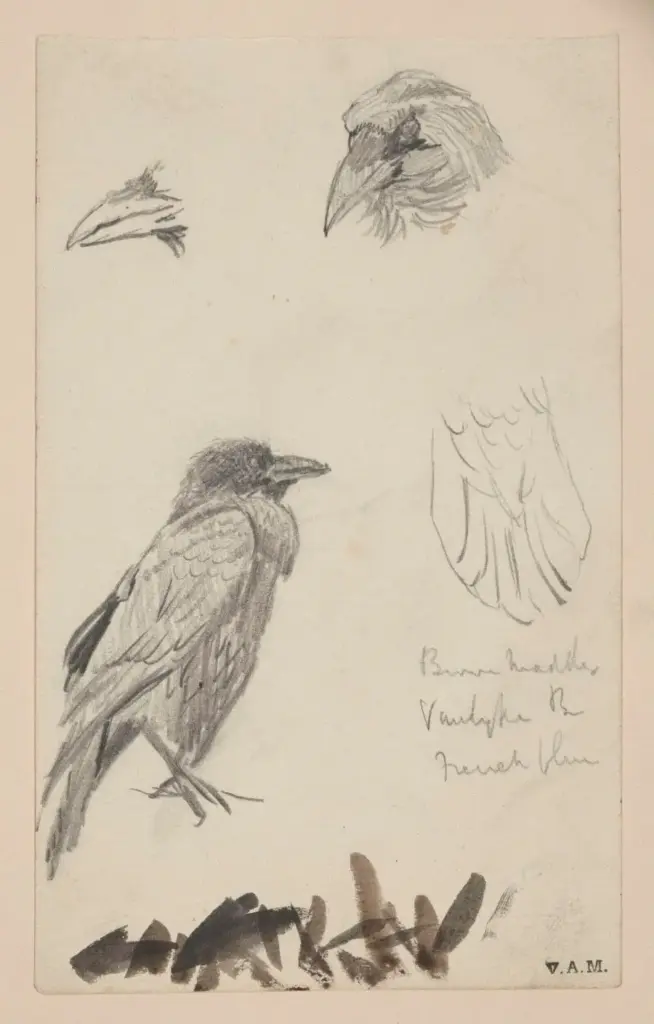
For five months, the Victoria and Albert Museum (V&A) has been the setting for a meticulous archival deep dive. Tasked with cataloguing nearly 700 works on paper by the celebrated 19th-century artist and illustrator Randolph Caldecott, a museum intern has spent months uncovering hidden connections, correcting historical oversights, and bringing a vast, under-represented collection to light.
Supported by The Randolph Caldecott Collection Trust, the project focuses on an artist best known for his influential annual "Picture Books," such as The House that Jack Built and Babes in the Wood. Yet, when the internship began in June, only half of the V&A’s extensive holdings related to Caldecott—comprising drawings, paintings, and prints—carried his name in the museum’s digital collections management software. This digital anonymity made it difficult for the public and researchers alike to discover the works via the museum’s online portal, Explore the Collections. Transforming this expansive archive required navigating multiple layers of historical data, institutional resources, and external archives to make the material fully accessible.

Existing Information
Cataloguing the more than 1.3 million objects housed across the V&A is a continuous, institutional endeavor. Fortunately, many of Caldecott’s works already bore varying degrees of documentation added by previous colleagues, ranging from detailed art-historical interpretations to basic attribution. These preliminary notes provided an essential baseline, offering an overview of the collection’s sheer diversity. In several instances, physical artifacts retained crucial context directly on their original mounts or labels.
Beyond physical labels, a wealth of untapped information awaited digitization within the historic Registers of Engravings and Drawings for each acquisition year. Reviewing these ledgers offered a contemporary perspective on how and when the objects entered the museum, enabling researchers to draw meaningful connections between items acquired concurrently during the 19th and 20th centuries.
Exploring the National Art Library
While Randolph Caldecott remains most famous for his pioneering contributions to children’s literature, his professional portfolio extended well into adult illustration. Among his lesser-known commissions were travel books, which typically featured comprehensive lists of illustrations at the front of each volume. By systematically transferring these published titles to the corresponding object records in the museum’s database, the cataloguing project successfully contextualized the depicted scenes, allowing viewers to easily trace proof prints back to their published counterparts. Similarly, for Caldecott’s extensive contributions to the Graphic magazine, noting the specific issue date for each illustration provided precise chronological clarity.
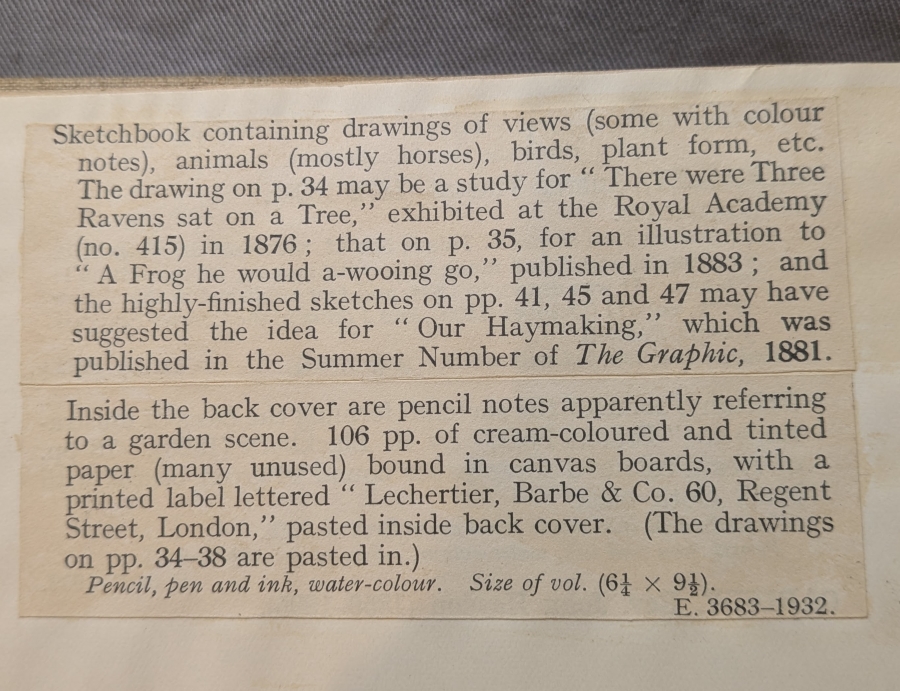
Physical copies of these published works are preserved within the National Art Library (NAL) at South Kensington. As the largest art, design, and performance library in the United Kingdom, the NAL grants both V&A staff and the general public access to its extensive holdings. For staff members, retrieving materials often involves climbing tall ladders to reach massive, bound volumes of historic periodicals like the Graphic.
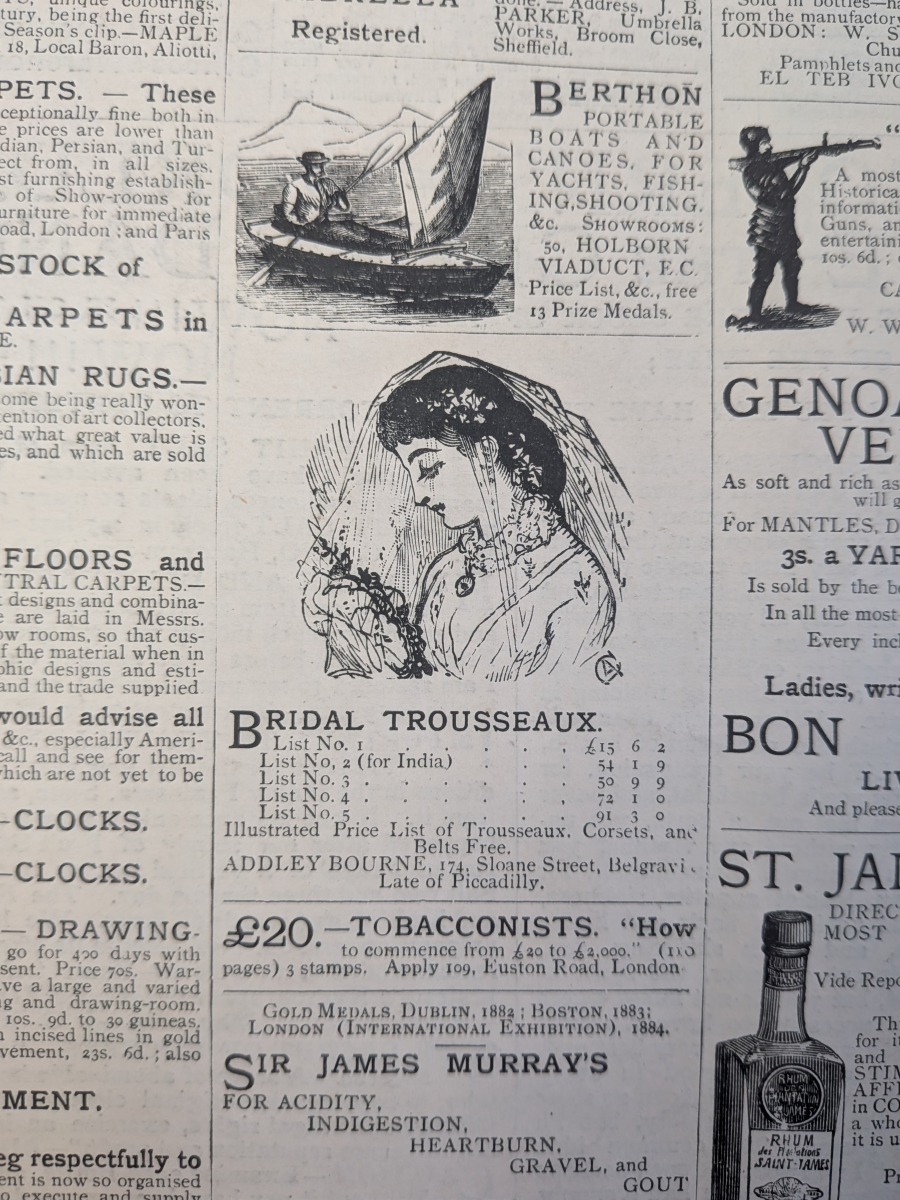
Examining these 19th-century pages provided a vivid window into Caldecott’s contemporary world. Beyond hunting for the artist’s sequential illustrations and comics, the research revealed highly decorated period advertisements accompanied by miniature drawings—ephemeral details that are frequently excised when articles are republished in modern anthologies. Reviewing the issues in their entirety delivered a more holistic understanding of the Victorian media landscape.
Additional children’s books illustrated by Caldecott are preserved at the V&A East Storehouse. Alongside pieces requested through the museum’s free Order an Object service, these materials remain accessible for public viewing. Caldecott and his prominent contemporary, wood engraver Edmund Evans, revolutionized Victorian publishing through the exceptional quality of their children’s books. Their adoption of six-color printing techniques and the innovative use of multiple double-page spreads set new standards for the medium. Encountering original Victorian editions in person provided both an unmatched tactile experience and an indispensable resource for accurate cataloguing, ensuring remote researchers can access equally rich metadata online.
New Discoveries
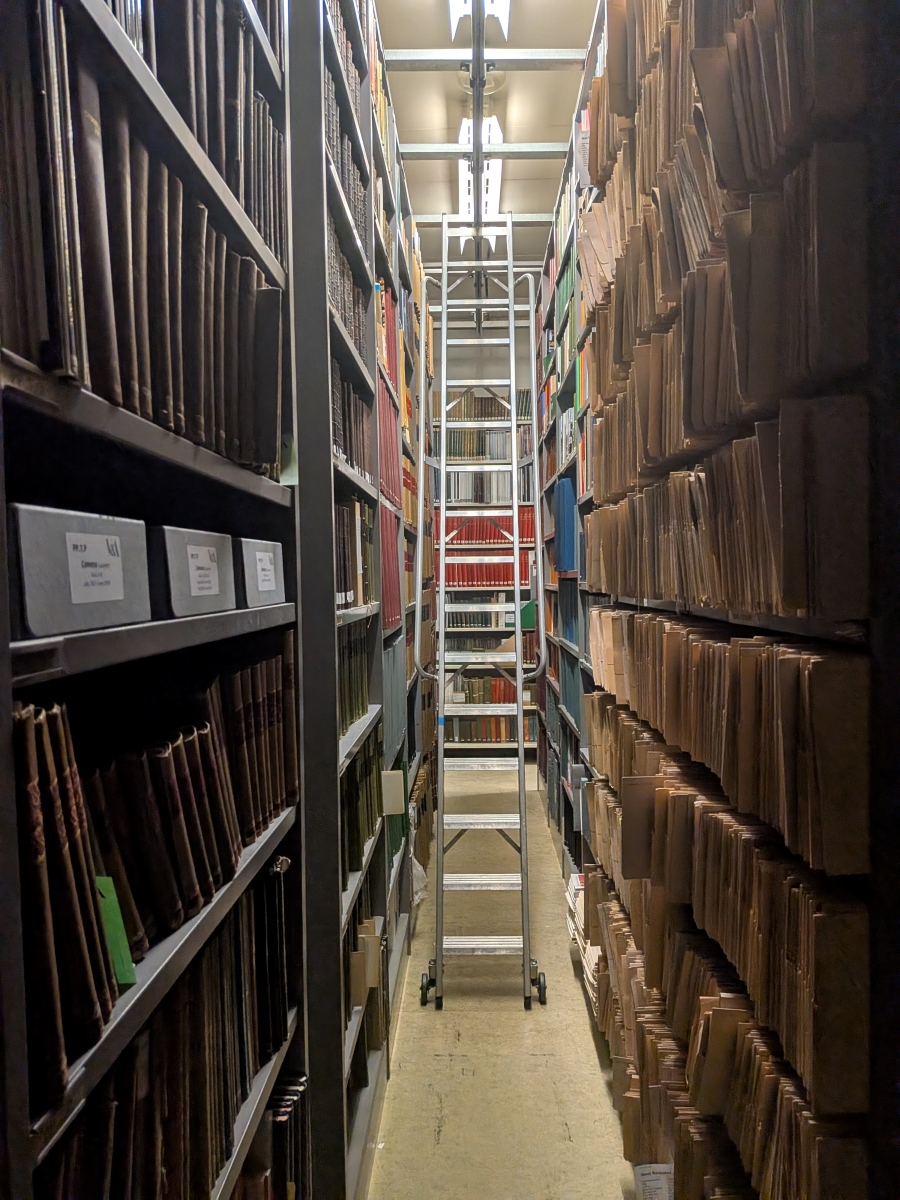
An extended period of dedicated research dedicated to a single artist frequently yields unexpected breakthroughs, bridging the gap between initial conceptual sketches and finished publications. While examining a V&A sketchbook used by Caldecott between approximately 1870 and 1886, the project identified a handwritten label on page 35 reading: "on p. 35, [may be a study] for an illustration to ‘A Frog he would a-wooing go’."
Although the frog depicted on the page was finely rendered, it lacked the distinctive gentleman’s waistcoat worn by the protagonist in the published book A Frog He Would A-Wooing Go. Because the specific page had been physically pasted into the sketchbook, identifying the true origin of the drawing presented an intriguing archival puzzle.
The solution materialized during a visit to the Picture Books collection at the NAL at V&A East Storehouse. While reviewing a copy of Jack and the Bean-stalk—published posthumously in 1886—it became apparent that because Caldecott’s illustrations for the project were left unfinished at the time of his death, preparatory sketches had been substituted in the printed volume. Leafing through the pages revealed not only the enigmatic frog sketch but also two additional drawings of goats and a crow that had been similarly misattributed in past cataloguing. Updating the object records with these verified sources ensures that future scholars can locate the materials effortlessly.
Enquiring with Other Organizations
While the V&A’s internal archives and library formed the primary foundation for the project, collaborative inquiries with external institutions proved equally vital. Reaching out to the NatWest Archive shed light on Caldecott’s formative years as a bank clerk—a lesser-known chapter of his early professional life.
Furthermore, establishing contact with Houghton Library at Harvard University, which preserves the remainder of the original preparatory sketches for Jack and the Bean-stalk, allowed for direct comparative analysis. By reviewing scanned copies of the Harvard holdings, researchers were able to compare the scale and format of the drawings, confirming conclusively that the examples in the V&A sketchbook belonged to the identical artistic series.
Through these collaborative efforts and rigorous internal cataloguing, the five-month initiative has significantly enhanced the accessibility of the V&A’s holdings. By bridging the gap between raw archival materials and digital records, the project ensures that Randolph Caldecott’s extensive body of work remains an open resource for public discovery and academic research.