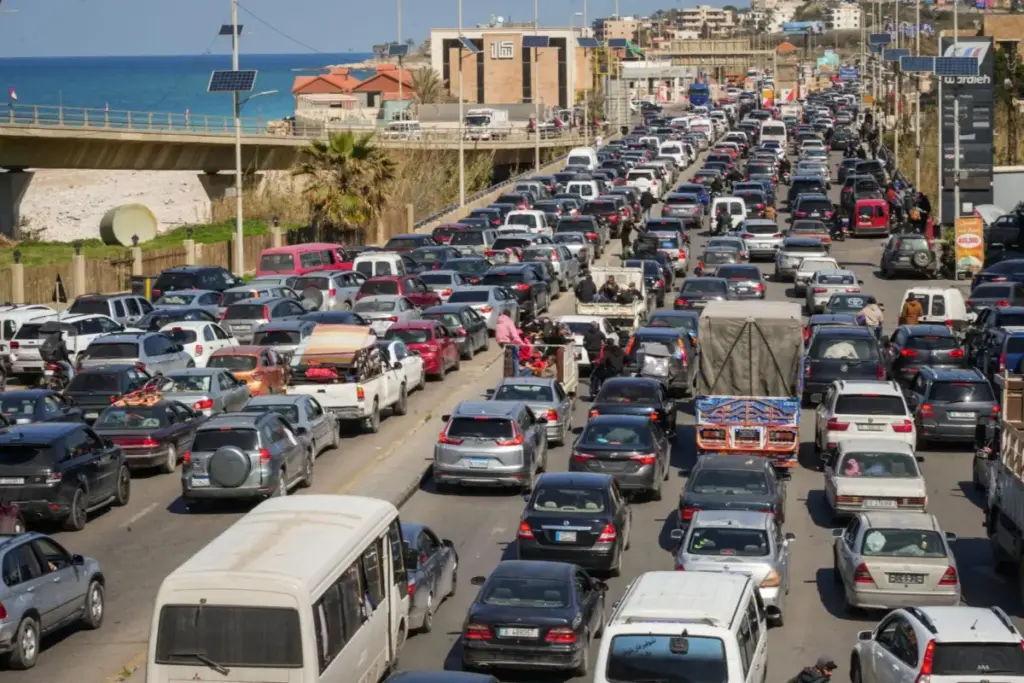
As Lebanon marks a grim milestone following years of relentless escalation, humanitarian workers are drawing urgent attention to a crisis that extends far beyond visible destruction. While global headlines frequently focus on the immediate physical metrics of war—collapsed buildings, wounded bodies, and material ruin—experts on the ground emphasize that these physical tallies only scratch the surface of the true, profound damage being inflicted upon the lives, minds, and futures of the Lebanese people.
Sana Basim, the head of programmes for Islamic Relief in Lebanon, offers a deeply sobering perspective on a conflict whose most devastating wounds are often invisible to the outside world. The traditional imagery associated with warfare—soldiers, heavy weaponry, military displays, bloodshed, and acute physical trauma—dominates public consciousness. Yet, this narrow lens consistently fails to capture the vast, hidden architecture of suffering that defines daily life for ordinary civilians caught in the crossfire.
The psychological weight of the ongoing escalation manifests in ways that are easily overlooked by those who are not living through it. It is found in the sudden terror gripping a parent when an air raid siren wails or evacuation orders are abruptly issued in the dead of night. It is captured in the profound confusion and uncertainty etched into the eyes of young children who have been violently uprooted from their homes, forced to flee their neighborhoods, and crammed into confined, temporary shelters. It is mirrored in the quiet, agonizing helplessness of a mother or father struggling against impossible odds to secure basic sustenance and put food on the table amidst a collapsing economy and scarce resources.
This invisible crisis spares no demographic, touching every layer of society with indiscriminate cruelty. Older citizens and individuals living with disabilities face an agonizing daily struggle simply to access life-saving medicines as medical resources dwindle and supply chains fracture. Pregnant women, already vulnerable, are forced to endure grueling journeys lasting more than 14 hours just to reach a semblance of safety, with some tragically reduced to sheltering overnight in open parking lots or along the cold shoreline.
The normalization of violence in children is perhaps one of the most heartbreaking indicators of how deeply the conflict has permeated society. Ten-year-old children in Lebanon have developed a chilling expertise, easily able to identify the specific make and model of a drone humming ominously overhead. Families regularly gather to bury their dead, only to be consumed immediately by the terrifying calculus of wondering whose name will be called next. For many, the desperate question of "will this ever end?" has quietly evolved into a much darker resignation: the lingering fear that they will never feel truly safe again.
While these deep psychological wounds may not leave tangible, physical scars on the skin, the trauma they generate is enduring and notoriously difficult to heal. Left unaddressed, this generational trauma runs the severe risk of passing invisibly from parents to children, embedding itself permanently into the social fabric of Lebanon.
Tired of Uncertainty
Among the most profound and corrosive consequences of a protracted conflict is the fundamental way it warps humanity’s relationship with uncertainty. In peacetime, uncertainty is a manageable aspect of human existence; in war, it becomes an oppressive, suffocating atmosphere.
Despite the ongoing dangers, the fundamental human desire for normalcy remains stubbornly resilient. People still yearn to celebrate birthdays, gather with friends over a meal, pursue higher education, fall in love, make long-term plans, and live their lives in the most ordinary, dignified ways possible. Yet, this fragile pursuit of normalcy is constantly fractured. A sudden, loud noise can instantly shatter a moment of peace, instantly triggering a physiological panic response and the dread that an airstrike is imminent. Even moments of genuine joy and laughter are permanently tinged with the heavy, persistent awareness that happiness is fleeting and may be instantly revoked.
Young people across Lebanon bear a heavy share of this psychological burden. Many youth interviewed by humanitarian workers report severe disruptions to their basic physiological and mental well-being, including chronic difficulty sleeping, severe trouble concentrating, and erratic eating patterns. A pervasive sentiment among the younger generation is the crushing feeling that their entire future has been placed on an indefinite hold.
For these young minds, ordinary pursuits such as spending time with peers, attending university lectures, or simply daydreaming about career paths feel like impossible luxuries. When their immediate, all-consuming responsibility is day-to-day survival, the luxury of a future evaporates. Prolonged exposure to fear and trauma forces the human brain to adapt, developing stark and varied coping mechanisms. Some individuals slide into a state of hypervigilance, living in a constant, exhausting anticipation of the next threat. Others slip into emotional numbness, while some resort to psychological denial simply because acknowledging the full, horrific scope of their reality is too overwhelming to bear.
This survival-driven mindset fundamentally alters economic and personal behavior. Many individuals have completely abandoned the practice of saving money or planning financially, choosing instead to live strictly day by day. This shift does not stem from a lack of ambition or dreams, but rather from a grim realization that they can no longer count on a future in which those dreams could possibly materialize.
The psychological weight trickles down to the youngest members of society. Recalling a conversation with a colleague who had been displaced alongside her family since the very beginning of the military escalation, humanitarian workers heard a heartbreaking anecdote from a young girl. Sitting at a temporary dinner table, the child turned to her mother and expressed a sentiment no child should ever harbor: "We are tired of this uncertainty. If there has to be another escalation, they should do it now. We are tired of this continuous stress, uncertainty and living in fear."
Hearing such words from a child is deeply unsettling, yet it accurately reflects the universal psychological exhaustion permeating the population. Another young person reflected on how the conflict has prematurely aged their entire peer group, forcing them to mature at an accelerated rate. They noted how the conflict has exposed the extreme fragility of stability and safety, turning basic privileges—such as being safely at home, walking to university, or seeing family members—into distant memories. In essence, the conflict steals far more than physical homes, physical lives, and financial livelihoods; it systematically robs an entire generation of the basic, human assumption that tomorrow will arrive, and that it will be safe enough to inhabit.
Romanticising Resilience
The personal narratives emerging from Lebanon are heavy with complex emotions, including pervasive hopelessness, ambient anxiety, profound frustration, deep grief, and moral injury—the distinct psychological pain that arises from witnessing or experiencing profound injustice while possessing virtually no power to alter the outcome.
The mechanics of displacement compound this trauma. Evacuation orders frequently arrive in the dead of night, often at 1 or 2 in the morning, giving panicked families only minutes to gather what they can and flee into the dark without any clear destination in mind. In the worst instances, sleeping rough by the sea serves as the only available refuge for families with nowhere else to turn.
Yet, despite enduring these harrowing conditions, external observers and international media frequently lean on a single, romanticized word to describe the population: resilience.
Humanitarian workers on the ground have increasingly pushed back against this terminology. There is a growing consensus that the relentless praise of Lebanese resilience must stop, because what is routinely labeled as resilience is, in reality, nothing more than raw, exhausting survival.
When a population is forced to endure multiple, overlapping crises over years, they adapt by necessity. They learn not to save for tomorrow because the current system offers no guarantees that tomorrow will mirror today. They learn to hyper-focus on the present, grabbing fleeting moments of celebration and connection because the future is entirely opaque. However, the danger of praising communities endlessly for their resilience is that it risks normalizing their suffering. It shifts the global focus toward celebrating their ability to endure infinite hardship, rather than asking the critical, uncomfortable question of why they are being forced to endure such unimaginable conditions in the first place.
What Safety Truly Means
Discussions surrounding psychological trauma in protracted crises often oversimplify the issue by focusing strictly on tangible losses—homes destroyed, businesses ruined, or infrastructure shattered. However, true safety encompasses a much broader definition. It is not merely the physical absence of falling bombs and active violence; it is the psychological environment that permits a generation to imagine tomorrow.
Beneath the overwhelming layers of fear, grief, and uncertainty, the fundamental human spirit in Lebanon persists. The core instinct to survive, the fierce desire to protect loved ones, and the determined search for pockets of normalcy amid chaos remain intact. Yet, experts caution that mere survival must never be mistaken for actually living.
True safety means a young person should be able to contemplate enrolling in university without the lingering dread that they will be forced to abandon their studies halfway through. It means a family should be able to make long-term plans without constantly calculating how fast they can pack their belongings and flee when danger approaches. It means a child should be able to hear a sudden, loud noise without their body instinctively bracing for an incoming airstrike.
Ultimately, safety is the freedom to dream and the liberty to imagine a future. Prolonged conflict inflicts deep damage not just through immediate physical destruction, but by teaching an entire generation to halt their imagination, instilling the devastating belief that their lives, dreams, and futures no longer hold value.
Yet, even amid the pervasive fear and uncertainty, the fundamental human drive remains: the desire not just to survive, but to truly live, to create, to contribute, and to enjoy the basic right to an ordinary, peaceful life. That is the true definition of safety—the freedom to believe that every individual life matters, that tomorrow belongs to them, and that they are permitted to imagine it.
As the crisis persists, organizations like Islamic Relief continue to work on the ground, providing vital support to vulnerable communities across Lebanon. Humanitarian agencies emphasize that sustained international solidarity and resources remain critical as the country navigates this dark chapter.