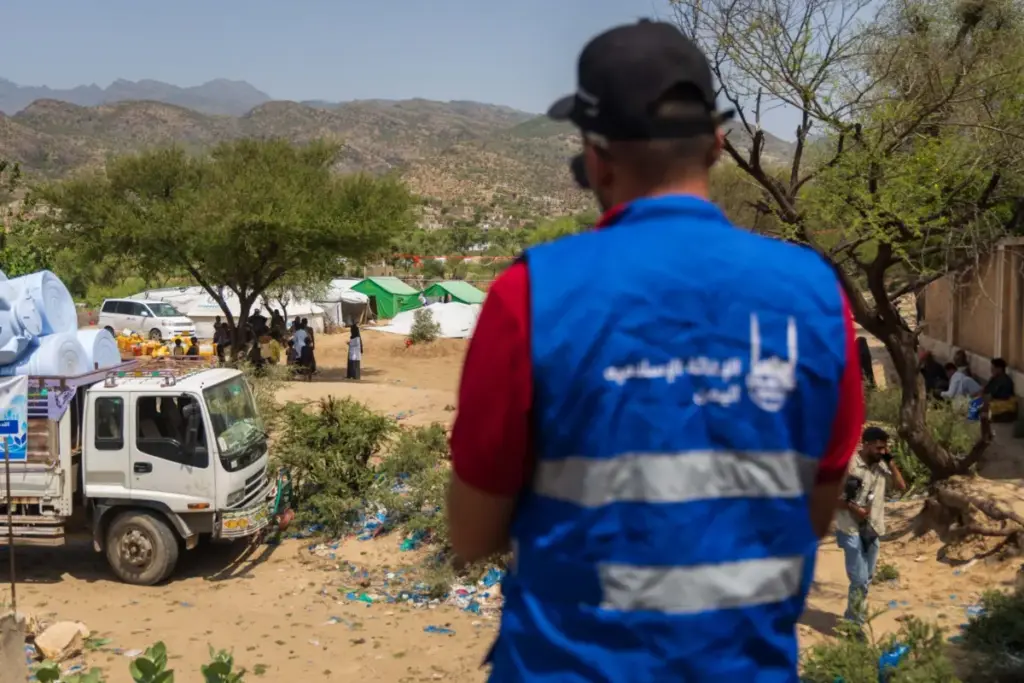
Cholera cases have surged dramatically, tripling over the course of the last three weeks in southern Yemen as ongoing conflict and widespread displacement continue to destabilize the region. International humanitarian organization Islamic Relief has issued an urgent warning that thousands of lives are now at immediate risk unless the international community steps up assistance and funding to contain the rapidly spreading water-borne disease.
The renewed escalation in fighting has forced over 200,000 people to flee their homes, seeking refuge in overcrowded and poorly equipped camps as well as alternative public sites, including mosques and local schools. The conditions in these temporary settlements are severely compromised. Approximately 40 percent of the displaced population currently lacks access to safe, clean drinking water, while one-third are entirely without proper latrine facilities. This critical lack of sanitation infrastructure is forcing vulnerable families to resort to open defecation, creating ideal breeding grounds for the rapid transmission of fatal water-borne diseases, chief among them being cholera.
The outbreak has already claimed 27 lives this year, with approximately 2,000 new cases recorded over the past four weeks alone. The impact of the outbreak is heavily concentrated, with 94 percent of these recent cases reported across five southern displacement-hosting governorates: Abyan, Lahj, Al-Dhale’e, Taiz, and Aden.
This dangerous health crisis is being heavily fueled by the near-total collapse of Yemen’s healthcare system, battered by years of relentless war and a crippling economic crisis. At present, only about 60 percent of health facilities remain fully functional in these affected areas, and many of the operating centers are severely depleted or entirely out of essential medicines and supplies.
Islamic Relief had previously sounded the alarm last month, warning that a severe cholera outbreak was highly probable unless aid operations were rapidly scaled up to address the appalling living conditions endured by displaced families.
Saaid Said Omar, Islamic Relief Yemen acting country director, emphasized the gravity of the situation on the ground.
"This cholera outbreak is a disaster. People who fled the conflict by the thousands were already suffering from shortages of food, shelter and displacement. Now they are at risk from this cholera outbreak which is highly likely to spread and can kill a human in 24 hours," Omar said. "This outbreak is not surprising as many displaced families are relying on unprotected wells and surface water, while sheltering with thousands of others in overcrowded sites without proper sanitation services and latrines."
Omar further stressed that the unfolding health emergency represents a critical juncture for the country.
"This is a pivotal moment for Yemen. If the current crisis does not receive sufficient international attention and funding, the humanitarian situation is likely to deteriorate significantly in the coming months. The cholera outbreak is an early warning sign of a much wider crisis. Donors have a crucial opportunity to act now to prevent further loss of life, contain disease, and protect vulnerable families before needs escalate beyond current response capacities. Yemen cannot afford another cycle of delayed action," he added.
In response to the escalating numbers, international agencies have stepped up active testing for cholera in the high-transmission areas of Abyan, Lahj, Al-Dhale’e, Taiz, and Aden. High positivity rates from these testing efforts have confirmed active and ongoing spread of the infection within the camps and host communities, prompting local specialist medical teams to work around the clock to curb transmission chains.
As part of the wider humanitarian response, Islamic Relief is planning to procure critical medicines and maintain regular medical supplies to support operational hospitals in their ongoing fight against cholera in Taiz, Lahjj, and Aden. These efforts are being coordinated alongside other humanitarian partner agencies engaged in testing individuals for the infection and delivering vital aid packages to hundreds of other displaced families across the region.
Islamic Relief has a long-standing history of humanitarian operations in Yemen, having worked in the country since 1998. The organization implements a wide range of developmental and emergency projects designed to improve water and sanitation infrastructure, strengthen sustainable livelihoods, support orphaned children, and provide rapid emergency relief, operating in close collaboration with local partner organizations across various governorates.