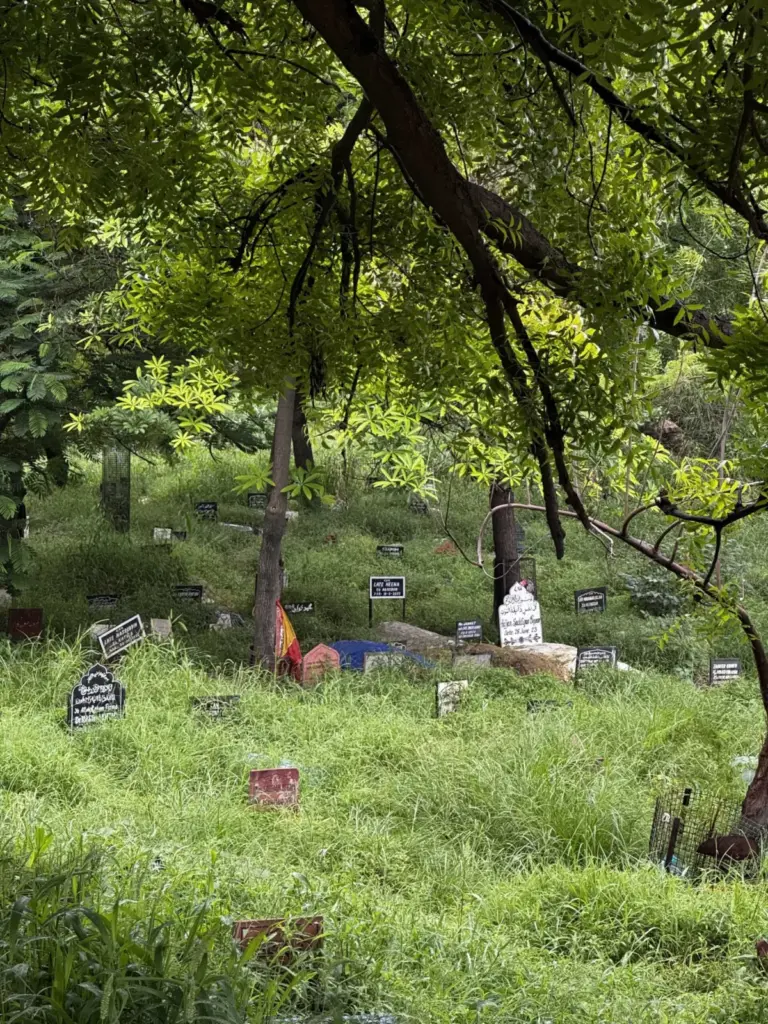
By Farheen Saifi
“Kitna hai bad-naseeb ‘Zafar’ dafn ke liye,
Do gaz zameen bhi na mili kuu-e-yaar mein.”
(How unfortunate is Zafar, even in death, he was denied a place to rest in his beloved land.)
Over 160 years ago, the last Mughal emperor, Bahadur Shah Zafar, penned these poignant lines while living in desolate exile in Rangoon. Today, his profound grief over being denied a resting place in his own homeland continues to echo through the historic lanes of Delhi. For a significant segment of the capital’s Muslim community, Zafar’s poetic lament mirrors a harsh, contemporary reality. Grieving families across the metropolis are increasingly struggling to find even two yards of land to lay their loved ones to rest with dignity.
In November 2024, Abrar Ali found himself thrust into this harrowing ordeal. When his father passed away, Ali embarked on a distressing journey that took him from one graveyard to another across the national capital, searching in vain for an available plot.
“In the month of November 2024, when my father died, I went from one graveyard to another but could not find space to bury him,” Ali recalled.
After hours of frantic searching, he eventually reached Jadid Qabristan Ahle Islam, one of the largest and most prominent Muslim cemeteries in the city, located near Delhi Gate at ITO. However, he was met with the disheartening news that the grounds were already exhausted and could accept no more burials.

For families like Ali’s, the final stage of life—which ought to be marked by solemn respect, community support, and unhindered dignity—transforms into a desperate and exhausting search for basic space. Decades of rapid urban expansion, widespread encroachment, and systemic administrative neglect have steadily choked the city’s burial landscape, shrinking the resting places designated for generations past.
Graveyards Disappearing from Delhi’s Map
The sheer magnitude of the crisis is vividly captured in a comprehensive study conducted by the Delhi-based Human Development Society. The research sheds light on the alarming depletion and systemic marginalization of Muslim burial grounds across the capital. According to the findings, while Delhi officially houses 131 physical graveyards, only a small fraction of them remain fully operational and capable of handling new burials.
Out of these physical sites, sixteen remain completely unused and locked in limbo due to prolonged legal litigation or severe poor upkeep. More critically, forty-three of these vital spaces have been partially swallowed by encroachments, falling prey to private individuals, local communities, corporate entities, and even government bodies.
The discrepancy between official documentation and ground realities is stark. The Delhi Waqf Board lists 624 graveyards on paper, yet a vast majority of these sites have vanished from the physical map over the decades, consumed by the city’s relentless development.
Many of the remaining cemeteries are operating well beyond capacity. Thirty-two active graveyards have officially reported zero vacancies. To cope with the overwhelming demand, caretakers in some locations have resorted to a practice known as “landfilling.” This method involves burying newly deceased individuals directly over older graves in raised soil mounds—a practice that many community members and caretakers view as both unsustainable and deeply lacking in dignity.
The Human Development Society study also provides a historical breakdown of Delhi’s surviving burial grounds, illustrating just how deeply rooted these spaces are in the city’s heritage. The data shows that 34% of these graveyards are between 100 and 200 years old, 12% have stood for over two centuries, 18% date back 51 to 100 years, 20% are between 10 and 50 years old, and a mere 4% have been established within the last decade.
This stark imbalance points directly to a systemic failure in urban planning. Modern development schemes and master plans for the capital have consistently overlooked the necessity of earmarking new land for Muslim cemeteries to accommodate a growing population.

This population pressure is acutely felt in densely populated, Muslim-majority areas such as Okhla and Old Delhi. Here, families face enormous hurdles in securing burial plots, while ongoing encroachments on Waqf lands continuously erode the few remaining options.
“We have no space in Batla House graveyard. It is shrinking every day. Residents nearby are forced to travel to other areas to bury their loved ones,” said Shakeel, the caretaker of the Batla House Muslim cemetery, highlighting the daily operational challenges on the ground.
“The shortage is particularly severe in densely populated neighbourhoods, especially at graveyards attached to mosques and dargahs. These are the most sought after and also the most encroached,” Shakeel added, pointing to the vulnerability of historic sacred sites.
Encroachment and Urban Pressure
Encroachment remains the single greatest threat to the survival of Delhi’s remaining cemeteries. Over the years, numerous burial grounds have steadily lost parcels of land to expanding housing colonies, unauthorized constructions, government offices, new roads, public parks, and commercial complexes. Investigative reports and community surveys have repeatedly documented how plots explicitly dedicated to the dead are continually chipped away by Delhi’s expanding urban footprint.
The consequences of this unchecked territorial loss are stark and immediate. “The remaining space in the existing qabristans is hardly enough for two more years,” the Human Development Society warns in its report, cautioning that the capital’s Muslim community faces the grim prospect of running out of burial grounds entirely unless immediate, decisive action is taken by authorities.
A Broader Religious and Cultural Context
Community leaders and civil society members emphasize that the current burial crisis does not exist in a vacuum. Instead, it forms part of a broader, more troubling pattern of neglect toward minority religious infrastructure. Historically, Delhi was home to hundreds of mosques, dargahs, and cemeteries established and maintained by rulers, saints, and ordinary citizens alike. In the decades since Independence, however, a significant number of these sacred spaces have been abandoned, legally sealed, or quietly appropriated.
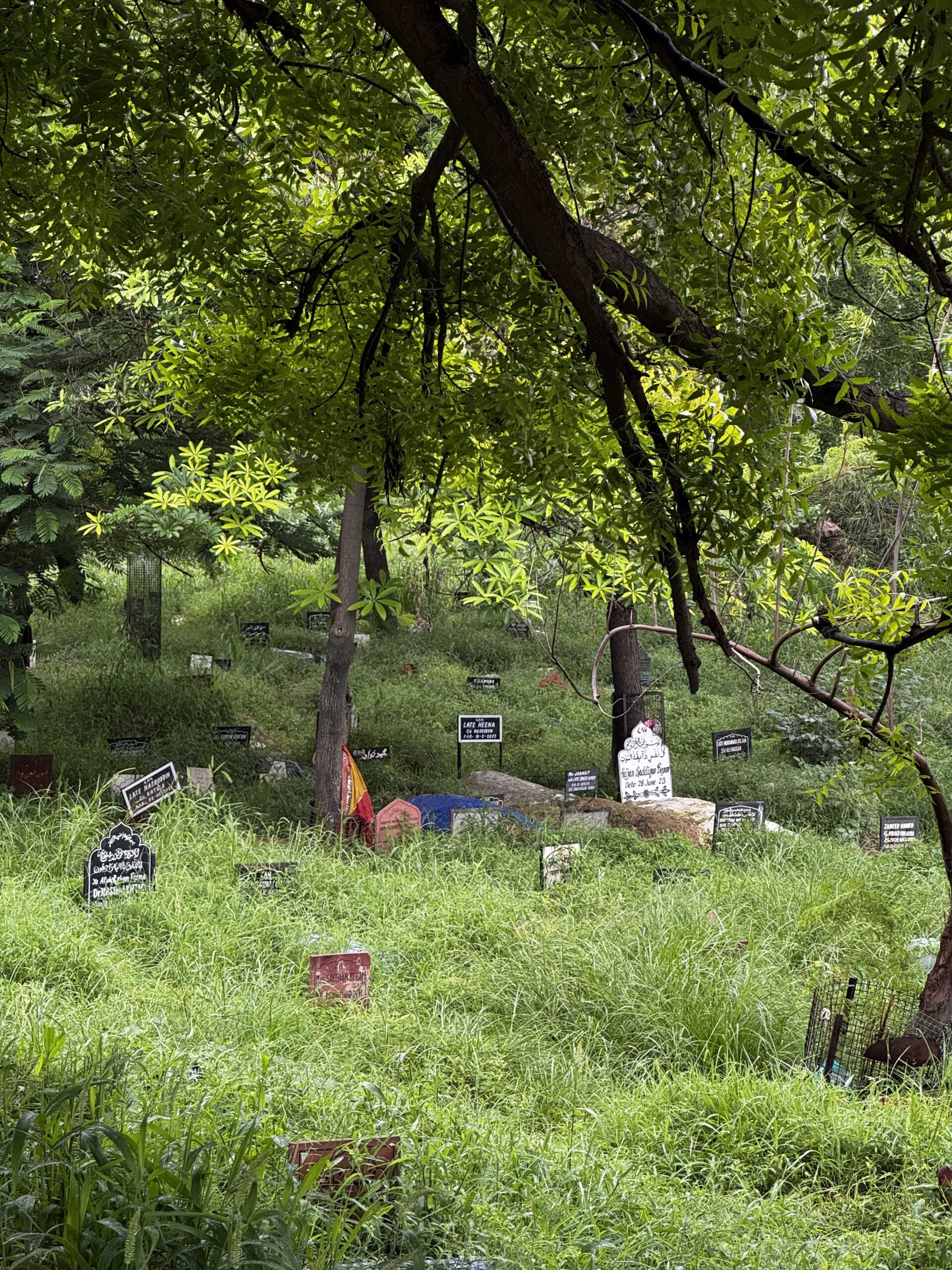
“This study is an eye-opener. It shows that a majority of Muslim graveyards registered with the Delhi Waqf Board and other agencies have practically disappeared. Both public and government agencies have occupied or encroached upon them, while new land is not being earmarked in planning schemes,” said Dr. Zafarul-Islam Khan, former chairman of the Delhi Minorities Commission.
For ordinary families, this compounding crisis fosters a deep sense of alienation and betrayal. In Islamic tradition, the timely and respectful burial of the dead is not merely a cultural custom, but a sacred religious obligation. As spaces vanish, however, laying a relative to rest is increasingly becoming a matter of extraordinary privilege rather than a fundamental right.
Elders in the community vividly recall an era when graveyards were treated as sacred commons—spaces that anchored collective memory and served both the living and the dead. Today, centuries-old resting places are disappearing at an alarming rate, leaving communities stripped of the physical spaces required to properly honour and mourn their deceased.
Calls for Action
In response to the mounting crisis, social activists, religious figures, and community organizers are stepping up their demands for immediate state intervention. They argue that government authorities must take urgent steps to legally protect existing graveyards, clear out illegal encroachments, restore abandoned burial grounds, and proactively allocate adequate land parcels in all future urban development blueprints. Without these concrete measures, community advocates warn that the sense of marginalization among Delhi’s Muslims will only deepen.
“Initially, mosques were abandoned by the central government and very few remain open in Delhi. Now, graveyards too are shrinking and being taken over. This is a complete violation of the religious beliefs of minorities,” said Ismail, a social activist based in Old Delhi.
As the pressure on the capital’s remaining cemeteries reaches a critical threshold, the families left behind continue their desperate search for space—carrying the heavy burden of grief compounded by the indignity of a city running out of room for its dead.