By Adeeba Jamal
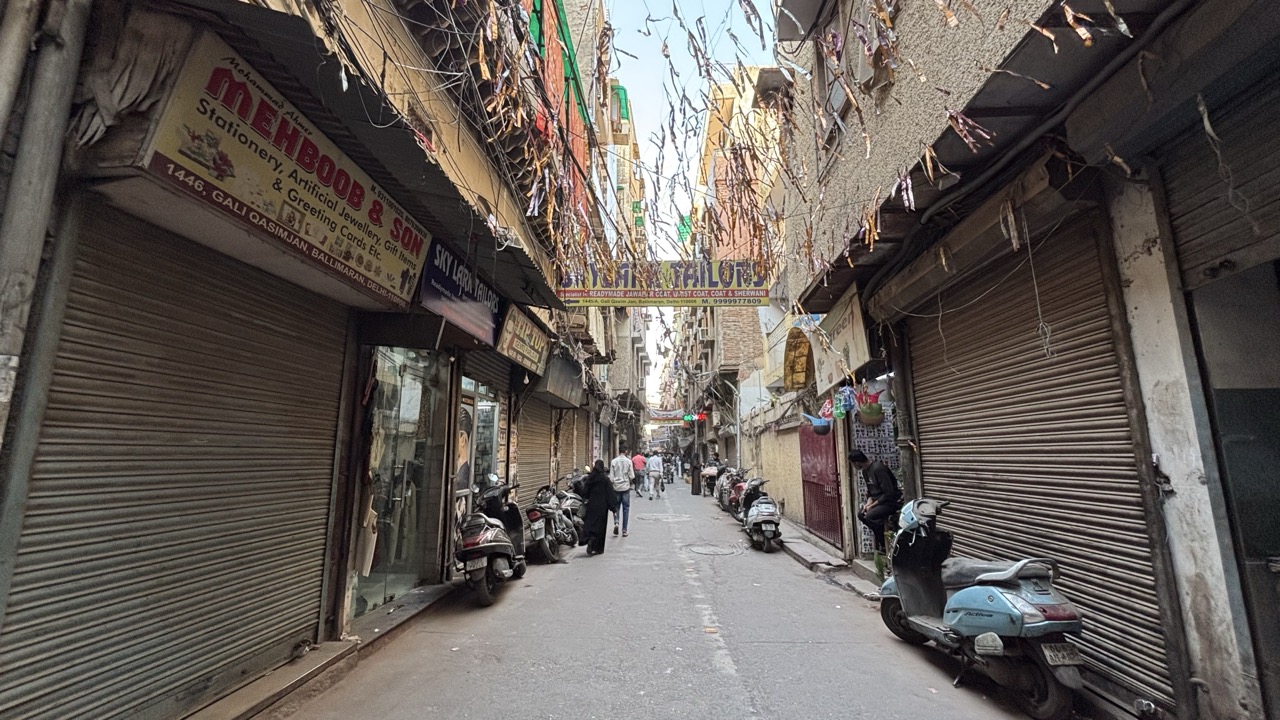
Old Delhi’s narrow lanes possess a vibrant and singular life of their own, defying the rapid march of modern time that erases the footprints of the past in most other metropolises. Every twist and turn of these historic alleys carries a piece of history—some facets shining brightly like polished silver, others fading quietly into the background like old, moisture-damaged ink. Deep within the bustling neighborhood of Ballimaran lies Gali Qasim Jan, a name that continues to be remembered and revered by its inhabitants, even as its broader historical prominence slips from the collective memory of the city at large.

The alleyway does not announce its rich past with ostentatious bronze plaques, electronic notice boards, or polished stone markers. Instead, the atmospheric air is thick and alive with the persistent blare of electric rickshaw horns, the distant, hauntingly beautiful echo of an azaan calling the faithful to prayer, and the warm, overlapping voices of neighbors calling out to one another over the rhythmic clatter of clay chai glasses. Sandwiched between a cracked, timeworn stone archway and a sagging, intricately carved wooden jharokha, the tangible traces of bygone eras remain stubbornly visible, seamlessly woven into the everyday, mundane life of the modern city that surrounds them.
Long ago, Nawab Qasim Jan, a prominent noble and courtier who served during the twilight of the Mughal Empire in the era of Shah Alam II, chose this very location to construct his grand haveli. In time, his noble title became permanently fused to the geography of the street, anchoring his identity to the terrain. Today, that legacy survives not through the rigid pages of academic textbooks or formal government archives, but rather because it is etched deeply into the everyday lives, memories, and routines of the ordinary people who still proudly call this historic alleyway their home.
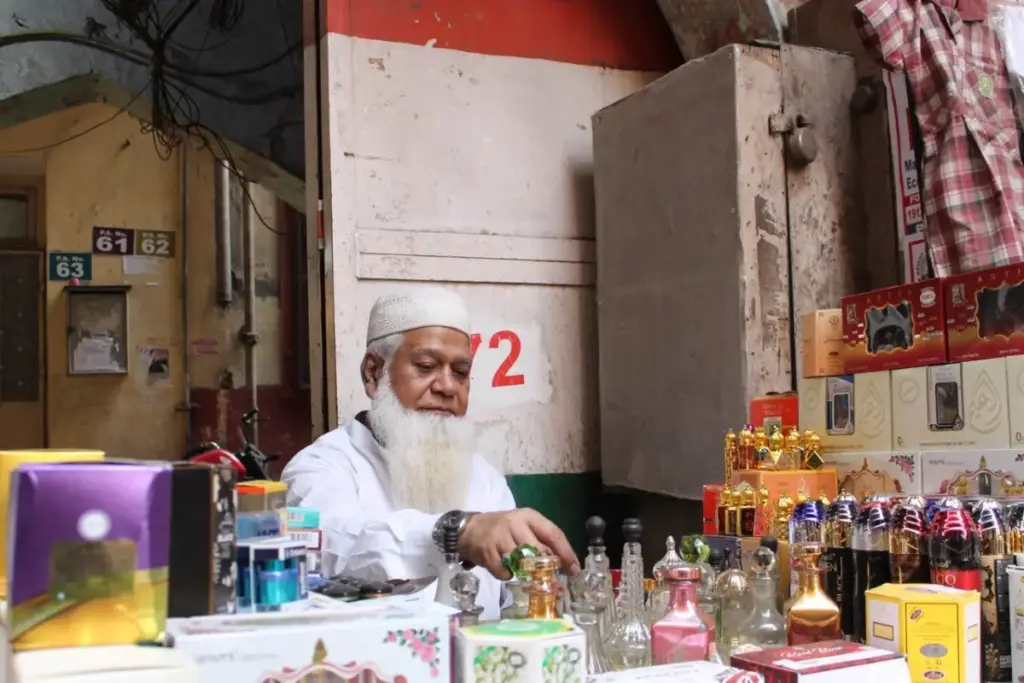
“People don’t really know who Qasim Jan was anymore,” reflects Syed Shaheed Hassan, a soft-spoken, contemplative resident in his seventies who has spent every single day of his long life rooted in this neighborhood. “But his name… it stayed. We have all grown up hearing it, passing it down without always knowing the full weight of the history it carries.”
Mr. Hassan operates a small, unassuming attar shop tucked neatly into a side nook of the gali. For over four decades, he has made a living selling traditional perfume oils—fragrances like rich gulab (rose), delicate jasmine, and warm amber—compounded from recipes that evoke a forgotten era. Opening a tiny, dust-free glass vial with practiced care, he offers a sensory reminder of the past. “This is not merely fragrance,” he remarks softly, letting the rich scent drift into the crowded air of the lane. “It is Mughal culture in a bottle, preserved just as it was centuries ago.”
What ultimately elevates Gali Qasim Jan from a mere geographical relic of Delhi’s deeply layered past is the extraordinary convergence of stories that define it. Within the span of a few short steps, threads of royal court intrigue, anti-colonial revolution, classical Urdu poetry, and the golden age of Indian cinema interweave in a way that is utterly unique, even by the rich standards of Shahjahanabad.
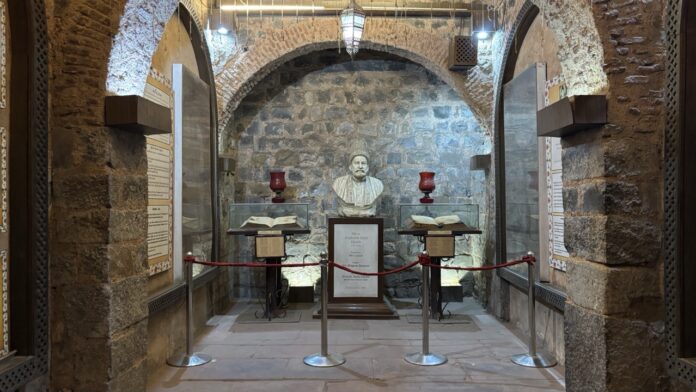
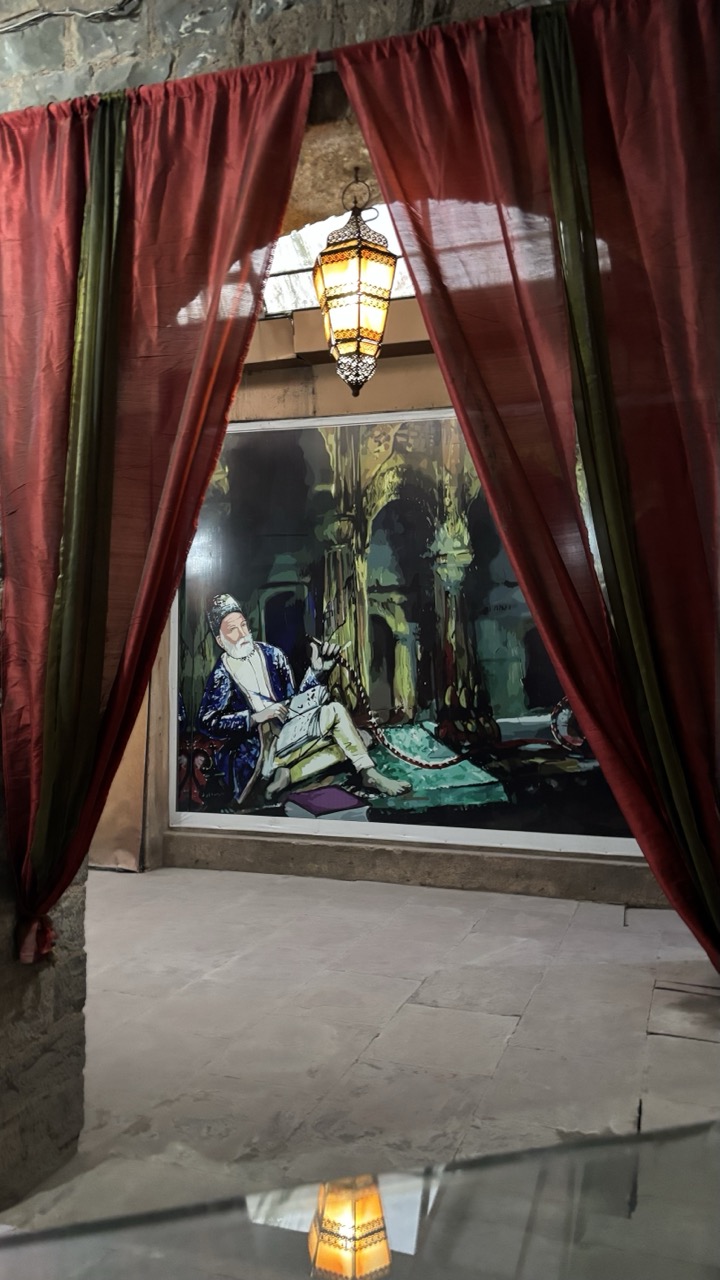
“The legendary poet Mirza Ghalib lived just a few doors down from here,” Mr. Hassan notes, gesturing vaguely down the crowded corridor of the lane. “His nikah happened right here in this vicinity. People in the neighborhood have always said that this place gave him a certain peace of mind… maybe even some of those immortal ghazals were born right here in the quiet corners of this gali.”
Even as the daily noise, chaos, and commercial bustle of the lane press in from all sides, they fail to completely obscure the profound historical events that unfolded within these very walls. A closer examination of the neighborhood reveals that layers of revolutionary history emerge from almost every crevice.
Crucially, Gali Qasim Jan holds the distinction of being the birthplace of Maulana Qasim Nanautawi, a towering religious scholar who later emerged as a foundational figure in the anti-colonial resistance against British rule. Nanautawi went on to establish the renowned seminary Darul Uloom Deoband and actively participated in early freedom struggles, most notably the clandestine anti-British activities associated with the historic Silk Letter Movement.
“We did not have massive political processions here or anything like that during the freedom struggle, but great minds were shaped inside these very walls,” Mr. Hassan explains, his expression turning thoughtful. “Big, transformative ideas often start in small, unassuming rooms.”
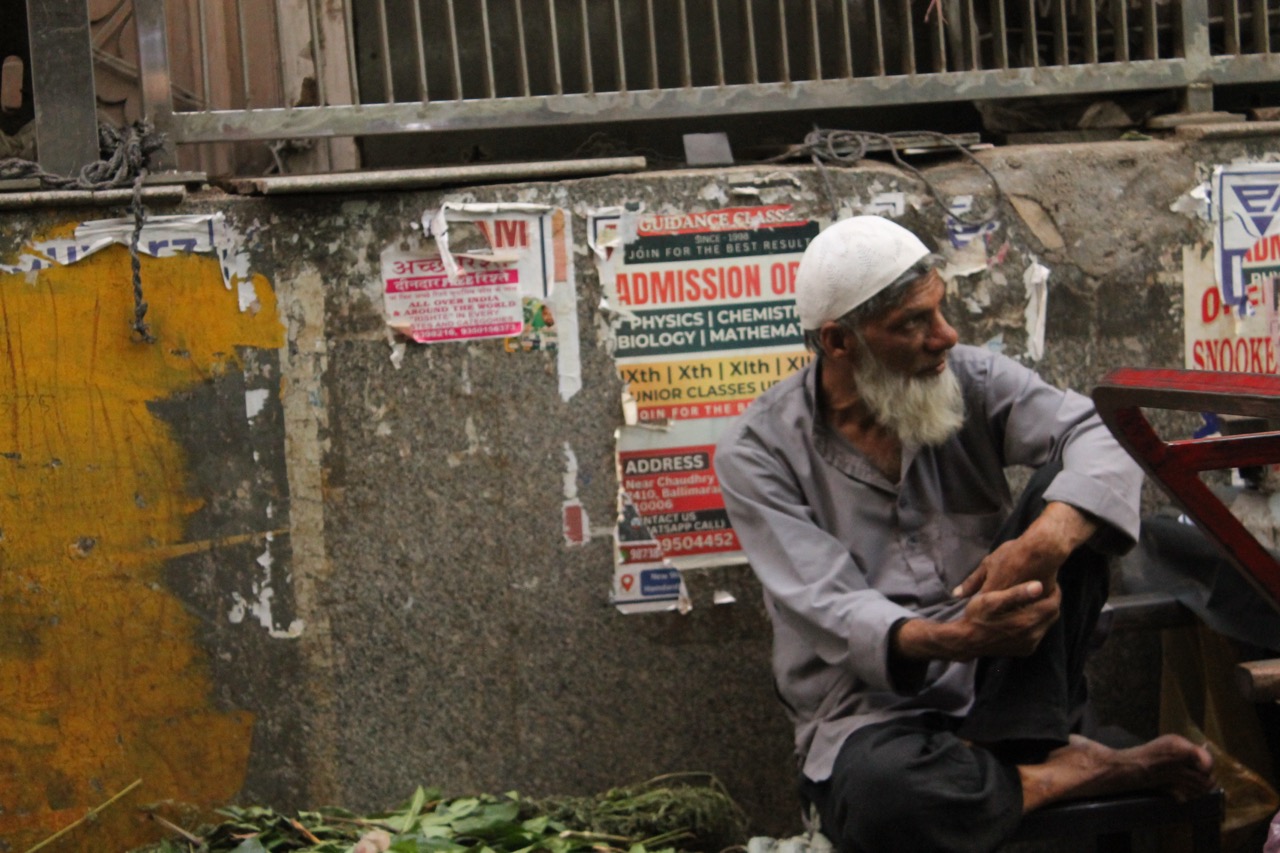
Leaning in slightly, a subtle twinkle returns to his eyes as he recalls another, entirely different layer of the alley’s storied existence. “You know, Meena Kumari once came right here into this lane,” he shares with a gentle smile. “They shot a scene for the classic film Pakeezah right here in this gali. I clearly remember her sitting in a traditional rickshaw and passing directly by my shop, which at that time was just a small decorated table set up on the street. It is the kind of personal, cinematic memory that you simply do not find written down in formal archives or history books.”
Yet, for all the glamour of cinema and the weight of imperial history, Mr. Hassan maintains that his most cherished memory of the neighborhood is subtler, quieter, and arguably far more revolutionary in its long-term social impact.
“There was a time, not all that long ago, when young girls in our community were rarely sent to formal schools. It simply was not the social norm,” he recalls, his tone turning reflective. “But then, Rabea Girls’ Public School opened right here in the neighborhood. It fundamentally changed everything. Suddenly, every single morning, we would see young girls dressed in crisp white uniforms rushing down the lane with their school bags slung over their shoulders… it gave all of us a profound sense of hope for the future.”
His voice trails off for a moment as the memory settles over him. “In those days, just seeing a young girl going off to school was a very big deal. It broke barriers that had stood for generations.”
Outside the shaded enclave of the shop, the modern world gallops forward at an unforgiving pace, marked by traffic, commerce, and digital connectivity. Yet, Gali Qasim Jan continues to move stubbornly at its own unhurried, rhythmic pace. Local children kick plastic footballs across the stone pavement beneath crumbling, historic balconies. Elderly women lean out from upper-story windows to exchange afternoon gossip across the narrow expanse of the sky above. And the lingering, sweet scent of jasmine and attar from Mr. Hassan’s modest shop floats continuously on the breeze, bridging the gap between yesterday and today.
The structural walls of the lane are weathered, scarred by time, pollution, and neglect, but they continue to speak to those willing to listen. They communicate not through official government plaques or bronze inscriptions, but through living, breathing human memories like those preserved by residents like Syed Shaheed Hassan. In the quiet persistence of these recollections, the rich, complex history of Old Delhi finds a silent, enduring home.