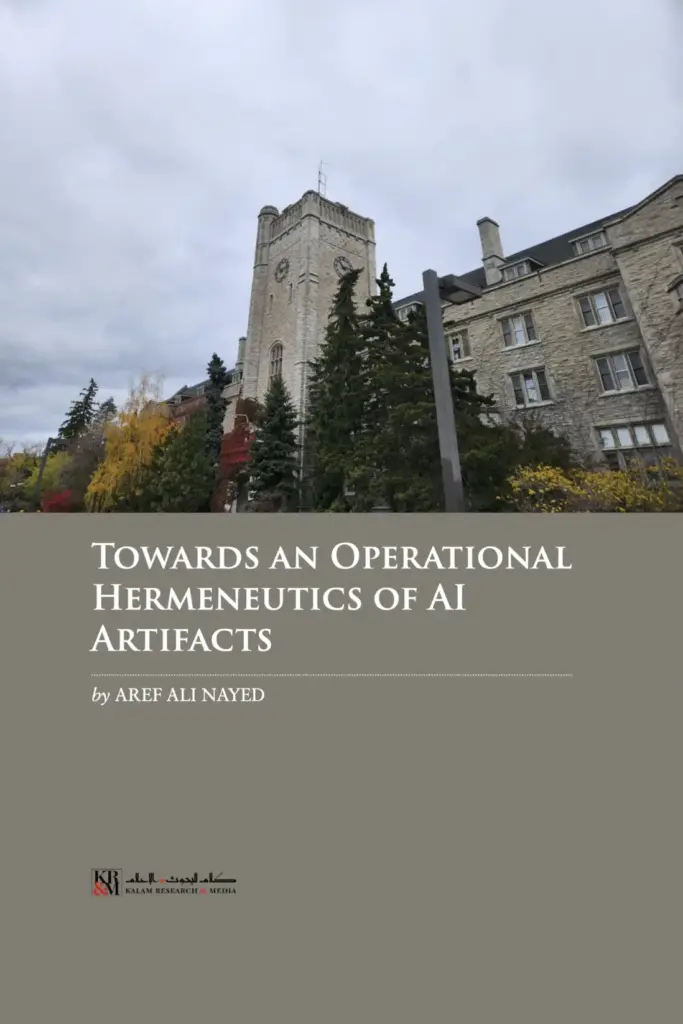
Published in 2025 and spanning 26 comprehensive pages, a groundbreaking new academic monograph by Dr. Aref Ali Nayed offers a profound synthesis of classical philosophy and cutting-edge artificial intelligence research. By drawing extensively upon his pioneering work in Operational Hermeneutics—a theoretical framework originally developed at the University of Guelph during the 1990s—the paper introduces a sophisticated new paradigm designed for understanding, interpreting, and governing the multifaceted outputs generated by modern artificial intelligence systems.
The intersection of artificial intelligence and the humanities has long been a subject of intense academic debate, particularly as machine learning models grow increasingly autonomous and capable of generating complex text, imagery, and software code. Dr. Nayed’s latest publication directly addresses this critical juncture by extending classical interpretive theories into the digital age. Rather than viewing artificial intelligence merely through a technical or utilitarian lens, the monograph treats AI-generated artifacts as profound extensions of human culture and cognition that require rigorous hermeneutical analysis.
Key Contributions to Philosophy and Technology
At the core of the 26-page monograph are several transformative contributions to both technological theory and philosophical inquiry. First and foremost, the paper successfully extends the boundaries of Operational Hermeneutics so that it can be applied directly to artificial intelligence artifacts, including texts, digital imagery, and machine-generated code. This methodological leap allows researchers and technologists to analyze digital creations with the same depth of critical interpretation traditionally reserved for historical texts and human works of art.
To establish a solid foundation for this approach, the paper meticulously traces the philosophical lineage of the concept of "artifacts" from classical antiquity all the way through to modern times. Dr. Nayed connects the teleological insights of Aristotle with the foundational design sciences and bounded rationality theories of Herbert Simon. By bridging this ancient and modern intellectual heritage, the research provides a stable theoretical anchor for understanding how artificial intelligence systems construct, modify, and present information within contemporary digital ecosystems.
Furthermore, the monograph proposes four distinct modes of human engagement with technological systems: actuating, manipulating, utilizing, and actualizing. These categories offer a nuanced taxonomy of how users, developers, and institutions interact with artificial intelligence, moving beyond passive consumption to active, conscious participation. This structured approach helps clarify the evolving relationship between human agency and machine autonomy in real-world applications.
Crucially, the paper tackles the pressing domain of AI ethics through the novel lens of interpretive responsibility. As algorithms increasingly influence public discourse, legal judgments, and daily decision-making, the burden of interpretation shifts significantly. To capture the risks associated with this shift, Dr. Nayed introduces the compelling concept of "hermeneutic harm" within AI contexts. This term draws attention to the subtle yet profound damages that can occur when machine-generated outputs are misinterpreted, misapplied, or engineered in ways that distort human understanding and cultural narratives.
An Ambitious Interdisciplinary Research Program
Beyond its theoretical advancements, the publication officially announces a major collaborative research initiative uniting prominent academic institutions, specialized research organizations, and private technology entities. This ambitious multi-institutional partnership brings together the University of Guelph in Canada, the Sheikh Mohammed bin Zayed University for the Humanities in Abu Dhabi, the Mohamed bin Zayed University of Artificial Intelligence (MBZUAI), Kalam Research & Media, and Agathon Systems Ltd.
This diverse coalition reflects the truly interdisciplinary nature of the challenge at hand, combining rigorous philosophical scholarship with advanced technical expertise in artificial intelligence. The primary objective of this collaborative research program is to translate these theoretical insights into practical outcomes, specifically by developing hermeneutically-informed AI design principles and robust governance frameworks. By embedding philosophical accountability directly into the architecture and regulation of future technologies, the initiative aims to guide the development of artificial intelligence systems that are more transparent, ethically grounded, and aligned with human values.
Scholars, researchers, and professionals interested in exploring the full depth of these arguments can access and download the complete 26-page monograph directly through the published resource link provided by Kalam Research & Media.